Formal Table Setting: What to Set, Clear and Bring for Each Course
Plan a formal table setting for three or five courses with labeled diagrams, course-by-course clearing tables and a printable service checklist.
Get the course service checklist ↓- The guest list
- One repeatable setting; a six-diner inventory is included
- A little preparation
- Write the course order, count the pieces, then rehearse one empty setting
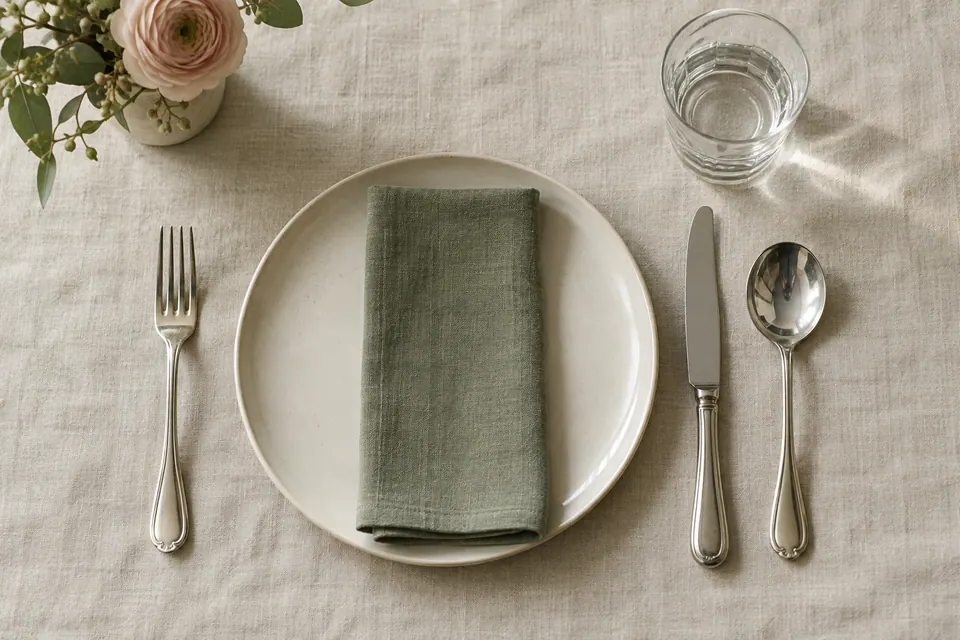
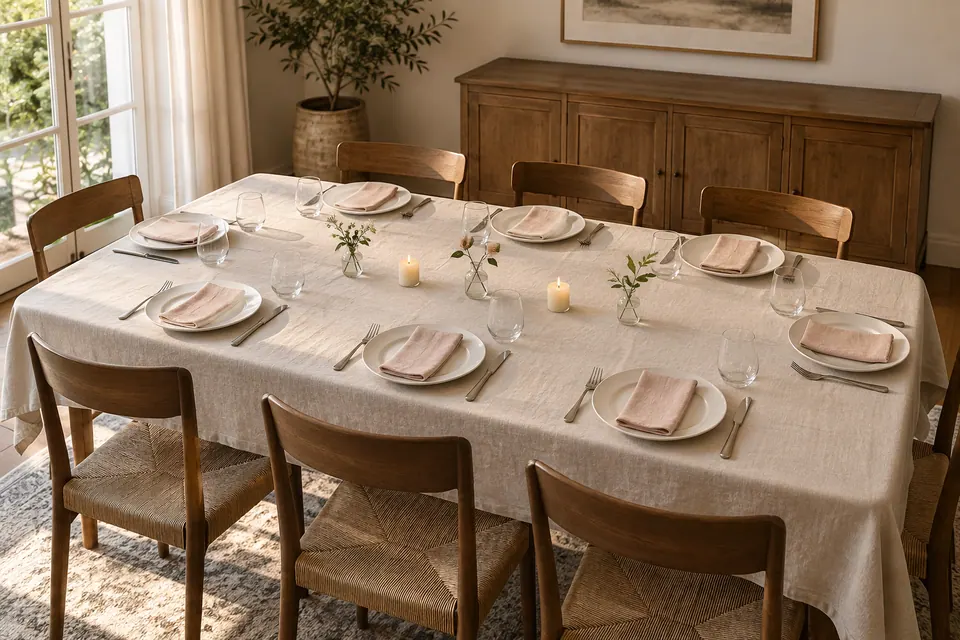
A formal table setting should tell a guest what happens next. Set the pieces for the planned courses, use the outer utensils first, and bring later pieces when their dishes arrive. A soup spoon belongs on the table when soup is coming. A row of unused glasses only gives you more things to clear.
The two plans below show an opening setting and its changes during dinner. One has three courses; the other has five, with salad after the main. These proposed plans use seated, plated service. Rehearse one place with your actual pieces before repeating it around the table.
Match the opening setting to the course order
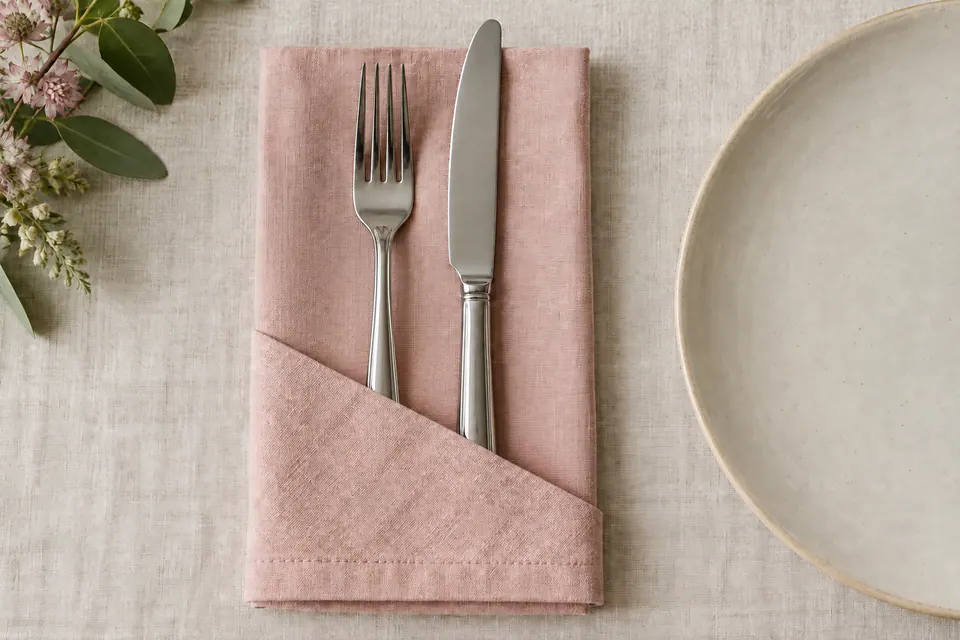
This guide follows common American formal-dining conventions. Villeroy & Boch’s flatware guidance places forks on the left, knives and spoons on the right, and arranges them by order of use. The cutting edges face the plate. Start with that sequence, then subtract anything your menu does not need.
| Piece | Position | Decision to make |
|---|---|---|
| Forks | Left of the plate space; the first fork used is outermost | Count the fork-eaten courses that will start with utensils already set. |
| Knives and soup spoon | Right of the plate space; blades inward; first-use spoon outside the knives | Omit a soup spoon when there is no soup. |
| Bread plate and spreader | Upper left, above the forks; spreader across the plate with its handle to the right | Include them here because bread is offered with the savory courses. |
| Water and optional wine | Upper right, above the knives; water nearest the knife line, wine to its right | Set one wine glass only at seats where wine will be served. |
| Napkin | In the central plate space or on the optional charger | Guests move it to their laps before the first dish arrives. |
| Dessert pieces | Off the table at the start | Reserve a clean fork or spoon for the actual dessert. |
The bread, glass and napkin positions follow Emily Post’s formal place-setting guide. That guide also brings dessert utensils with dessert. It limits the initial setting to three of one utensil type, with a separate exception for an oyster fork. Neither plan here needs that exception.
A charger is an optional service plate beneath the early-course dishes, not an extra eating plate in these examples. Here it leaves before the main arrives, following Emily Post’s convention of exchanging the charger for the main-course plate. Choose this sequence before you set the table so nobody has to lift a hot, loaded main plate to remove it.
Three courses: soup, main and tart
Our shorter example is vegetable soup, roast chicken with vegetables, then apple tart. There is no separate salad course and no fish cutlery. Although Emily Post describes a fully formal setting as serving more than three courses, the same placement logic gives this smaller dinner a composed opening. Emily Post’s three-course guidance also encourages adapting the setting to what the meal needs.
Put one dinner fork on the left. On the right, set the dinner knife nearest the plate space and the soup spoon outside it. Keep the dessert fork off the table. The illustration includes a charger; without one, leave that central space ready for the first dish rather than stacking plates for every course.
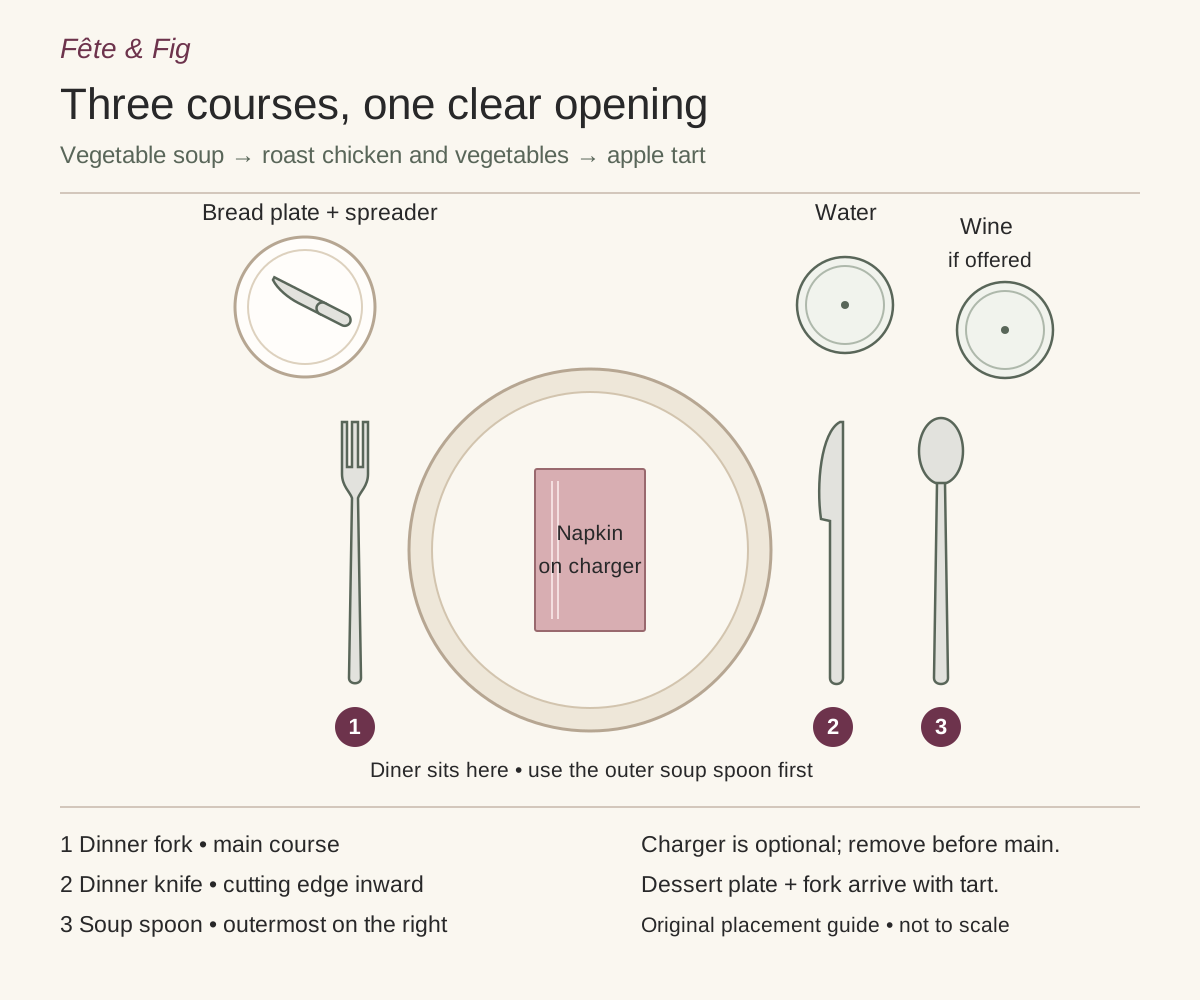
| Course | Bring | Clear before the next course |
|---|---|---|
| 1. Vegetable soup | Filled soup bowl on its own suitable underplate; place over the optional charger | Bowl, underplate and used soup spoon; then remove the charger before bringing the main. |
| 2. Roast chicken and vegetables | Prepared dinner plate; dinner fork and knife are already set | Dinner plate, used fork and knife; bread plate and spreader once savory service is finished. |
| 3. Apple tart | Dessert plate and clean dessert fork | Dessert pieces after guests finish; keep water available. |
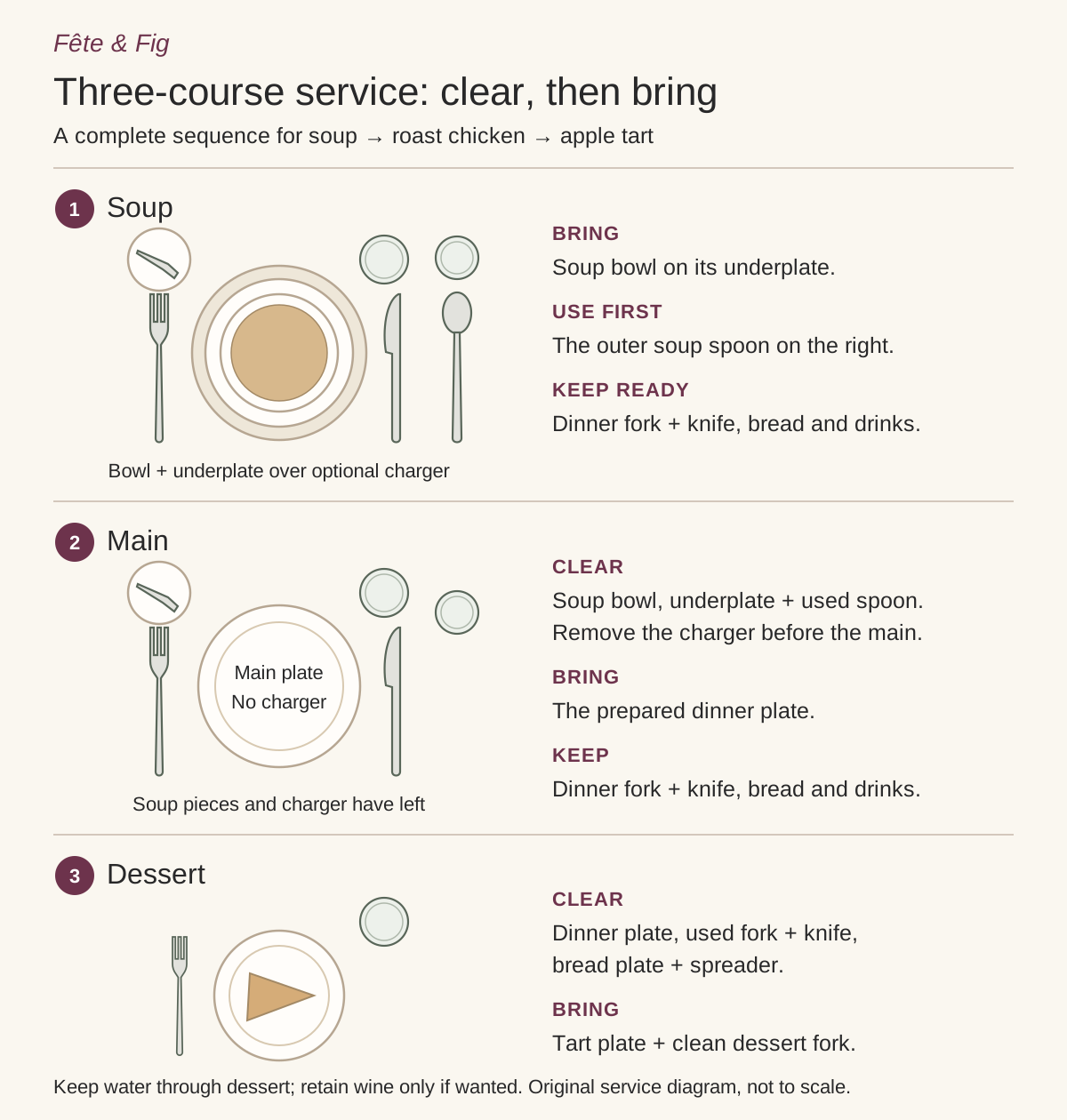
Bread and water stay through the main. This plan offers one optional wine throughout the savory courses, so it does not require a different glass for each plate. A nonalcoholic drink can have its own glass in the same drink area if it is being served.
Five courses: soup, fish, main, salad and dessert
The longer example is carrot soup, a small baked salmon course, roast lamb with vegetables, torn-leaf salad, then a spoon-eaten custard. These are course names for the service plan, not recipes or a shopping list. Use the dinner menu comparisons when deciding what your kitchen can manage.
The fish fork starts outside the dinner fork. The fish knife goes outside the dinner knife, and the soup spoon goes furthest right. This sequence keeps the first utensil needed accessible. The salad fork waits off the table because salad is the fourth savory course; it comes with that plate after the main setting is cleared. No salad knife is counted for the torn-leaf salad in this example.
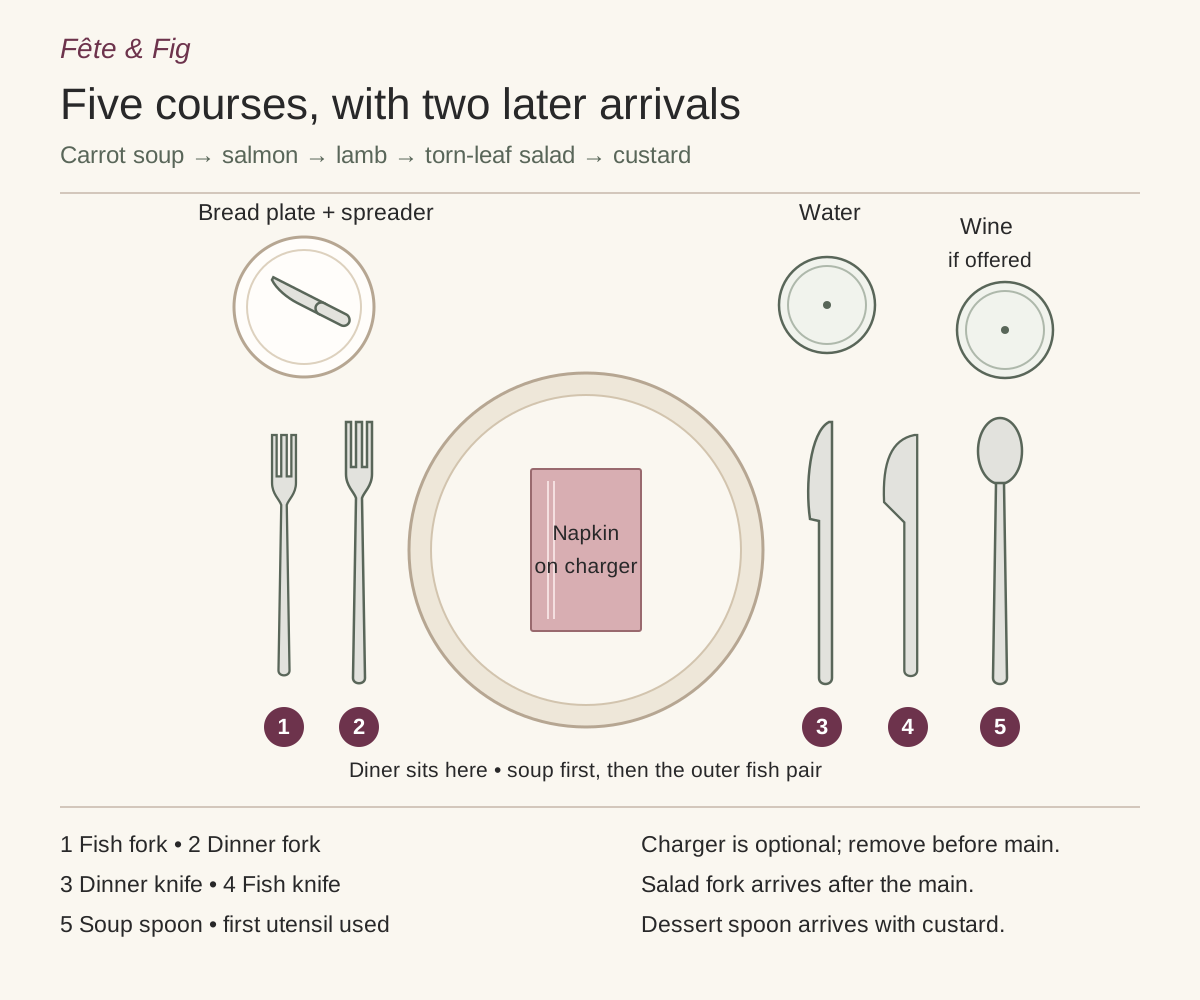
| Course | Bring | Clear before the next course |
|---|---|---|
| 1. Carrot soup | Soup bowl and suitable underplate over the optional charger | Bowl, underplate and soup spoon; leave the charger for the fish plate. |
| 2. Baked salmon | Small fish-course plate over the charger | Fish plate, fish fork and fish knife; remove the charger before the main arrives. |
| 3. Roast lamb and vegetables | Prepared dinner plate | Dinner plate, dinner fork and dinner knife; retain bread service for the salad. |
| 4. Torn-leaf salad | Salad plate and clean salad fork, set on the left | Salad plate and fork, then bread plate and spreader before dessert. |
| 5. Custard | Dessert dish and clean dessert spoon, set on the right | Dessert pieces after guests finish; keep water available. |
If you do not own fish utensils, use a separate ordinary fork and knife for the salmon and keep their positions in the same sequence. Do not borrow the dinner pair and then return used pieces to the cloth. If salad moves before the main, rewrite the utensil order and clearing plan together; the drawing above no longer describes your meal.
Stage clean pieces before the first course
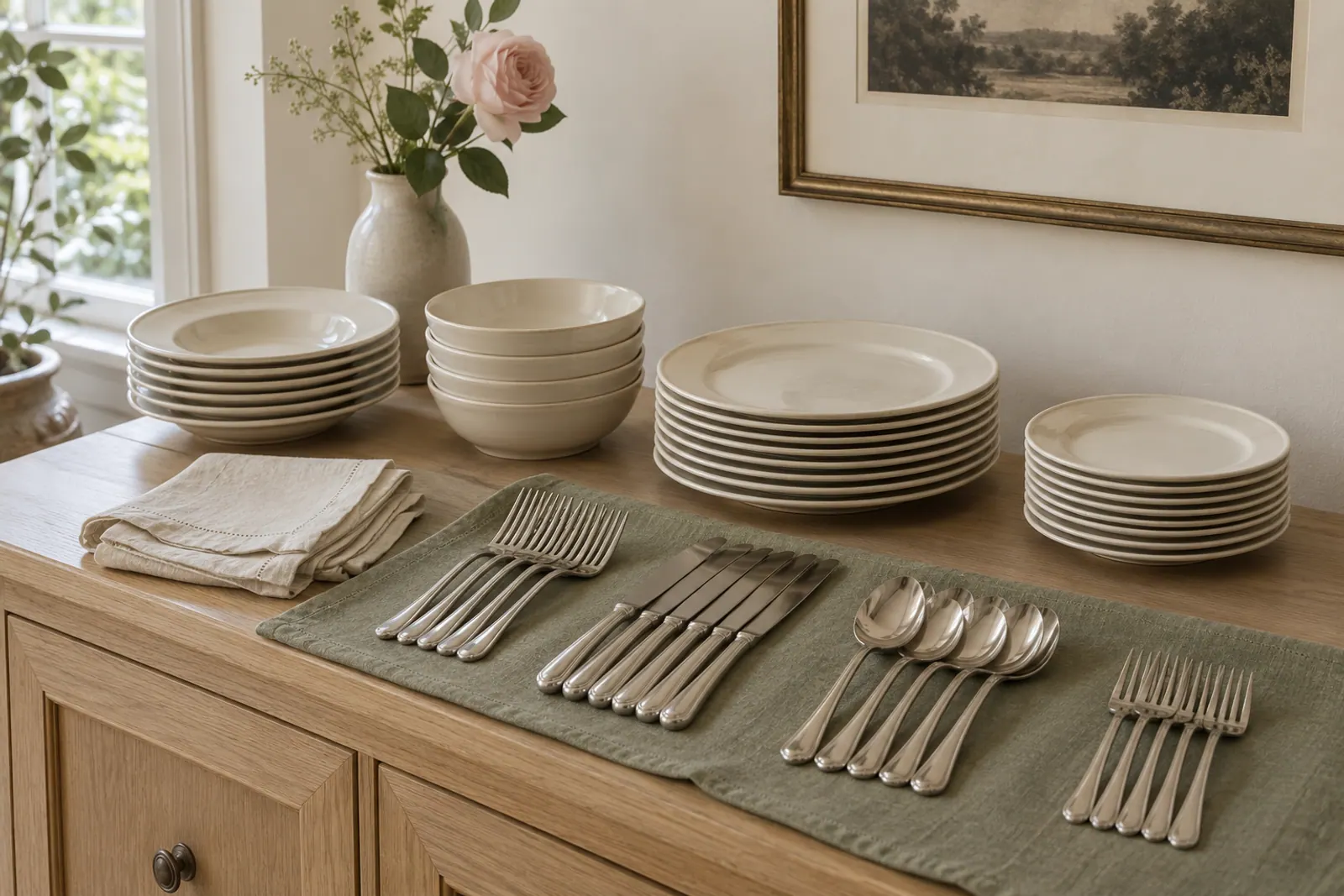
For six diners, multiply every per-person item by six. The table below counts pieces needed without washing and reusing them between courses. A soup underplate, fish plate and dessert plate have separate jobs even if they happen to be the same size.
| Piece | Three-course plan | Five-course plan |
|---|---|---|
| Dinner plates; napkins; water glasses | 6 of each | 6 of each |
| Dinner forks; dinner knives; soup spoons | 6 of each | 6 of each |
| Soup bowls; soup underplates | 6 of each | 6 of each |
| Bread plates; spreaders | 6 of each | 6 of each |
| Other course-specific dishes and utensils | 6 dessert plates and 6 dessert forks | 6 fish plates, 6 fish forks, 6 fish knives; 6 salad plates and 6 salad forks; 6 dessert dishes and 6 dessert spoons |
| Optional chargers and wine glasses | 6 chargers if used; 1 wine glass per wine-drinking guest | 6 chargers if used; 1 wine glass per wine-drinking guest |
Put each later course’s clean dishes and cutlery together where the person serving can find them. Add a few spare pieces from your own set, especially a glass and the utensils you will use most. Keep a separate landing place for used dishes. If the clean stack shares that surface, move it before clearing begins.
Clear for dessert and bring the last pieces
Finish the last savory course before placing dessert dishes. Remove the used plates and cutlery and, in these plans, the bread pieces. Water stays. Remove wine glasses that are no longer wanted rather than insisting that every glass leave together.
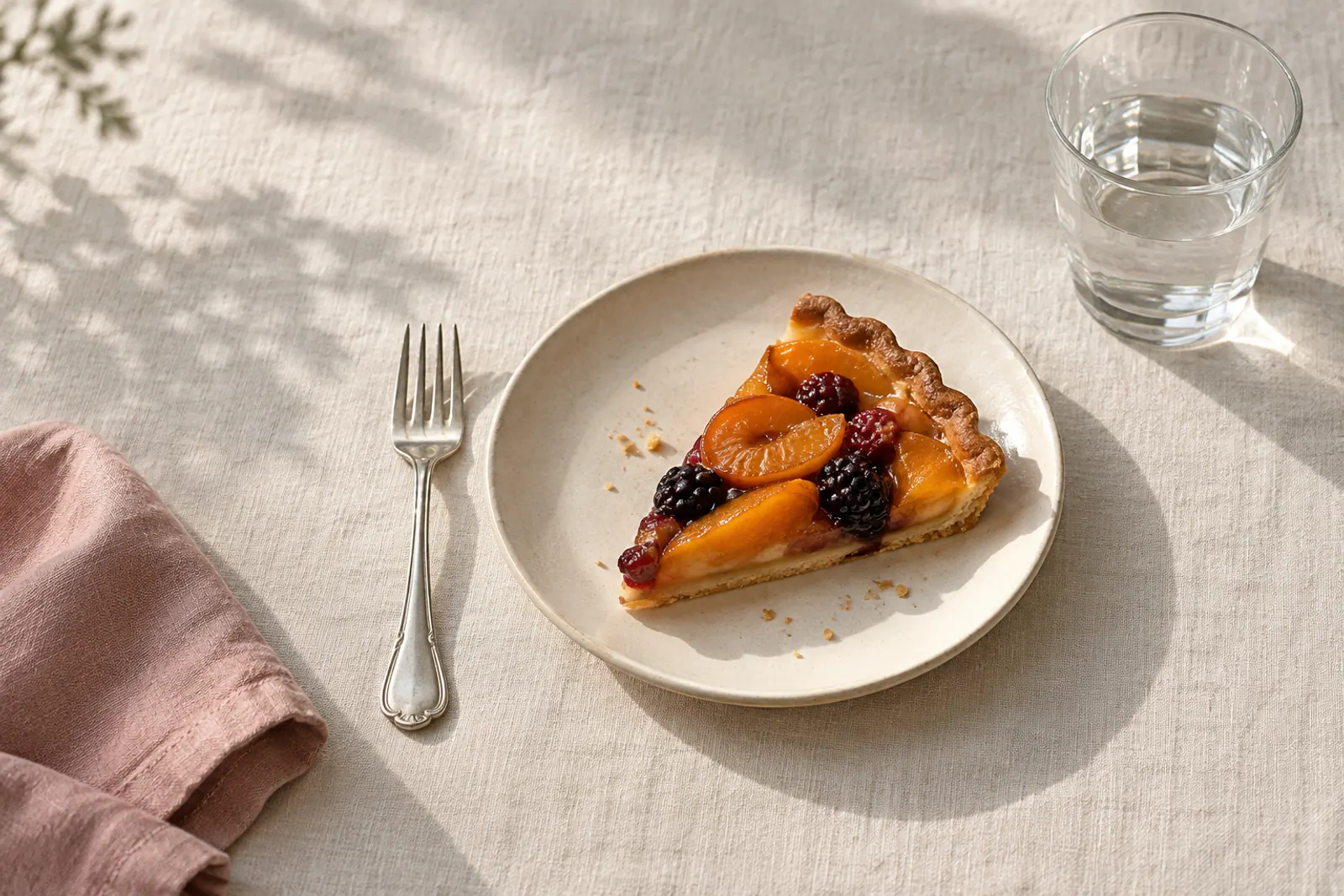
For tart, bring a fork. For custard, bring a spoon. You do not need both just to complete a decorative pattern. Set the clean utensil beside its dish, with the fork on the left or spoon on the right. Coffee or tea cups arrive when those drinks are served, not in the opening soup setting. Emily Post’s informal-setting guidance places later coffee service above and to the right of the setting.
Check one seat and print the service sheet
Use this final check before repeating the setting around the table. The labeled diagrams can be opened full size; the checklist is also a text equivalent for readers who prefer to work without a drawing.
Download the free service sheets: A4 PDF or US Letter PDF. The set includes the opening settings, clear-and-bring sequence and a blank course worksheet for your own meal. Choose the file that matches your paper and print at actual size, in portrait orientation. No sign-up is required; intended for personal, noncommercial use.
| Check | Write or verify before guests arrive |
|---|---|
| Course order | Write each course and the fork, knife or spoon it actually needs. |
| Opening setting | Trace the first three savory courses from the outside inward. Remove unused pieces. |
| Charger decision | Record “none” or “remove before main.” Give that task to the person bringing the main plates. |
| Later pieces | Group the salad and dessert pieces separately. Count one complete set for every diner. |
| Clear and replace | For each transition, name what leaves, what stays and what arrives. Include a place for used dishes. |
| One-seat rehearsal | Move empty dishes through the whole sequence. Check that each next utensil is clean and available. |
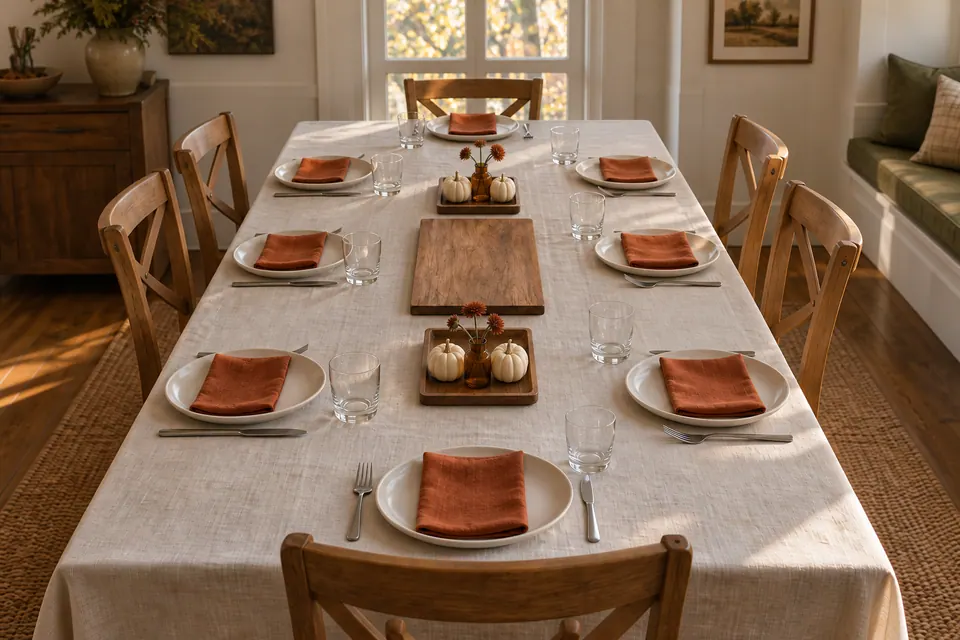
The rehearsal checks the service sequence, not whether all your chairs fit. For that, use the measured dinner-table layouts. Settle cloth size separately, then choose a napkin fold that does not cover the drink area. Once those choices are made, this page’s job is simple: the right piece reaches each guest at the right course.
Set the utensils needed for the opening courses in their order of use. Keep the later salad and dessert pieces nearby, and decide what leaves before the next plate arrives.
Checklist from this story
0 / 9 ready