Bridal Shower Tea Party for 12: Menu, Tea Amounts and Service
Host a bridal shower tea party for 12 with counted food portions, a two-round tea calculation, a teaware checklist and a clear serving schedule.
- The guest list
- 12 adults, including the hosts and guest of honor
- A little preparation
- Measure the teaware first; prepare the room the day before
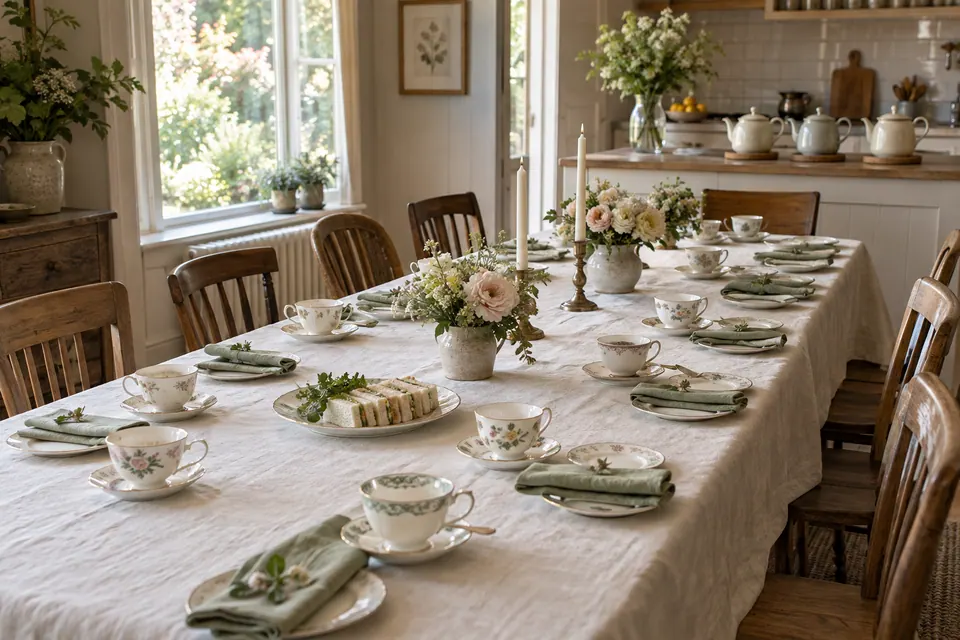
For a bridal shower tea party with twelve adults, start with four sandwich fingers, one scone and two small sweets per person. Plan two rounds of tea, with water available throughout. The useful measurement is how much tea your cups and pots can comfortably serve: twelve 200 ml pours need 2.4 liters of brewed tea per round.
This proposed gathering runs from 2 to 4 p.m., after lunch. The menu quantities are shopping estimates for afternoon refreshments, not a tested catering formula. Count the hosts and guest of honor among the twelve. If guests will arrive expecting lunch, choose a more substantial meal, such as our garden bridal shower lunch, or agree on larger portions with your food supplier.
If you are still choosing between tea, a meal and a shorter dessert gathering, the bridal shower ideas comparison sets out the different service jobs before you commit.
Order a small menu with distinct savory and sweet courses
Choose three sandwich fillings, plain scones with jam and cream, and two kinds of small sweet. For the base order, each guest can have four sandwich fingers, a scone and one of each sweet. A finger means one quarter of a full two-slice sandwich in this example. Confirm the supplier’s piece size before ordering.
One possible filling split is sixteen cucumber-and-cream-cheese fingers, sixteen egg-salad fingers and sixteen cheddar-and-chutney fingers. These are menu choices, not recipes or guarantees that they suit every guest. Change the split and arrange complete alternative portions after checking ingredients and handling with the people who need them.
| Item | Base order | Optional order with 25% extra | Portion assumption |
|---|---|---|---|
| Sandwich fingers | 48 fingers | 60 fingers | Four per guest; 12 full two-slice sandwiches cut into four, or 15 full sandwiches with the reserve |
| Plain scones | 12 | 15 | One bakery-confirmed individual scone per guest; check whether the product is miniature or large |
| Small sweets | 24 | 30 | Two per guest; for example, 12 small lemon bars and 12 shortbread pieces |
| Jam | 240 g, about 8½ oz | 300 g, about 10½ oz | 20 g per scone |
| Clotted cream or agreed alternative | 300 g, about 10½ oz | 375 g, about 13¼ oz | 25 g per scone; follow the product's storage instructions |
The extra column is a choice for seconds, not another compulsory order. Select one column and use it consistently. Keep reserve portions separate rather than putting every piece on the table at arrival.
Choose bridal shower finger foods by their serving job
For this afternoon tea, choose foods guests can lift from a platter and eat from a small plate. Three different sandwich fillings give the savory course some choice; the scone and sweet courses follow later. Use the table to confirm the order with your supplier rather than adding every attractive bite to the menu.
| Choice | Base allocation | What to check before ordering |
|---|---|---|
| Cucumber-and-cream-cheese fingers | 16 fingers | Confirm the bread size and quarter-sandwich cut. Ask when the supplier recommends assembling and collecting them so you can plan chilled storage and service. |
| Egg-salad fingers | 16 fingers | Choose a filling and cut that stay together when lifted. Have the supplier identify the filling on its tray, and keep refill portions chilled. |
| Cheddar-and-chutney fingers | 16 fingers | If this is the vegetarian choice, confirm that the actual cheese and all other ingredients suit the guest. The filling name alone does not establish that. |
| Plain scones with jam and cream | 12 whole individual scones | Ask to see the supplied size. Splitting twelve scones makes twenty-four halves, still twelve whole-scone portions; miniature scones need a new portion agreement. |
| Lemon bars and shortbread | 12 small pieces of each | Confirm that each piece is the intended small serving. Swapping a shortbread piece for a full cupcake or a dessert cup changes portion size and may add plates or spoons. |
Keep replacements within their course. For example, changing one sandwich filling can preserve sixteen fingers if the bread size and cut stay the same. Sixteen pinwheels or sixteen mini rolls are not automatically the same amount of food as sixteen quarter-sandwich fingers. Agree on their size and quantity before replacing that part of the order.
For a guest who needs a different menu, agree on a complete alternative tea with the guest and supplier, including the bread, fillings, scone, accompaniments, sweets and handling. Confirm vegetarian requirements and allergen needs separately; a vegetarian label does not settle an allergen question. Keep the supplier’s ingredient details and the food labels with the order.
If the supplier confirms comparable portions, one alternative allocation replaces four of the forty-eight fingers, one of the twelve scones and two of the twenty-four sweets. That leaves 44 regular fingers, 11 regular scones and 22 regular sweets, plus the reserved alternative allocation. Revise the regular filling split accordingly.
Use plain plates and platters you already own. A tiered stand can hold the sweets, but it is optional. Put sandwich trays down at the first service, then bring scones and their accompaniments later. This leaves the table less crowded and makes it easier to manage chilled ingredients.
Calculate tea from the cups you will actually use
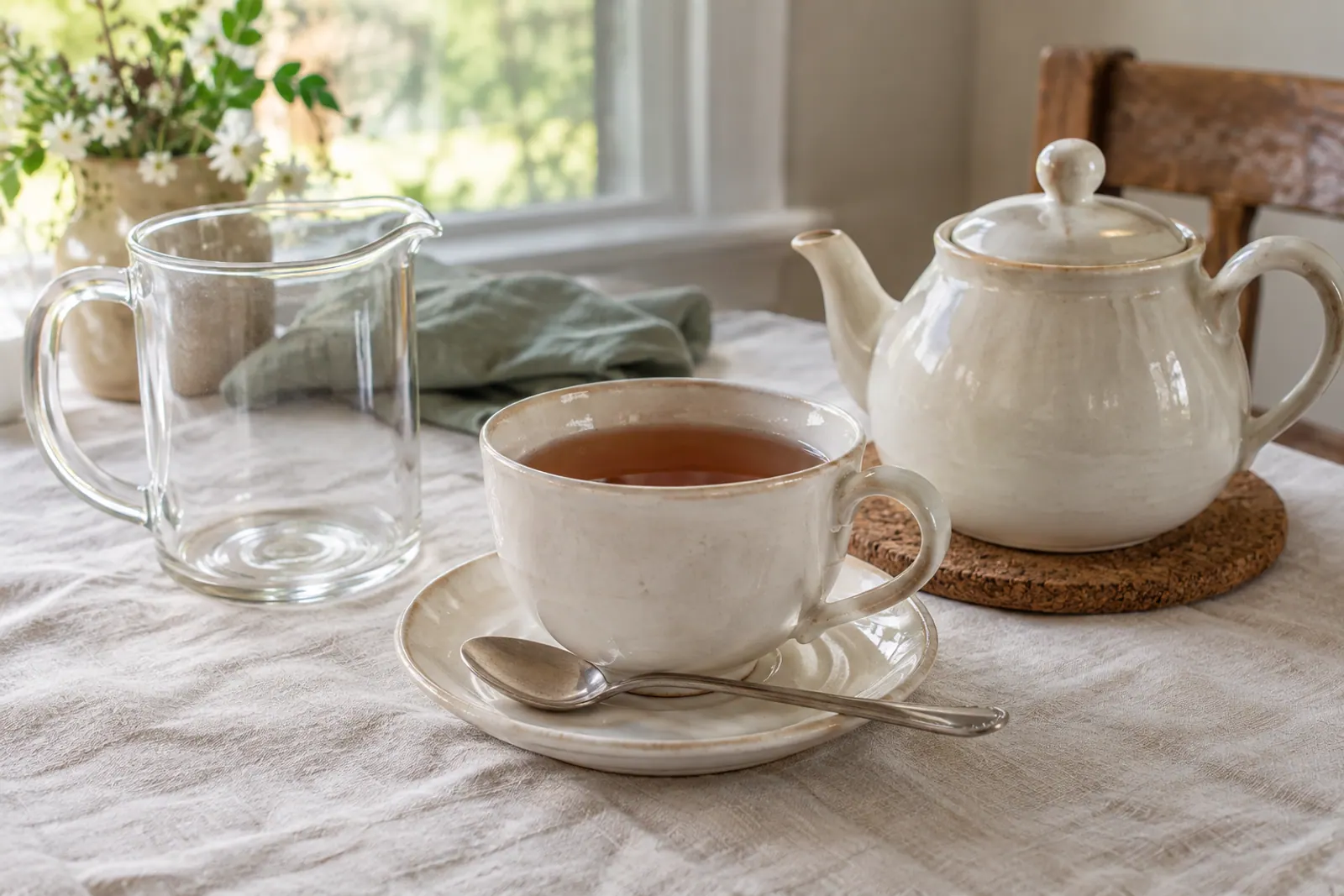
Fill one cup with cold water to the intended tea level, leaving space for carrying it comfortably and adding milk if wanted. Pour that water into a measuring jug. Our example uses a 200 ml tea pour, about 6¾ US fluid ounces. A cup that holds 200 ml to the brim needs a smaller pour and a new calculation.
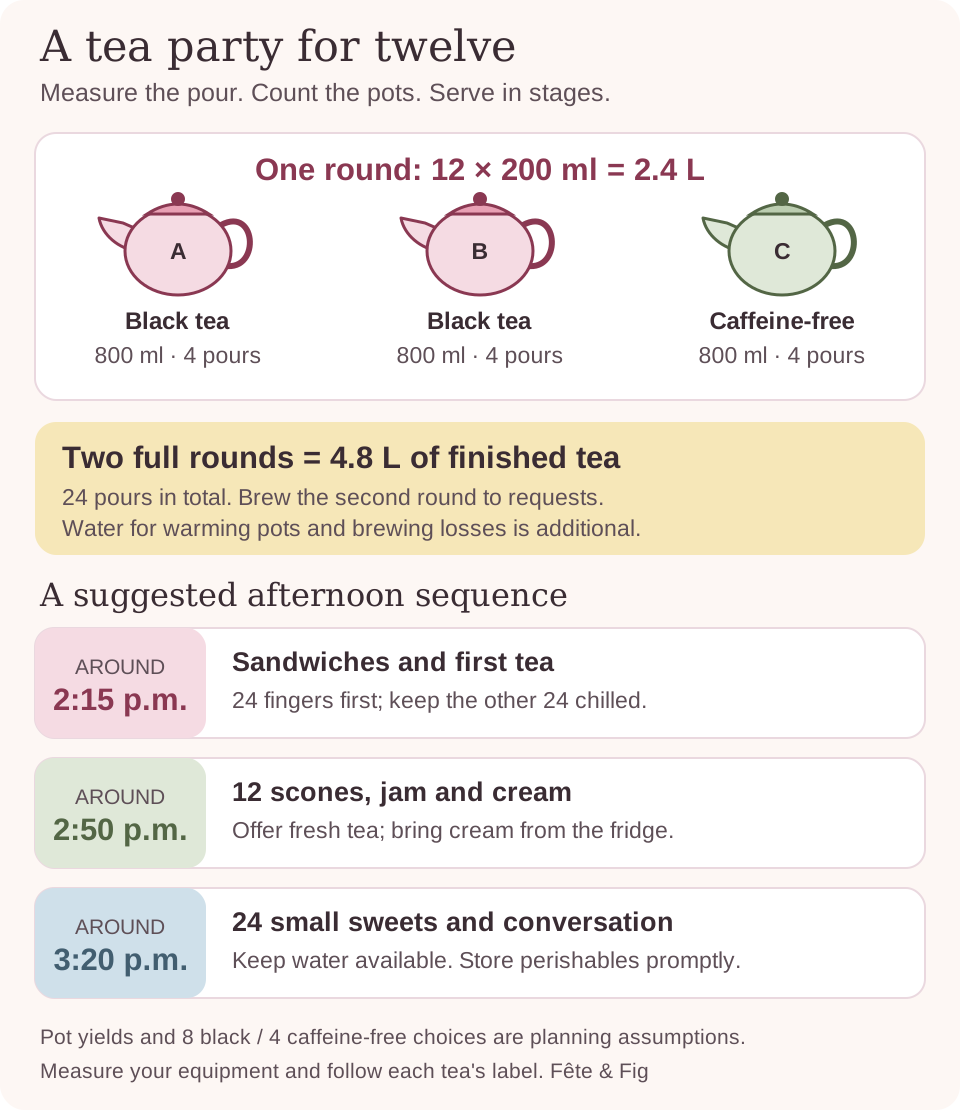
Next, check each pot’s comfortable serving yield. A pot advertised as one liter does not necessarily deliver one liter after allowing for its infuser, safe fill level and liquid left behind. For this plan, use three pots that each deliver 800 ml of finished tea, about 27 US fluid ounces, across four 200 ml pours. Check the yield with your chosen tea and equipment before relying on it for the party.
| Calculation | Result | Meaning for service |
|---|---|---|
| 12 people × 200 ml | 2,400 ml, or 2.4 L, per round | Twelve first cups |
| 800 ml ÷ 200 ml | Four cups per pot | Three filled pots cover twelve cups |
| 2.4 L × two rounds | 4.8 L of finished tea, about 5 US quarts | Capacity for twenty-four pours; make the second round to demand |
| Eight black-tea drinkers × 200 ml | 1.6 L per round | Two pots of black tea in this preference example |
| Four caffeine-free drinkers × 200 ml | 0.8 L per round | One separately labeled pot in this preference example |
The general formula is tea drinkers × pour size × number of rounds. Divide one round’s volume by a pot’s usable yield and round up to find how many pot fills that round needs. Those fills can be sequential if you own fewer pots; they do not have to mean buying more equipment. Check preferences again before the second round so you do not brew unwanted tea.
Choose one black tea and one clearly labeled caffeine-free infusion the guests want. Keep their packaging nearby. Dose and brew each according to its own instructions; different products need different amounts, water temperatures and steeping times. Twinings also directs readers to the blend’s packaging for the recommended brewing time. Remove the bags or infuser when the brew is ready.
If both chosen products specify one bag for a 200 ml serving, the example needs sixteen black-tea bags and eight caffeine-free bags for two full rounds. Keeping twenty and ten respectively gives a few spares. If your product uses a different dose, calculate from its label instead. Loose-leaf quantities follow the same volume calculation using the maker’s stated dose.
The 4.8 liters is tea available to drink, not an exact kettle-water requirement. Water used to warm suitable pots, absorption and pouring losses need additional capacity. A kettle with a 1.5-liter maximum cannot make one 2.4-liter round in a single boil. Heat water in batches within its marked limits and brew each pot with water at the temperature its tea requires. Serve a finished pot while the next batch heats instead of leaving all twelve guests waiting for simultaneous cups.
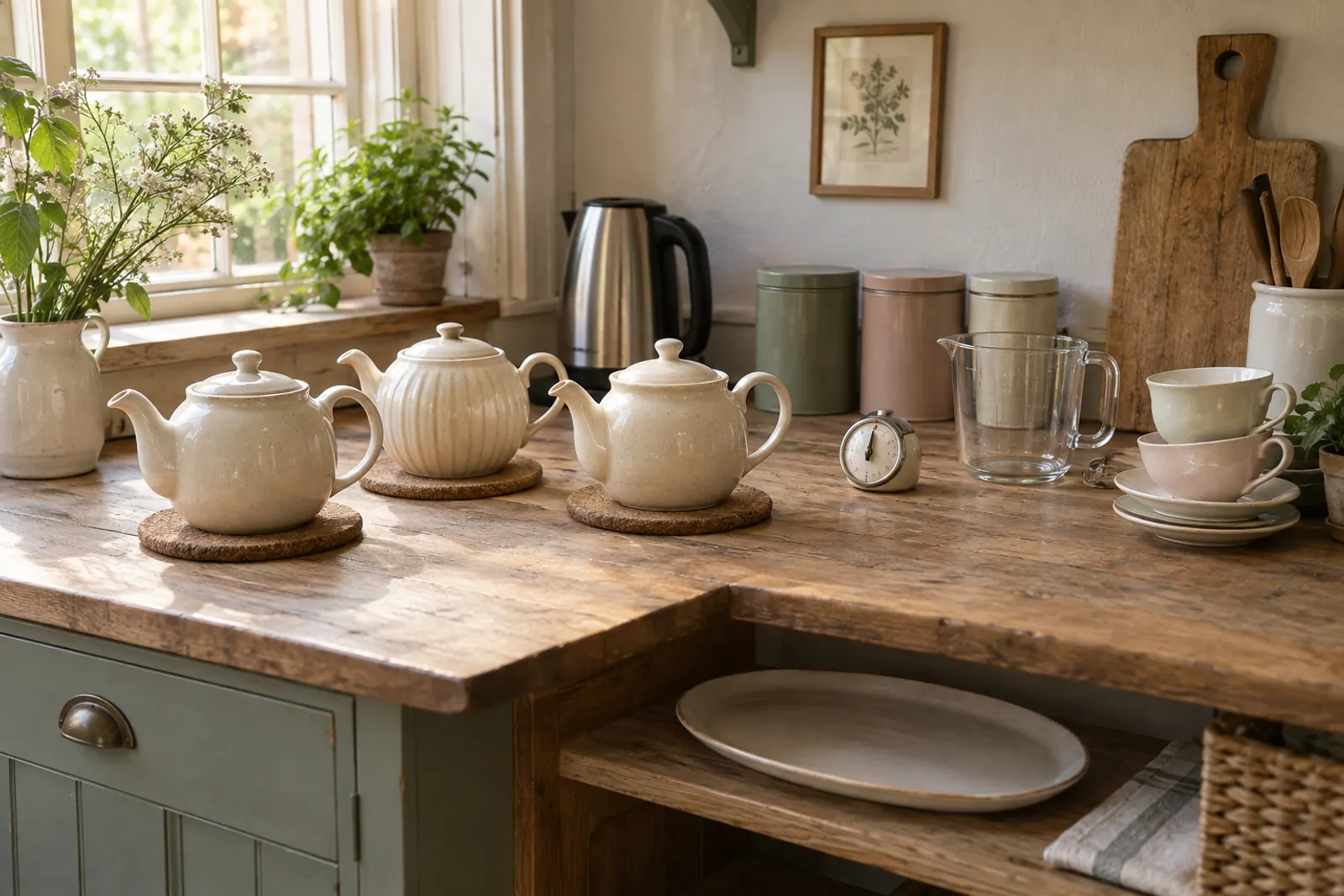
Set up a tea counter that one person can operate
Keep the kettle and brewing work on a stable kitchen counter, with the route to the seated guests clear. Guests should be able to reach drinking water without stepping into that work area. Use heatproof rests for the pots and keep their labels in place when the second round begins.
| Item | Count | Preparation |
|---|---|---|
| Cups or mugs, teaspoons and water glasses | 14 of each | Twelve settings plus two spares; use saucers if the cups need them |
| Small plates, forks, spreaders and napkins | 14 of each | One setting per guest; keep spares by the serving pieces |
| Teapots and heatproof rests | Three of each in the illustrated plan | Check 800 ml finished yield per pot; label two black tea and one caffeine-free |
| Kettle, measuring jug and timer | One of each | Record the kettle's capacity and each tea's instructions; time each pot separately |
| Infusers or strainers, if needed | One suitable set per tea pot | Keep the two tea choices separate |
| Milk jugs | One per milk choice | Label the contents; use small chilled refills |
| Sandwich platters | Four small platters | Two for the first batch and two clean replacements |
| Scone and sweet serving pieces | Two scone plates and two sweet plates | Six base-order scones per plate; twelve small sweets per plate |
| Jam and cream dishes | Two of each | Separate serving spoons; hold the cream cold until needed |
Have about 500 ml of milk or the requested alternatives available in total if the sixteen black-tea pours might each take 30 ml. That is a planning allowance of 480 ml rounded up, not a required amount in every cup. Adjust the type and quantity to replies. Start with three liters of drinking water available, about 3⅙ US quarts, and a straightforward way to refill it. Tea quantities do not replace access to water.
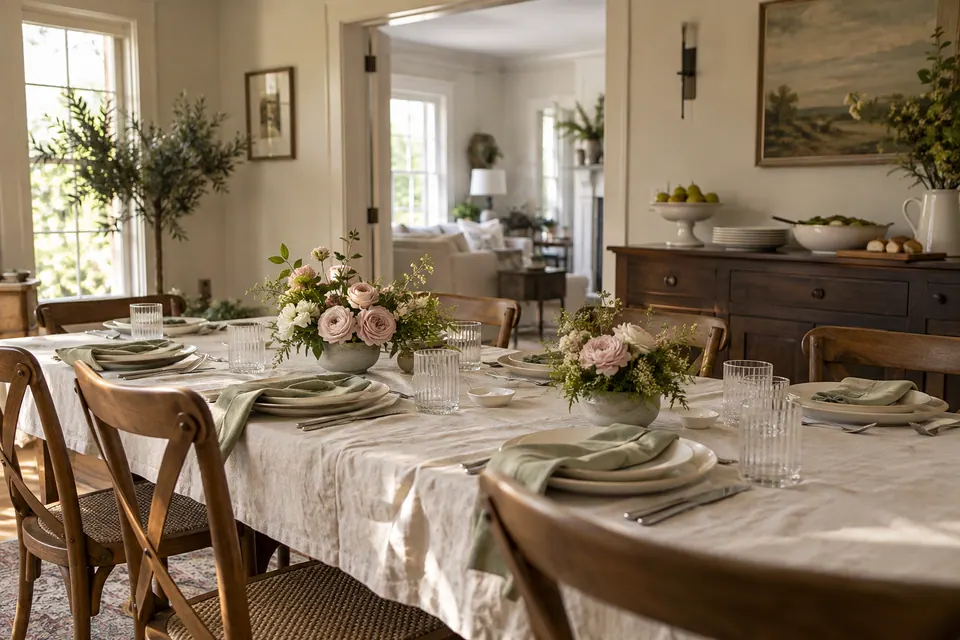
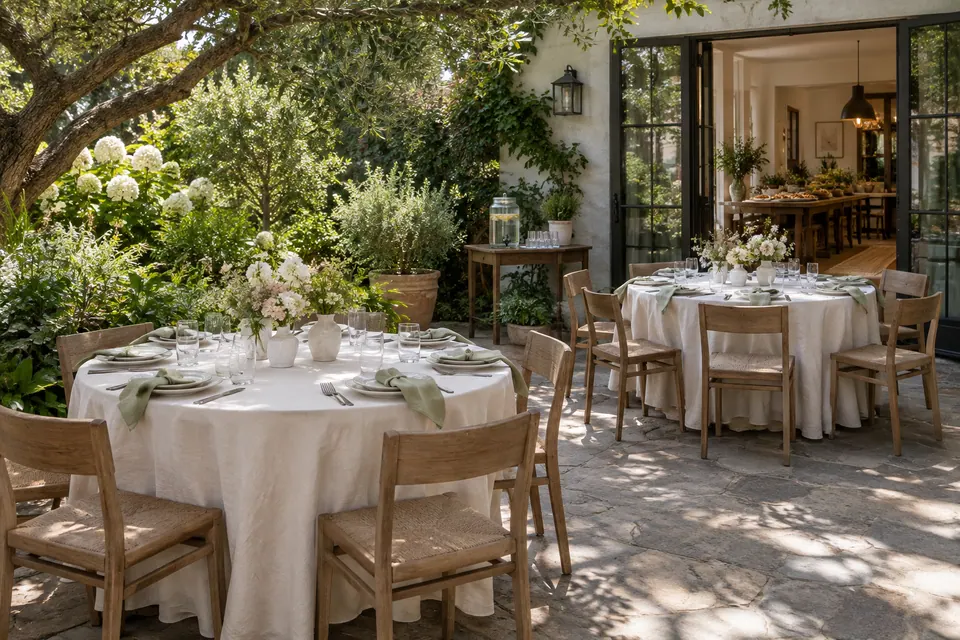
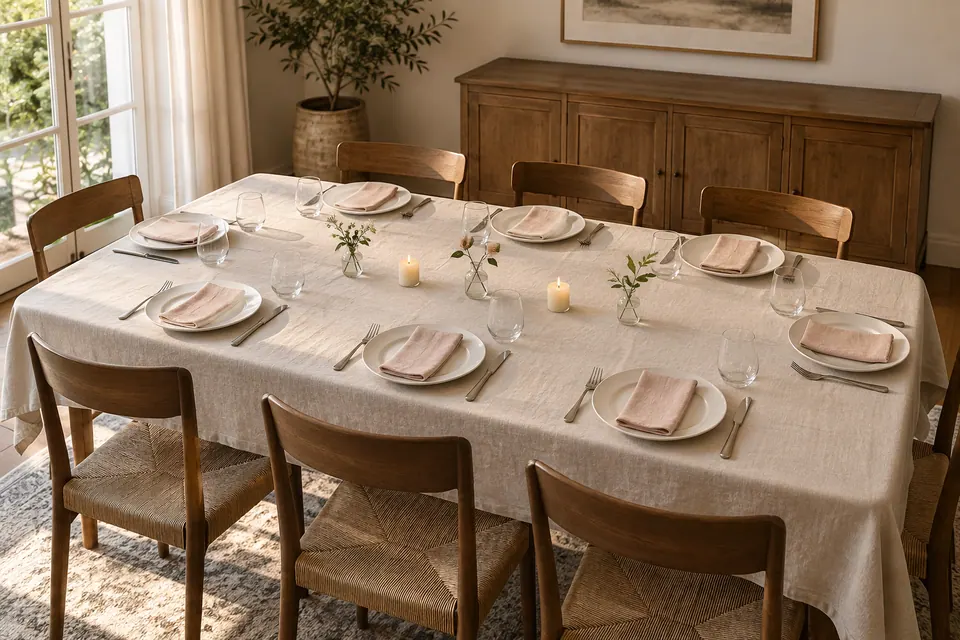
For the table, use a plain cloth, one napkin color and two short arrangements that leave sightlines open. Spread cups out at the actual seats before deciding where any stand belongs. The editable menu card can list the three courses and tea choices; ingredient information belongs beside the food as well. For name cards and small table signs you can make to match, use the measured projects in our DIY bridal shower decorations guide.
Serve in stages so tea and cold food stay manageable
Ask one host to handle tea while another welcomes guests and brings food. The following times leave room for conversation; they are event windows, not brewing or reheating instructions. Start the tea work early enough for your measured kettle and chosen teas.
| Time | At the table | Tea and food jobs |
|---|---|---|
| Before 2 p.m. | Set places, water and menu cards | Keep perishable food chilled; arrange dry tea supplies and read the brewing labels |
| 2 to 2:15 p.m. | Arrival, water and greetings | Confirm tea choices and start the first pots in sequence |
| Around 2:15 p.m. | Sandwiches and first tea | Bring 24 sandwich fingers first; keep the other 24 chilled, then replace platters as needed |
| Around 2:50 p.m. | Scones, jam and cream | Offer a fresh tea round; bring cream from chilled storage just before serving |
| Around 3:20 p.m. | Small sweets and conversation | Offer remaining requested tea and water; manage food storage before any activity |
| By 4 p.m. | Goodbyes | Finish the food-storage check, gather borrowed pieces and clear the tea counter |
Serve plain scones as supplied or warm them according to the bakery’s directions. If warming adds an oven job, give it to the food host and bring the cream separately. The menu also works with room-temperature scones, so a slow kettle does not need to compete with another last-minute task.
Keep perishable sandwiches, milk and cream at 40°F (about 4°C) or below until needed. Use clean replacement platters and track when each batch leaves temperature control, including preparation time. FDA guidance says to discard perishables left out for more than two hours, or one hour above 90°F (about 32°C). Moving them back into the refrigerator does not erase their earlier time out. Follow the product’s instructions and FDA’s buffet guidance; a 4 p.m. party finish is not automatically a food-storage deadline.
Make the shower details fit the afternoon
For a blue-and-white setting, the Something Blue bridal shower guide compares patterned tableware with plain pieces and blue linen. Keep the tea quantities from this guide, and use the theme’s counted decorations only where they leave room for cups and serving dishes.
Tell guests that tea, sandwiches, scones and sweets will be served from 2 to 4 p.m., and include a contact for food or access needs. Our bridal shower invitation wording offers adaptable examples. Keep the wider guest-list, budget and invitation work in the bridal shower planning checklist.
If the guest of honor wants an activity, give each guest a small card at the sweet course with one invitation: “Write a place you would take us for a lovely afternoon together.” Guests can suggest a nearby walk, a favorite cafe or their own kitchen table. Sharing aloud is optional. If gift opening is wanted, use that conversation window instead and let the food host finish storing perishables first.
With fewer teapots, pour in smaller groups and tell guests when their chosen tea is coming. With smaller cups, redo the volume calculation. The plan should follow the twelve people and the equipment in the room, with enough space between courses for the hosts to sit down too.
For twelve 200 ml tea pours, allow 2.4 liters of brewed tea per round. Three pots yielding 800 ml each can serve that round; brew again for refills.
Checklist from this story
0 / 8 ready