Something Blue Bridal Shower: Two Before I Do Setups
Choose between two Something Blue bridal shower setups for 12, with counted supplies, a measured refreshment table and practical invitation design choices.
See the refreshment table plan ↓- The guest list
- 12 adults, including the hosts and guest of honor
- A little preparation
- Choose the furniture and count borrowed pieces before ordering anything
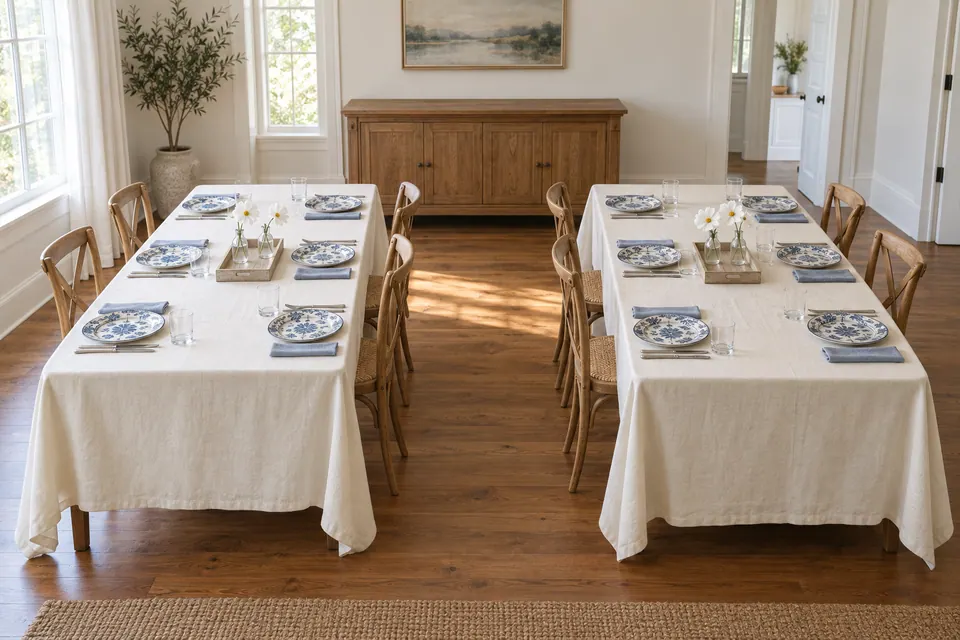
A Something Blue bridal shower can start with what you already own: patterned blue-and-white plates, or plain dishes paired with blue fabric. Below are two complete room and supply plans for twelve adults, including the hosts and guest of honor. The first uses two seated tables of six. The second uses three small tables of four and a compact refreshment surface.
“Something Blue Before I Do” works as the name on either invitation. It does not require blue food, matching favors or a backdrop at every station. Repeat blue in the places people actually use: their setting, the invitation and one service detail.
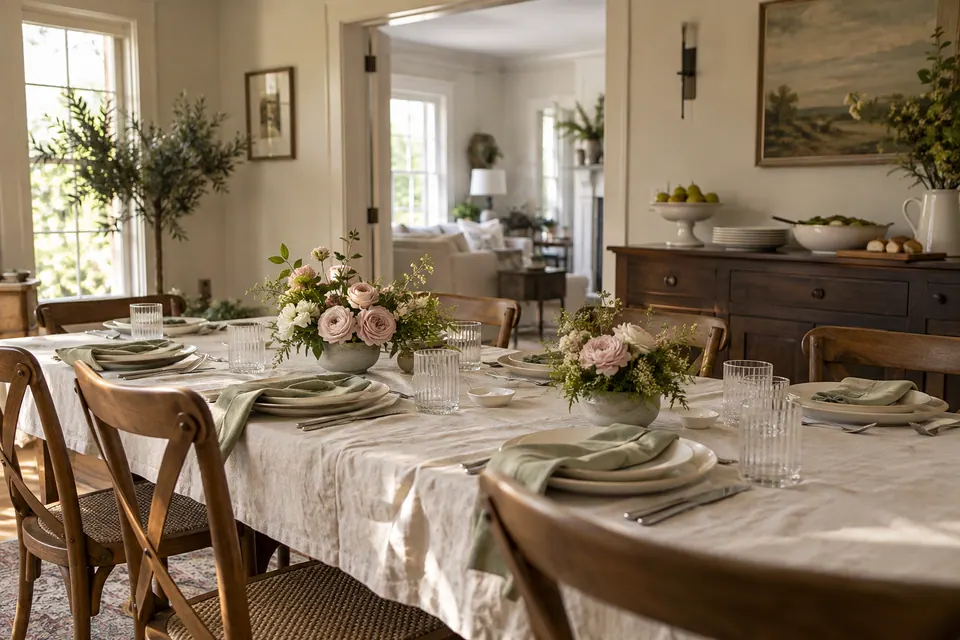
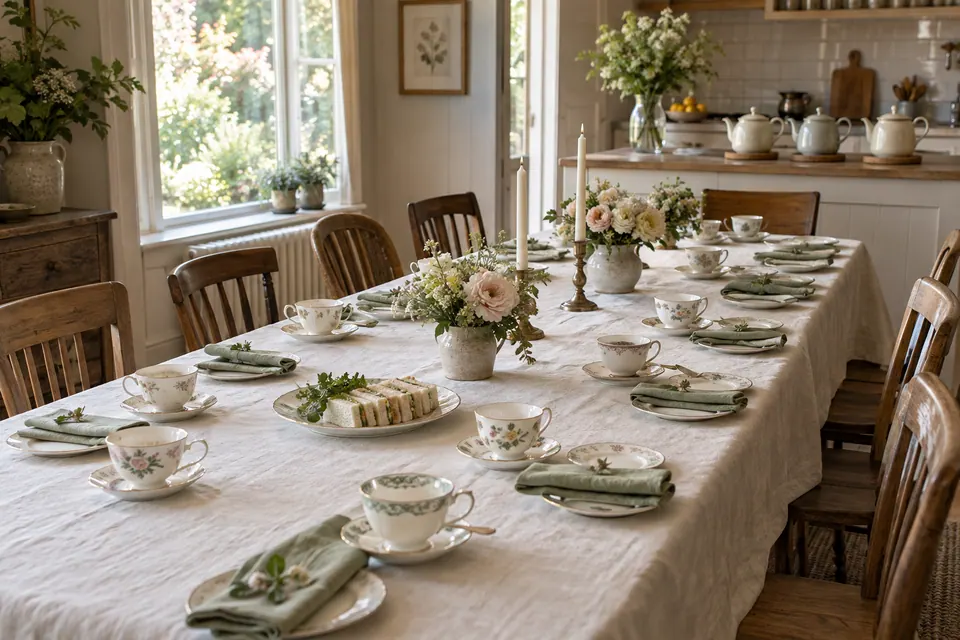
These are original proposed setups, not photographs of an event we hosted. Furniture dimensions and counts belong to the written plans; the AI-created images illustrate the styling rather than proving fit or measured clearance.
Choose the setup that matches your existing pieces
| Decision | A: patterned porcelain | B: plain glass and blue fabric |
|---|---|---|
| Start with | Borrowed blue-and-white plates, ordinary clear glasses and ivory cloths | Plain plates, clear tumblers, blue napkins and one blue runner |
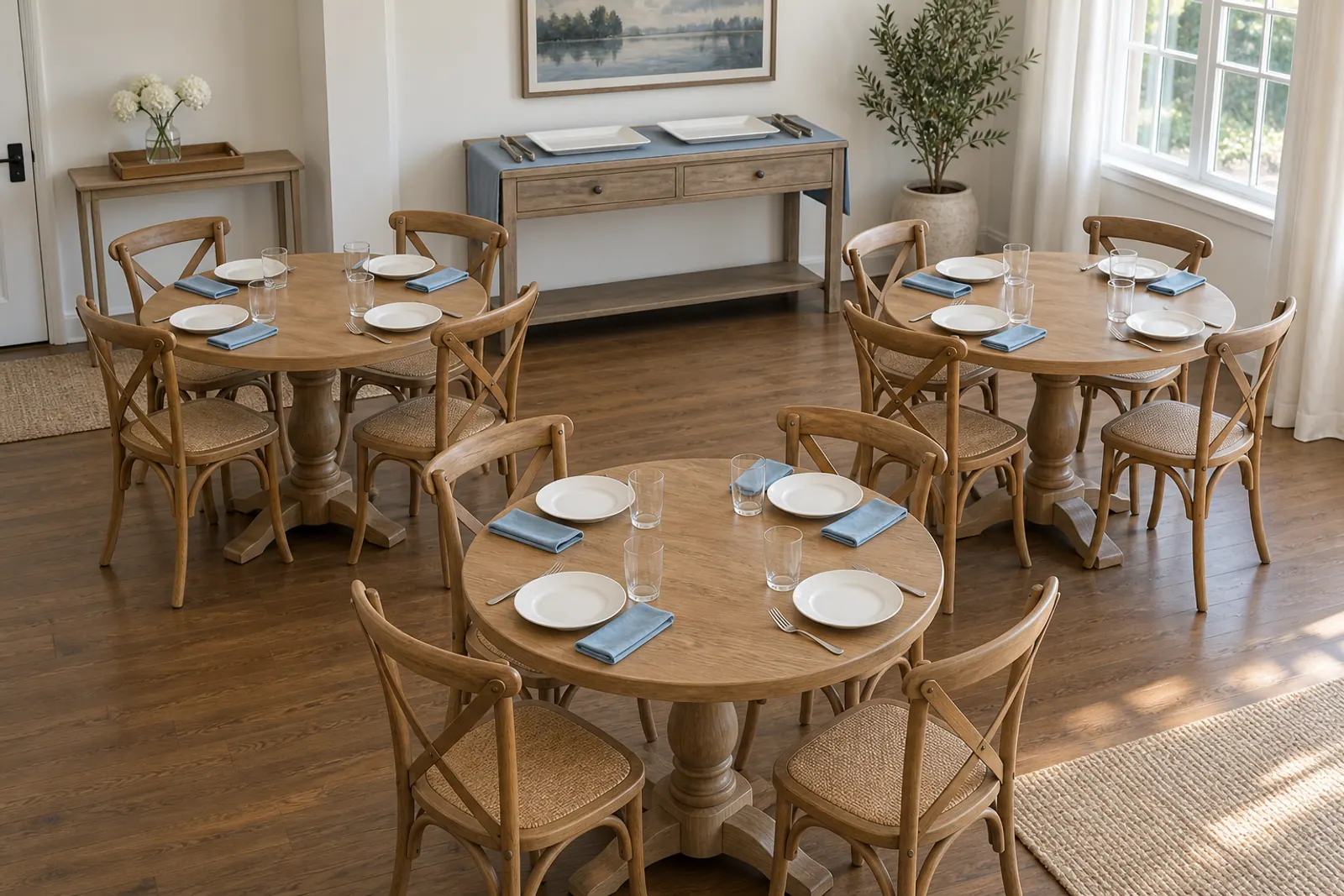
| Seating furniture | Two separate 72 × 36-inch tables, six chairs each | Three 36-inch round pedestal tables, four chairs each |
| Food surface | One 72 × 24-inch service counter; tea brewing elsewhere | One 48 × 24-inch refreshment surface; drinks elsewhere |
| Main preparation | Sort borrowed settings, fit two cloths and arrange four bud vases | Check twelve seats, measure two serving trays and plan replenishment |
| Possible borrowing need | The second table, matching-height chairs or enough patterned plates | Two additional round tables, chairs or serving trays |
| After the shower | Return counted porcelain and reuse plain linens and vases | Wash the blue fabric and return ordinary glassware and furniture |
Option B reduces the refreshment surface, not the number of seats or necessarily the room footprint. Three round tables may take more floor space than expected. Set out all twelve chairs, pull them back and walk from the entrance to every seat before committing. Adjust for table legs, wider chairs, doors and guests using mobility equipment; the dimensions here are not an accessibility specification.
Setup A: patterned porcelain at two tables of six
Place the two 72 × 36-inch tables separately. Seat three people along each long edge, with nobody at the short ends. Each 72-inch edge is divided among three guests, an illustrative 24 inches of edge per place. Try the actual chair widths before accepting that arrangement.
A finished 60 × 96-inch ivory cloth gives a 12-inch drop on all four sides of each table: (60 − 36) ÷ 2 and (96 − 72) ÷ 2 both equal 12. A different cloth can still work; check its drops with the tablecloth size guide.
Set one 12 × 8-inch low tray at the center of each table. Put two stable bud vases on each tray, each with a single short white flower. That is two trays, four vases and four flower stems in use. Keep the arrangements below seated sightlines. Reserve two clear tray-sized spaces on the service counter or another console so both centerpieces can be lifted away before food needs the space.
| Piece | Gather | Use at first service |
|---|---|---|
| Dining furniture | Two 72 × 36-inch tables and twelve chairs | Six seats per table, no end seats |
| Cloths | Two finished 60 × 96-inch cloths | One per table |
| Patterned plates, blue napkins, water glasses, forks and knives | 14 of each | 12 of each at the tables; two complete spare settings off the tables |
| Teacups, saucers and teaspoons | 14 of each | 12 at tea service, two spares |
| Small dessert plates | 14 | 12 brought out with sweets; two spares |
| Food serving pieces | Four platters and four tongs, one scone basket, two small accompaniment bowls and two spoons | Two platters in use and two clean replacements; wash and change the pieces between courses as needed |
| Tea preparation pieces | Three teapots, three suitable rests and a kettle or other suitable hot-water source | The linked tea plan checks a usable 800 ml yield per pot; also gather milk and alternative jugs for the guests' choices |
| Decor trays and vases | Two 12 × 8-inch trays and four stable vases | One tray and two vases per dining table |
| White flower stems | 6 | Four in use and two replacement stems |
| Food and drinks surfaces | One 72 × 24-inch food counter and a separate suitable tea counter | Confirm the actual pots, kettle, serving pieces and safe cable route before choosing the positions |
For a 2 to 4 p.m. gathering after lunch, use the base menu in our bridal shower tea party for twelve: 48 sandwich fingers, 12 scones and 24 small sweets, with jam and cream quantities and the brewing equipment detailed there. Those are afternoon refreshments, not twelve full lunches. The tea guide also supplies the pot-yield calculation, so buying teacups does not silently become an assumption about tea capacity.
Serve sandwiches, then scones, then sweets. Keep the relevant serving pieces on the food counter and let one host bring each course. Move the flower trays when needed instead of arranging hot pots around them. If you cannot provide the separate tea preparation space, choose the simpler drinks format in Setup B.
Setup B: plain glass and a compact refreshment table
Use three bare 36-inch round pedestal tables with four seats at each. Start with a plain 8-inch side plate, folded blue napkin, fork and clear tumbler per place. Keep every tabletop center empty; the four settings and their real glass bases get priority.
Dress a 48 × 24-inch refreshment console with a blue runner. A finished 14 × 72-inch runner, centered lengthwise, has 12 inches beyond each short end and leaves 5 inches of bare surface on either long side. Check that it lies flat and cannot be pulled from a chair or walking route.
Put the single flower arrangement on a separate welcome console: one 10 × 8-inch removable tray, one stable clear vase and three short white stems. Keep an equally large landing area free on that console. The arrangement never occupies a food tray position.
| Piece | Gather | Allocation |
|---|---|---|
| Guest furniture | Three 36-inch round tables and twelve chairs | Four guests per table; check actual legs and elbow room |
| Side plates, forks, tumblers and blue napkins | 14 of each | 12 in use and two of each spare |
| Dessert plates and dessert forks | 14 of each | Keep separate until the sweet course; two spare settings |
| Refreshment console and runner | One 48 × 24-inch console; one 14 × 72-inch runner | Two serving vessels at a time |
| Serving trays | Four with outside footprints no larger than 16 × 12 inches | Two in use and two clean replacements |
| Serving tongs | Four with stored footprints no larger than 12 × 2 inches | Two in use and two clean replacements; change for a suitable utensil if the food requires it |
| Flowers | One 10 × 8-inch tray, one vase and four stems | Three stems displayed and one spare |
| Drinks | Separate 36 × 18-inch counter, two suitable jugs and one wiping cloth | Water and one alcohol-free drink, with refill supplies available |
| Food information | Three small cards and their holders | One per food type; keep supplier ingredient details available |
For the same after-lunch time window, one simple order is 24 filled mini rolls, 12 individual fruit cups and 24 small shortbread pieces. This assumes two mini rolls, one fruit cup and two small sweets per person across the gathering. Confirm the size and fillings with the supplier and reserve complete suitable portions for guests who need an alternative. This is an illustrative order, not a tested catering yield or a full-meal promise.
Start with six rolls on one tray and six fruit cups on the other. Keep 18 rolls and six fruit cups properly stored for replenishment, rather than relying on the small counter to hold the entire order. Later, clear the savory service and bring shortbread in batches of six. Check that the actual items, including cup rims and tray handles, fit before accepting these batch sizes. A smaller dish needs a smaller batch and more frequent attention.
Measure the small refreshment surface
The drawing isolates Setup B’s 48 × 24-inch top. Its example footprints are deliberately smaller than the whole surface. Food volume and usable tray interiors still need an actual check.
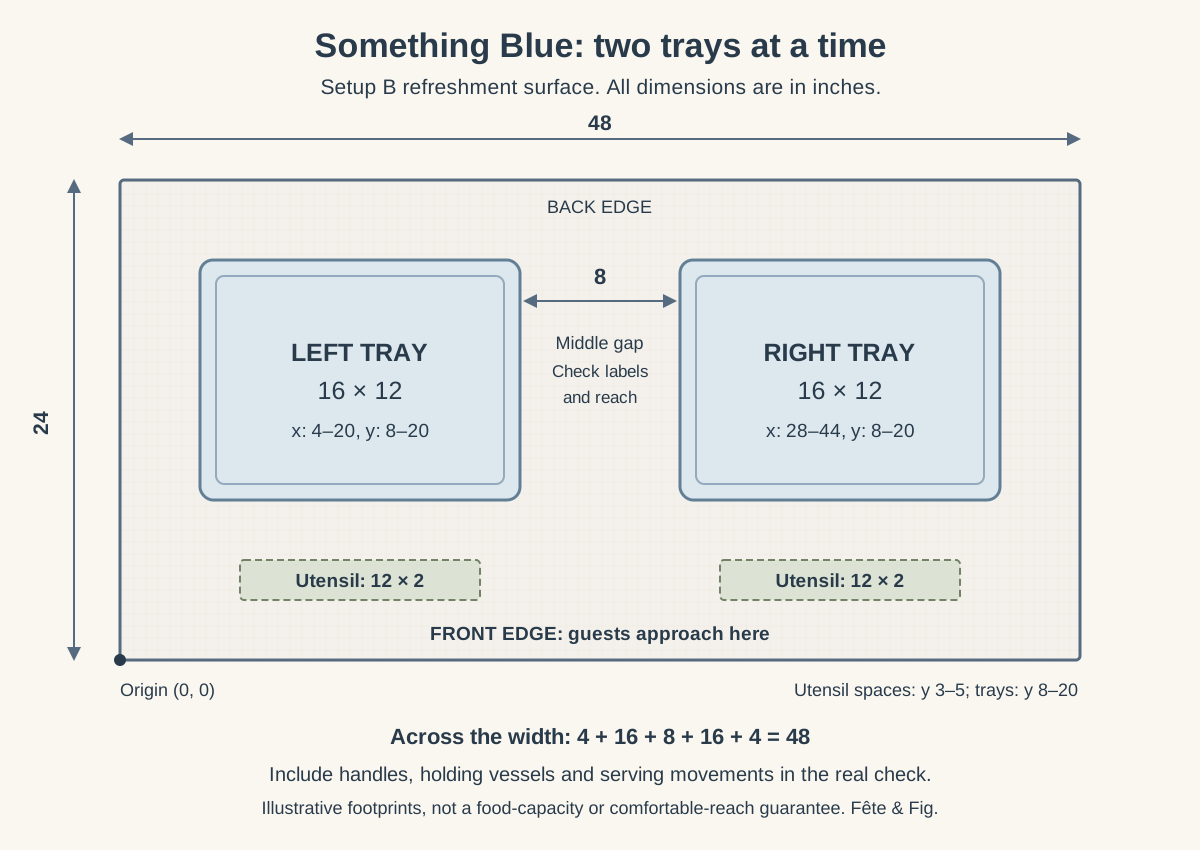
| Footprint | Left to right, x | Front to back, y | Outside size |
|---|---|---|---|
| Whole surface | 0 to 48 | 0 to 24 | 48 × 24 |
| Left tray | 4 to 20 | 8 to 20 | 16 × 12 |
| Right tray | 28 to 44 | 8 to 20 | 16 × 12 |
| Left utensil space | 6 to 18 | 3 to 5 | 12 × 2 |
| Right utensil space | 30 to 42 | 3 to 5 | 12 × 2 |
Across the width, 4 + 16 + 8 + 16 + 4 = 48 inches. Each tray has four inches behind it. The utensil spaces are three inches behind the front edge and three inches in front of the trays. Place the food cards in the middle gap only if their real holders leave serving movements clear. If you need an ice bath or another holding vessel, its entire footprint replaces the listed tray footprint; it does not become invisible extra space.
One host needs to replenish this small service area while another welcomes guests. Keep reserve perishables refrigerated and put out small batches. FDA advises holding cold foods at 40°F or below and hot foods at 140°F or above; discard perishable food left without temperature control for more than two hours, or one hour above 90°F. Count preparation and transport time too. See FDA’s buffet safety guidance.
Carry the blue detail into the invitation design
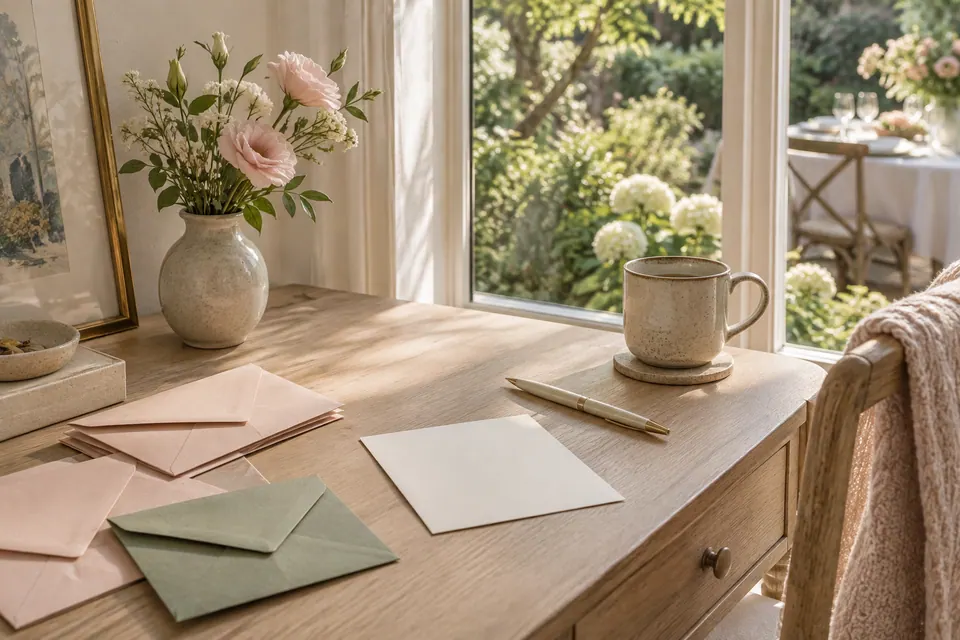
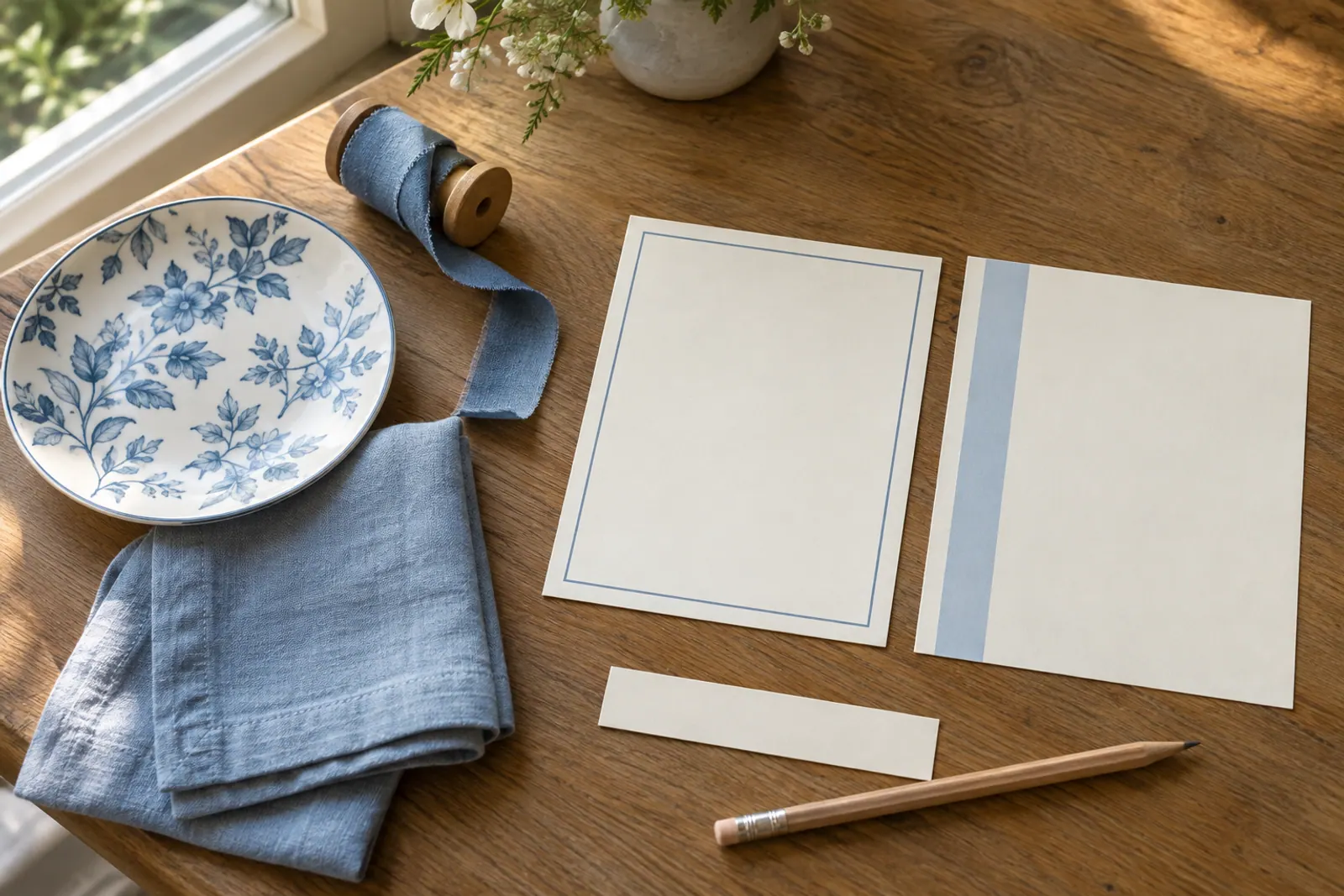
For patterned porcelain, choose an ivory invitation with a thin blue border and a small original botanical detail. For plain tableware and blue linen, choose a wide blue side band or a simple blue heading. The two blank cards in the photo compare those directions; they are not downloadable invitation templates.
When buying or commissioning a design, check its finished size, editable fields, print margins, digital version and whether text remains readable at the size guests will receive. Ask for a proof containing your actual details. A pale blue background can work with dark text; avoid placing a pale blue script over a busy pattern. Use artwork you made or have permission to use, rather than copying a pattern from another designer’s invitation.
A short starting point is:
Something Blue Before I Do
Please join us for a bridal shower honoring [name].
[Day, date], 2 to 4 p.m.
[Full venue name and address]
Afternoon refreshments will be served.
Please reply to [host and contact] by [date], including any food or access needs.
Add the guest of honor’s preferred name and the real service format. Use the bridal shower invitation wording guide for the complete detail check. This theme guide helps you choose the design direction; wording alone does not supply a finished invitation file.
Put the setup together in a useful order
- Before borrowing or buying: choose A or B, check the room with all chairs and count complete settings. Record gaps in the bridal shower budget worksheet, using actual quotes rather than assumed prices.
- The day before: wash and count dishes, fit the fabric, place empty food vessels and label their jobs. Prepare the tray landing areas and write down who owns each borrowed item.
- Before guests arrive: finish the low flowers, set the twelve places and check the route to the bathroom. Keep food stored according to its instructions while you finish nonfood jobs.
- During the shower: one person welcomes and directs guests; another handles food, clean replacement trays and time checks. Clear the first course before bringing out sweets.
- Afterward: store eligible food promptly, count borrowed pieces against the original list and wash the fabric for reuse. Let the guest of honor take the flowers if they want them.
Keep wider invitations, task assignments and deadlines in the bridal shower planning checklist. The theme is complete when the chosen pieces work together and twelve people can use the room comfortably; extra decorations are optional.
Use patterned blue-and-white plates for two seated tables of six, or plain tableware and blue fabric for three groups of four. Keep twelve seats in either plan and move decorative pieces away from food service.
Checklist from this story
0 / 8 ready