A Garden Party Bridal Shower for 12: Layout, Menu and Rain Plan
Plan a garden party bridal shower for twelve with outdoor and indoor layouts, counted table supplies, a sandwich lunch menu and a practical weather plan.
- The guest list
- 12 people, including the hosts and guest of honor
- A little preparation
- Confirm the space before invitations; prepare table supplies the day before
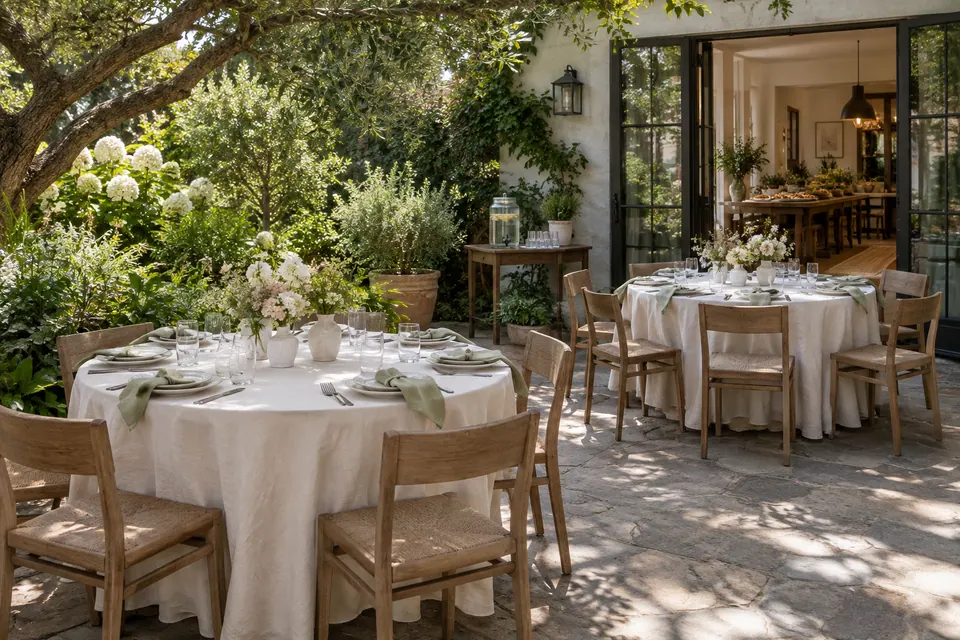
A garden party bridal shower for twelve works well around two tables for six, a sandwich lunch and time to talk over cake. Use pale flowers and green napkins to connect the tables, but settle the seating, shade and indoor alternative before buying decorations.
This proposed lunch runs from noon to 2:30 p.m. and counts the hosts and guest of honor among the twelve. It is an original planning example, not a record of a shower we have hosted. Ask the person being celebrated whether they want a shower, who should come, and whether games or gift opening would be welcome.
Give the garden and the house the same guest count
For this example, use two stable 60-inch round tables, about 152 cm across, with six chairs around each. Try the actual chairs; wide arms and table supports may reduce the usable positions. Six evenly spaced places divide each table’s edge into arcs of about 31 inches, but that calculation does not tell you whether the surrounding route is comfortable.
Keep the buffet on an indoor counter or table near the garden entrance, with the door and walking route clear. This makes it easier to keep refill portions stored appropriately. Place drinks away from the buffet so someone filling a glass does not stop the food line. Keep gifts on an indoor console and leave both dining tables for eating.
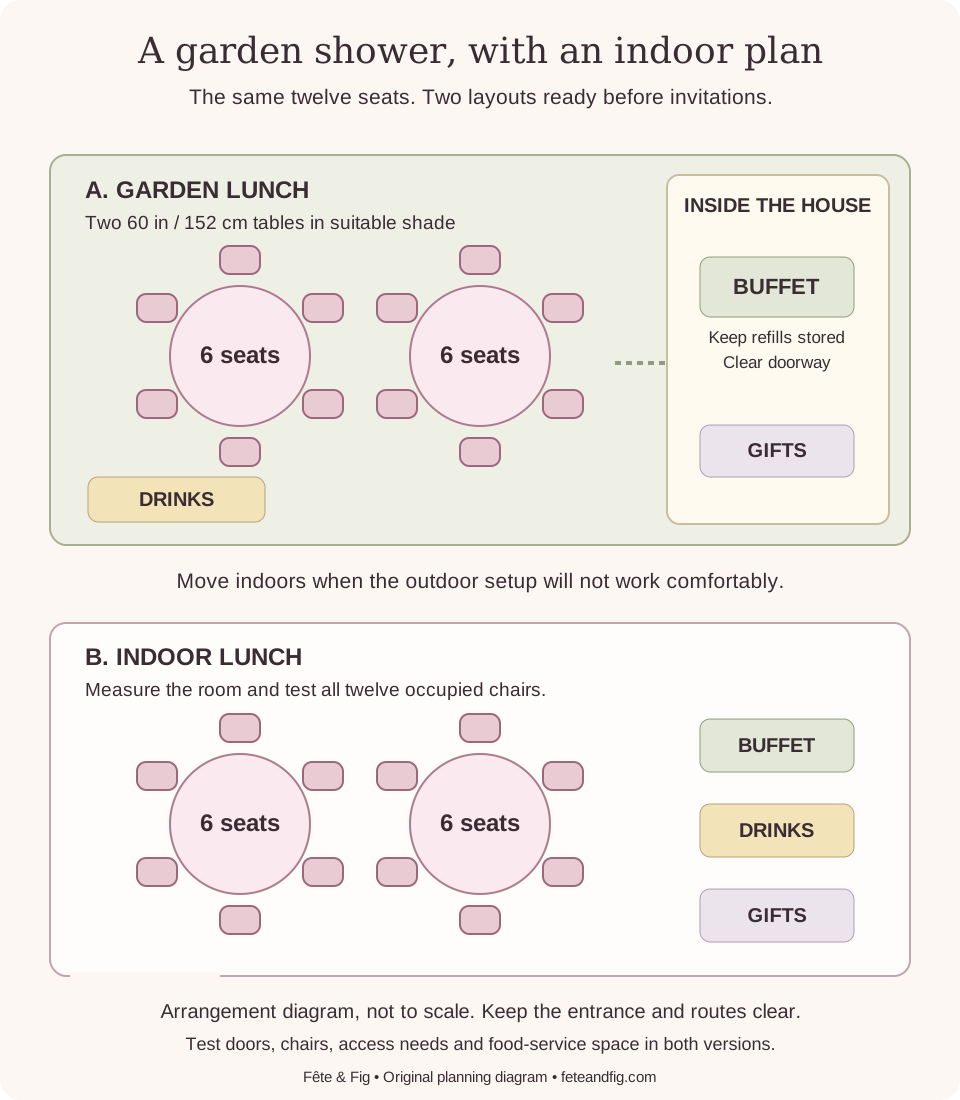
| Zone | Garden arrangement | Indoor alternative |
|---|---|---|
| Seats | Two 60-inch round tables, six chairs at each, in suitable shade | The same two tables and twelve chairs in rooms you have measured |
| Food | Indoor counter or table close to chilled storage | The same counter or a separate buffet surface that leaves the route clear |
| Drinks | Separate stable surface outside, close to the house | Side table away from the doorway and buffet |
| Gifts | Indoor console away from the entrance | Keep the same position if it remains clear |
| Guest route | Entrance, seat and bathroom reachable without crossing serving work | The same destinations, tested with chairs occupied |
Check shade at noon and again at the expected end time. A tree or awning that shades the empty table in the morning may not shade the seats during lunch. If the available shelter or temperatures will be uncomfortable, use the indoor arrangement. Tell guests about grass, gravel, steps and the actual access route in the invitation or details message.
Tape the two table circles onto the indoor floor, put the chairs in place and walk the routes before accepting the room as your backup. Move furniture only if there is somewhere suitable to store it. If all twelve seats cannot work inside, arrange a different venue or smaller gathering before invitations go out.
Set two tables with a counted floral kit
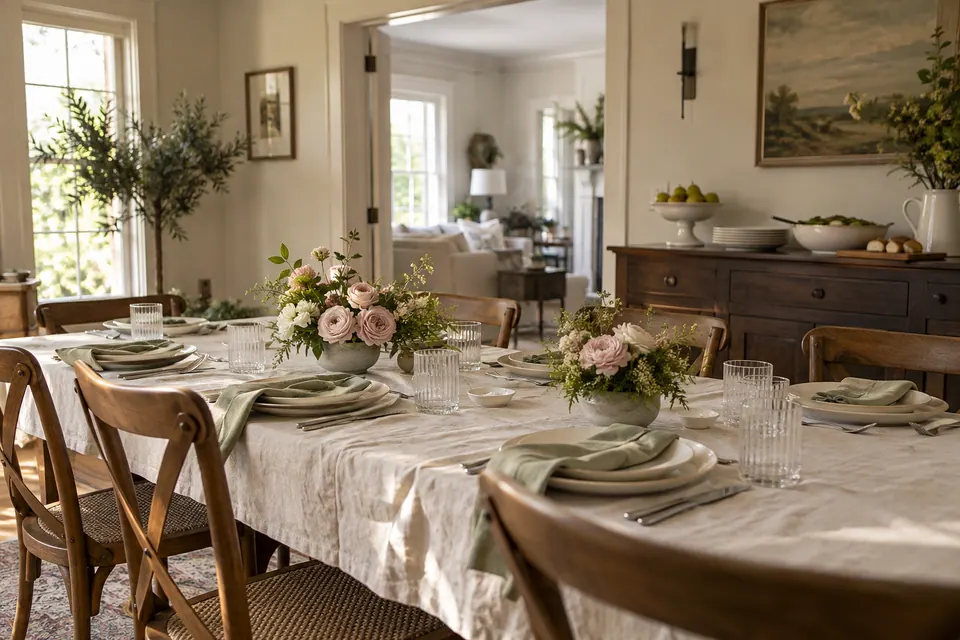
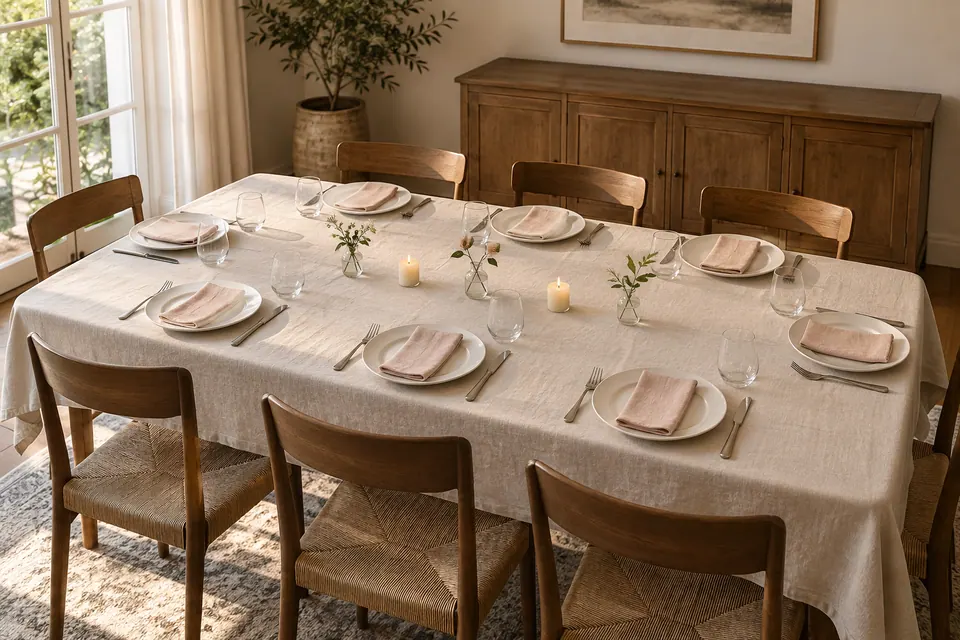
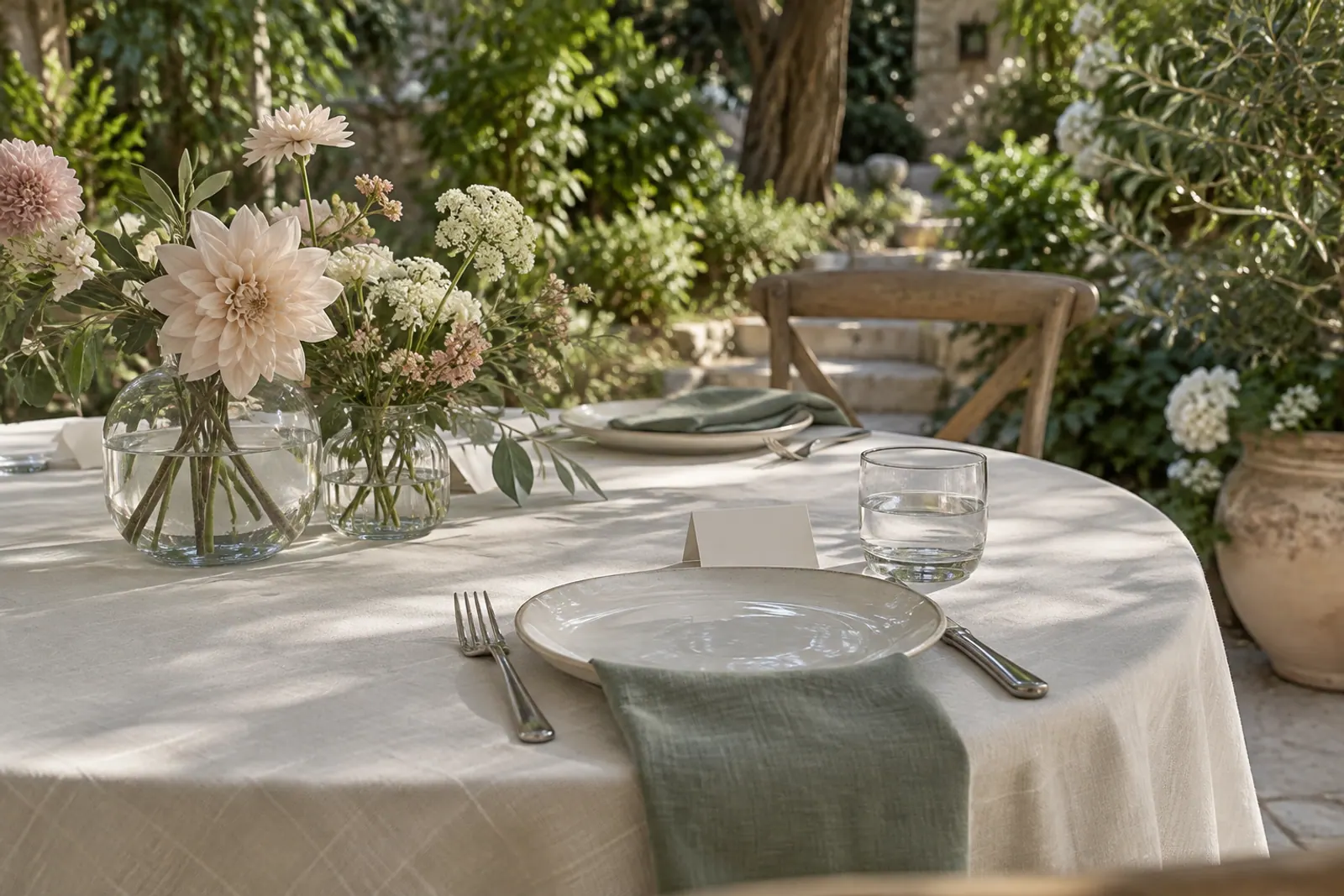
Use an ivory cloth on each table, soft green napkins and four short vases of the same pale flower. Two vases per table are enough to repeat the theme while leaving room for plates and glasses. Keep arrangements low enough that guests can see one another while seated.
| Item | Quantity for this plan | Placement or calculation |
|---|---|---|
| Round tablecloths | Two, each 90 inches across, about 229 cm | A 15-inch drop on a 60-inch table |
| Lunch plates, dinner forks and knives | Fourteen of each | Twelve places plus two spare pieces of each |
| Water glasses and napkins | Fourteen of each | Twelve places; keep the spares with the service supplies |
| Dessert plates and forks | Fourteen of each | Bring twelve of each with the cake |
| Small stable vases | Four | Two per table |
| Flower stems | Fifteen | Three per vase, with three replacements |
| Name cards | Twelve | Six around each table |
| Menu cards | Two | One per table |
| Serving pieces | Two sandwich platters, two salad bowls, two fruit bowls and one cake plate | One suitable utensil per dish; a cake knife and server for dessert |
| Welcome or memory cards | Fourteen, if using the optional activity | Twelve plus two spare sheets, with pens |
The editable menu card can carry the lunch choices without repeating ingredient details on every place card. Keep accurate food labels by the buffet and retain the ingredient information from purchased dishes.
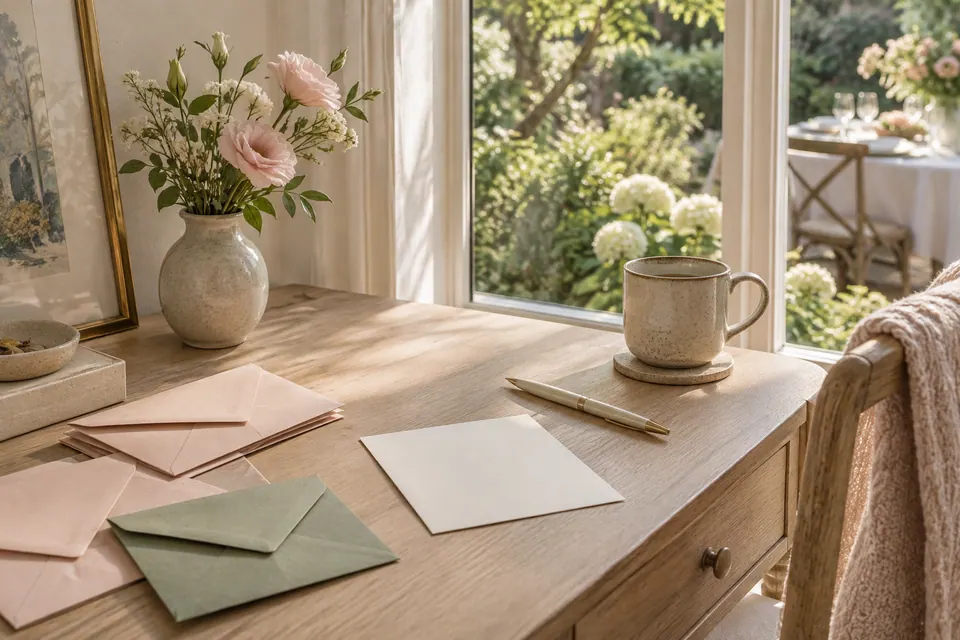
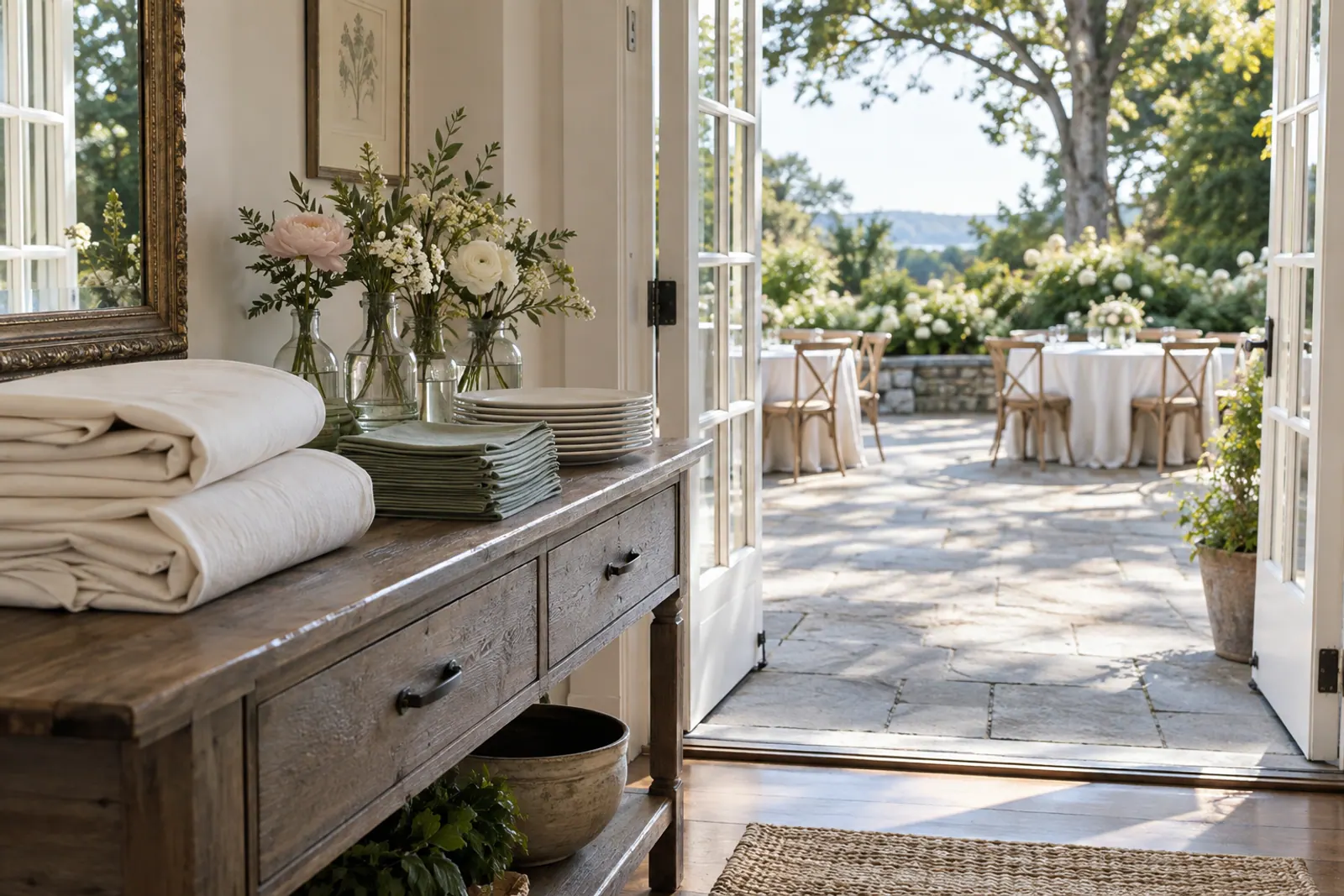
Lay out linens and paper details indoors the previous afternoon. Move them out after the weather decision and keep napkins secured beneath plates until guests sit down. This saves repeating the setup after dew, wind or an unexpected shower.
Serve a sandwich lunch with clear portion assumptions
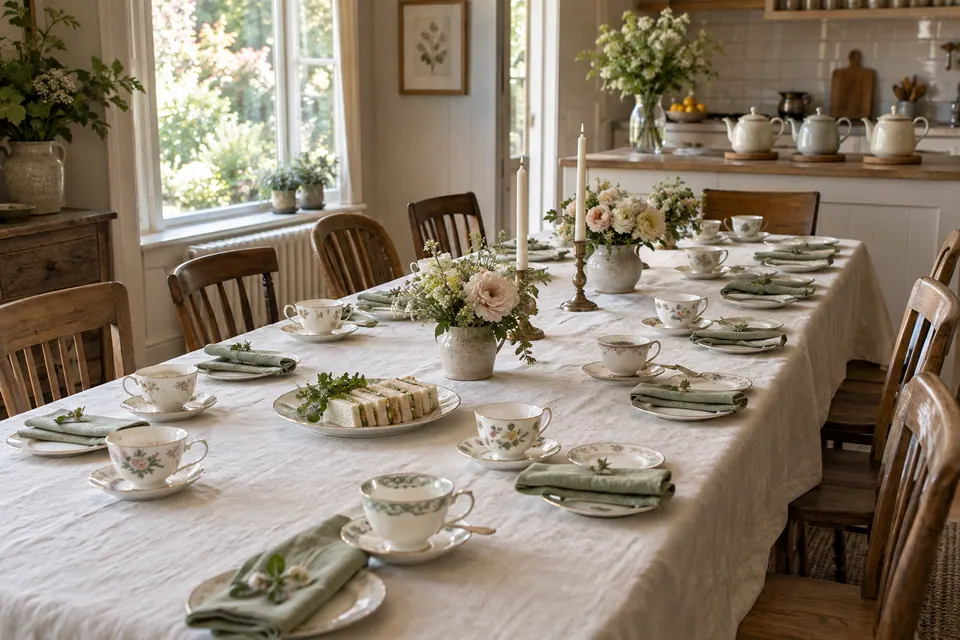
This plan uses a sandwich lunch. If you prefer afternoon tea, use the separate bridal shower tea party menu and equipment list, then keep the garden seating and weather checks from this guide.
This menu assumes twelve adults eating sandwiches as the main meal, with two salads, fruit and cake. The quantities are starting shopping estimates, not a tested catering formula. Adjust for the people coming, the supplier’s portion size and any full replacement meals needed.
| Buy or order | Starting amount | What the number means |
|---|---|---|
| Filled medium rolls | Eighteen whole rolls | One per person plus six for seconds; eighteen sandwich halves would be a different amount |
| Fillings | Three choices, initially six rolls of each | Change the split to match replies; reserve the appropriate meals for guests who need them |
| Prepared grain, pasta or potato salad | 1.5 kg, about 3⅓ lb | Approximately 125 g per person as a side |
| Prepared green salad | 600–800 g, about 1⅓–1¾ lb | Approximately 50–67 g per person |
| Prepared fruit | 1.2 kg, about 2⅔ lb | Approximately 100 g per person |
| Cake | Twelve confirmed servings | Ask the baker what a serving looks like; order extra if you want a reserve |
| Water and alcohol-free drinks | Six liters to start, about 6⅓ US quarts | For example, four liters of water and two of another drink, with refills available |
| Coffee and tea | Supplies for twelve to eighteen cups combined | Serve with cake; count cups, milk or alternatives and sweetener |
A vegetarian filling alone does not resolve every food need. Agree on suitable food and handling with the relevant guests, then label their reserved servings clearly. A guest should not have to discover at the buffet that all the food they can eat has already gone.
Put out a small first batch and keep refills in appropriate storage. Use clean replacement dishes instead of adding fresh food to a platter that has been out. Record when perishable food leaves temperature control; the food’s service clock begins then, even if guests are still arriving. Follow FDA guidance on safe buffet holding and time limits, and discard food that has exceeded those limits.
Make the weather decision while there is time to act
Pick a decision time based on the work needed to move indoors and when guests will travel. For local guests, the evening before might be practical; long journeys or equipment hire can require an earlier decision. Name the host who will check the forecast and send the update.
| Situation | Action | Message or task |
|---|---|---|
| Outdoor setup remains suitable | Confirm shade, routes and stable furniture | Set up outside after the final check |
| Rain, heat or wind would make lunch uncomfortable | Use the measured indoor arrangement | Tell guests the indoor location and whether footwear or arrival instructions changed |
| The backup cannot hold the group | Arrange another viable location before the event | Send the full address and any revised timing |
| Thunder is heard during the gathering | Move everyone into a suitable enclosed building promptly | Leave tableware and decorations until people are inside |
An umbrella, tent or open-sided shelter is not a lightning shelter. The National Weather Service’s outdoor lightning guidance explains why people need a safe building or an appropriate enclosed vehicle. The party’s indoor plan should be ready before weather forces a hurried decision.
Keep the guest message plain: “Lunch will be indoors at the same address. We will still begin at noon.” If the address changes, give the complete new address instead. Do not make guests infer the plan from a forecast screenshot.
Put the last jobs in order
Use the bridal shower planning checklist for invitations, replies, supplier deadlines and named task owners. For this garden plan, the final setup depends on three earlier decisions: all twelve seats fit, the menu matches the replies and the indoor alternative is usable.
The day before, confirm the food order, gather the counted settings, arrange the flowers and label the empty serving pieces. Assign one person to food replenishment and another to welcome guests and point out the drinks. If there are only two hosts, they can share clearing after the meal.
On the morning, check the chosen space, bathroom and arrival route first. Set the tables and drinks supplies before putting out any food. Follow the supplier’s collection and storage instructions, and give the cake knife, server and dessert plates a place of their own so they are ready later.
Leave room for lunch and conversation
| Time in this example | What happens | Host’s service job |
|---|---|---|
| Noon to 12:20 p.m. | Arrival, drinks and greetings | Welcome guests; keep food stored until service |
| 12:20 to 1:20 p.m. | Seated sandwich lunch | Replenish small batches, refill water and store or discard food as appropriate |
| 1:20 to 1:35 p.m. | Optional memory-card activity | Offer cards and pens; guests may write, talk or pass |
| 1:35 to 2:05 p.m. | Cake, tea and coffee | Bring dessert plates and serve the cake |
| 2:05 to 2:30 p.m. | Conversation and goodbyes | Gather belongings and help with departure |
For the activity, invite guests to write one happy memory with the person being celebrated or a wish for their wedding day. Sharing aloud is optional. Give the cards to the honoree afterward if the writers are happy for them to be kept.
If the honoree wants gift opening, replace the activity and part of the final conversation window with time for it. If they prefer talking over cake, keep that plan. The same tables, menu and weather arrangements work without a game.
Use two round tables for six, keep the food station close to indoor storage and test the same twelve seats inside before inviting guests.
Checklist from this story
0 / 7 ready