Mocktail Bar Ideas: Two Cold Drinks and a Complete Plan for 12 or 24
Plan a mocktail bar for 12 or 24 with two juice spritzes, exact batch quantities, shopping counts, chilled reserves and free printable serving cards.
Get the mocktail batch and serving plan ↓- The guest list
- A two-hour indoor gathering for 12 or 24 adults
- A little preparation
- Taste one serving, chill the ingredients and assign one refill host
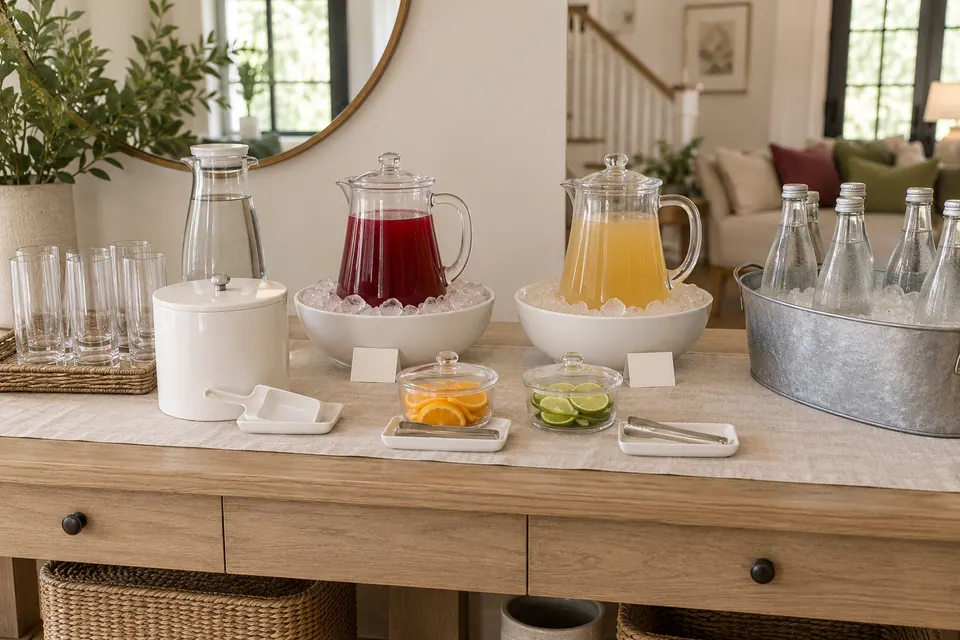
The most manageable mocktail bar ideas use two clearly different drinks, a plain-water option and a host who can replace the chilled bases. For this plan, guests choose a cranberry-orange spritz or an apple-lime spritz. You measure the juice base once, add sparkling water in the glass and keep extra base covered in the refrigerator.
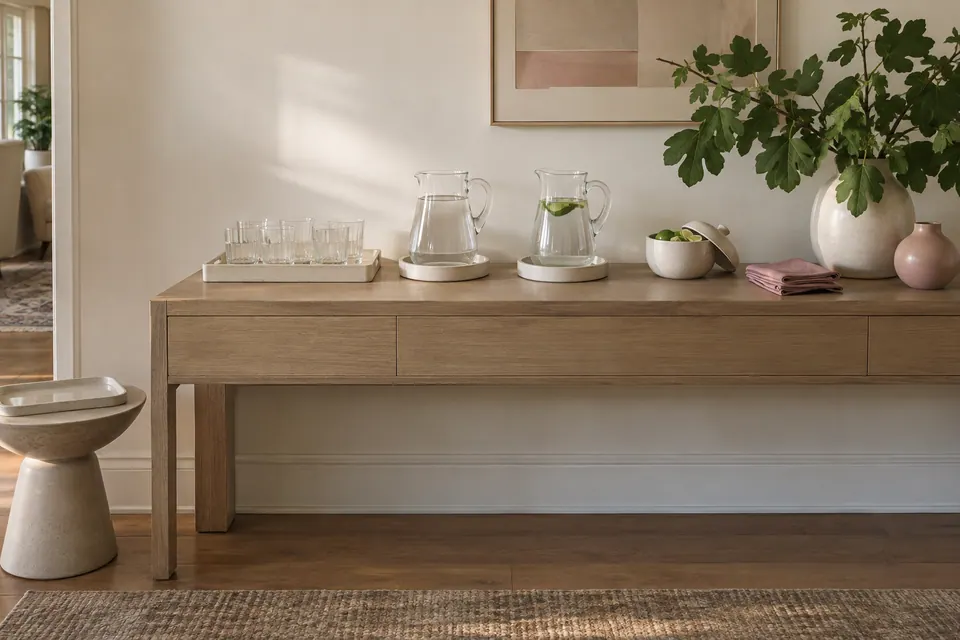
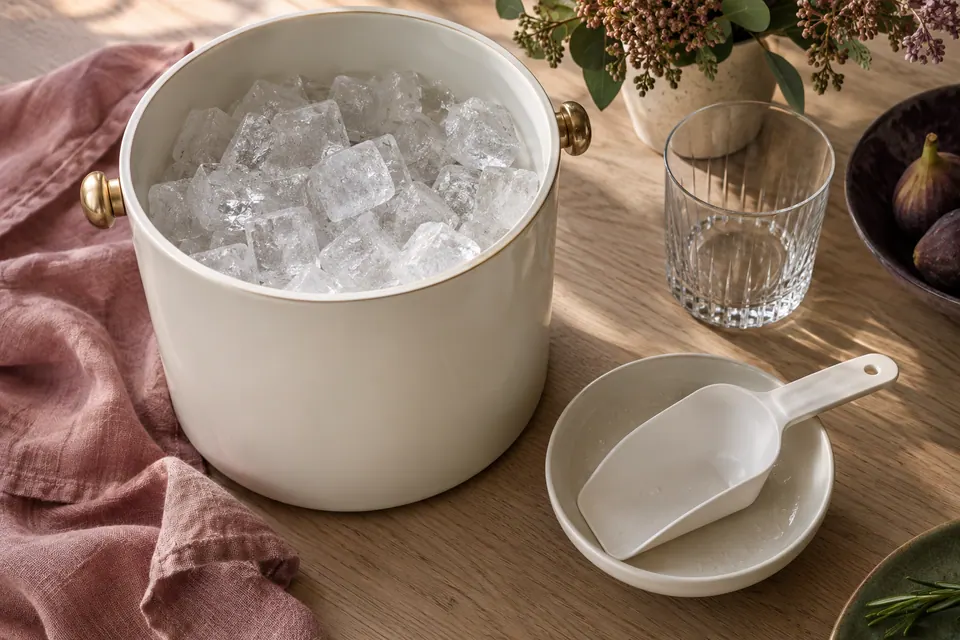
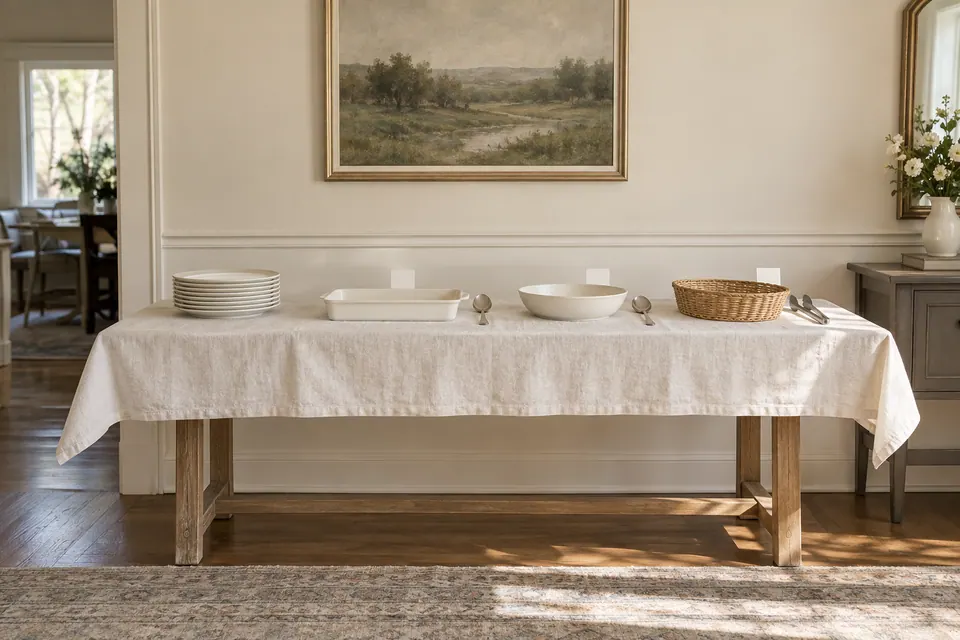
The quantities below are an original planning example for a two-hour indoor gathering of 12 or 24 adults, with two 240 ml drinks per person. We have not prepared or tasted these drinks. Make one serving with your actual juice products before committing to the batch; sweetness, acidity, glass fit and guest demand can change the plan. The AI-created images illustrate the serving concept and do not document an event.
Set the serving count before choosing containers
Two drinks per person is a starting allowance for this particular gathering, not a hydration recommendation or a promise about demand. The example splits demand equally between the two flavors. Ask guests about preferences and change that split before shopping if one is clearly more popular.
| Plan | 12 guests | 24 guests |
|---|---|---|
| Total mocktail servings | 24 | 48 |
| Cranberry-orange servings | 12 | 24 |
| Apple-lime servings | 12 | 24 |
| Liquid per serving, before ice | 240 ml, about 8.1 US fl oz | 240 ml, about 8.1 US fl oz |
| Total mocktail liquid | 5.76 L | 11.52 L |
| Separate plain-water starting stock | 6 L | 12 L |
The water stock assumes 500 ml per guest with more potable water available if needed. Increase provision for a longer event, heat or guest preferences. It is separate from the sparkling water used in the drinks.
Use metric milliliters for the batch arithmetic; the US fluid-ounce figure is only an approximate comparison. Ice and garnish do not count toward the 240 ml liquid allowance. Start the fit check with a tumbler around 400 ml, then try the actual 240 ml liquid, your measured ice portion and optional slice. Choose a larger glass or less ice if that combination reaches the rim.
Mix two drinks from measured juice bases
Buy pasteurized juice products and plain, unflavored sparkling water. For the red drink, use a cranberry juice drink or blend you like, not unsweetened cranberry concentrate. For the gold drink, use apple juice and ready-to-use lime juice, not lime concentrate. Check each label and its storage instructions. The recipes add no syrup, bitters, fermented mixer or spirit.
| Drink and ingredient | One serving | 12 servings | 24 servings |
|---|---|---|---|
| Cranberry-orange: cranberry juice drink | 90 ml | 1,080 ml | 2,160 ml |
| Cranberry-orange: orange juice | 60 ml | 720 ml | 1,440 ml |
| Cranberry-orange: sparkling water | 90 ml | 1,080 ml | 2,160 ml |
| Apple-lime: apple juice | 90 ml | 1,080 ml | 2,160 ml |
| Apple-lime: lime juice | 30 ml | 360 ml | 720 ml |
| Apple-lime: sparkling water | 120 ml | 1,440 ml | 2,880 ml |
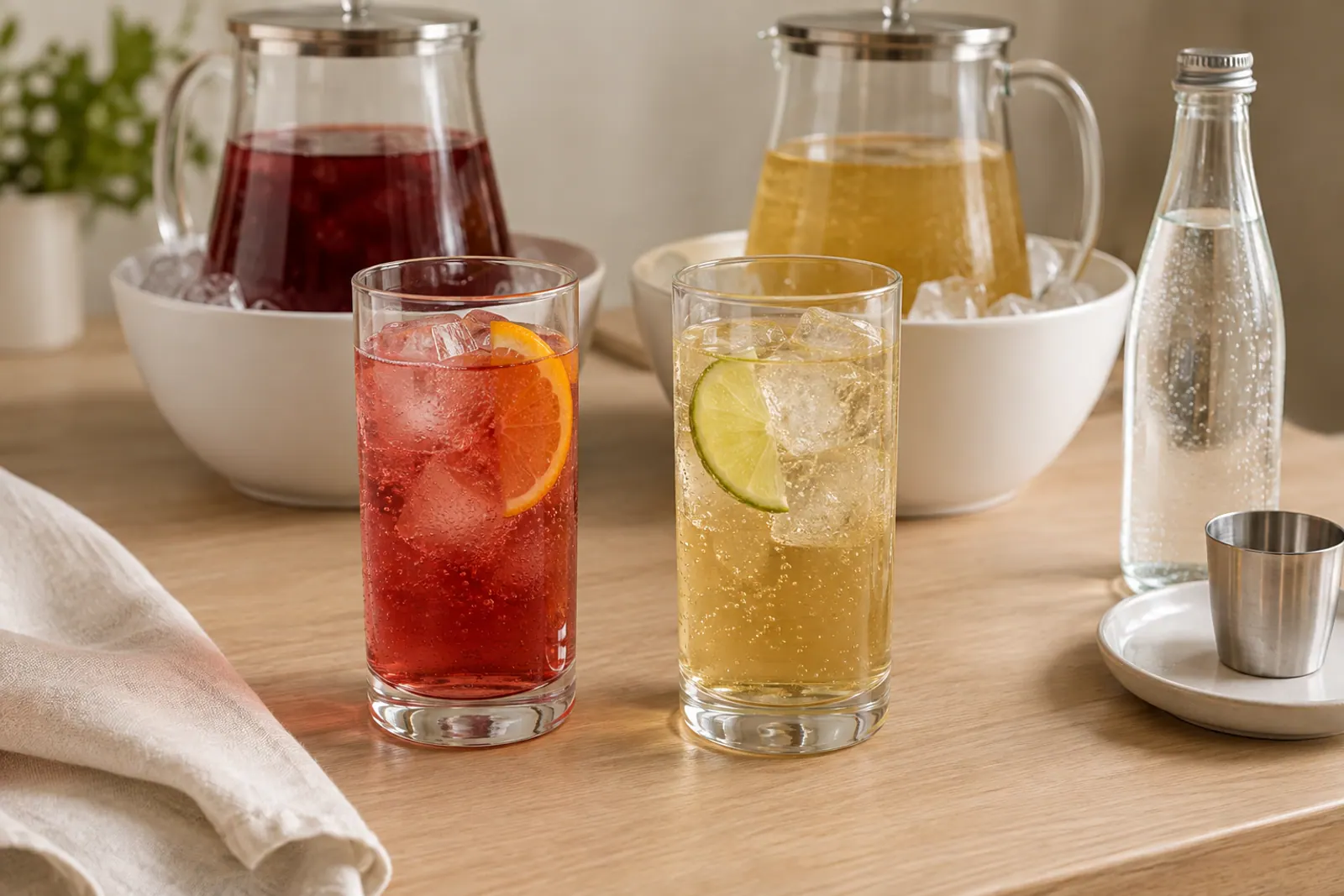
Cranberry-orange: combine the cranberry and orange juices to make a base. For one glass, measure 150 ml base, then add 90 ml sparkling water. Add your checked ice portion and, if wanted, one thin orange slice. Stir gently with a clean utensil.
Apple-lime: combine the apple and lime juices to make a second base. For one glass, measure 120 ml base, then add 120 ml sparkling water. Add your checked ice portion and an optional thin lime slice. Stir gently with a separate clean utensil.
For the one-serving taste check, mix the individual juice amounts in the table before adding water. If the apple-lime is too tart for your chosen juice, try 105 ml apple juice and 15 ml lime juice, keeping the base at 120 ml. Write the chosen formula on the serving card and update the shopping quantities: at 12 servings that version needs 1,260 ml apple juice and 180 ml lime juice; at 24 it needs 2,520 ml and 360 ml. Do not keep the old shopping list after changing the recipe.
You can also serve a single flavor. For example, 24 cranberry-orange servings for 12 guests need 2,160 ml cranberry juice drink, 1,440 ml orange juice and 2,160 ml sparkling water. The total liquid stays 5.76 L. That is a menu choice, not a third physical station layout.
Turn the batch into a shopping list
The worked purchase list assumes 1 L juice cartons, 250 ml lime-juice bottles and 500 ml sparkling-water bottles. Use the net volume on the actual package and round up: packages to buy = required volume divided by package volume, rounded up. No store price or package availability is assumed.
| Ingredient | 12 guests: required / buy | 24 guests: required / buy |
|---|---|---|
| Cranberry juice drink, 1 L cartons | 1.08 L / 2 cartons | 2.16 L / 3 cartons |
| Orange juice, 1 L cartons | 0.72 L / 1 carton | 1.44 L / 2 cartons |
| Apple juice, 1 L cartons | 1.08 L / 2 cartons | 2.16 L / 3 cartons |
| Ready-to-use lime juice, 250 ml bottles | 0.36 L / 2 bottles | 0.72 L / 3 bottles |
| Sparkling water, 500 ml bottles | 2.52 L / 6 bottles | 5.04 L / 11 bottles |
| Optional garnish portions | 12 orange slices and 12 lime slices | 24 orange slices and 24 lime slices |
The rounded package surplus is not an additional prepared batch. Keep unopened extras as reserve and follow package directions for any opened leftovers. If a purchased lime juice needs dilution, use its instructions to obtain the ready-to-use volume first or choose another product.
For garnish shopping, cut one fruit in the style you want and count its usable slices. Then divide the garnish target by that yield and round up. An orange or lime does not have a fixed slice yield across sizes. The downloadable shopping sheet has a field for that check. Skip garnish entirely when it complicates service or a guest prefers a plain drink.
Prepare in stages and keep the reserve cold
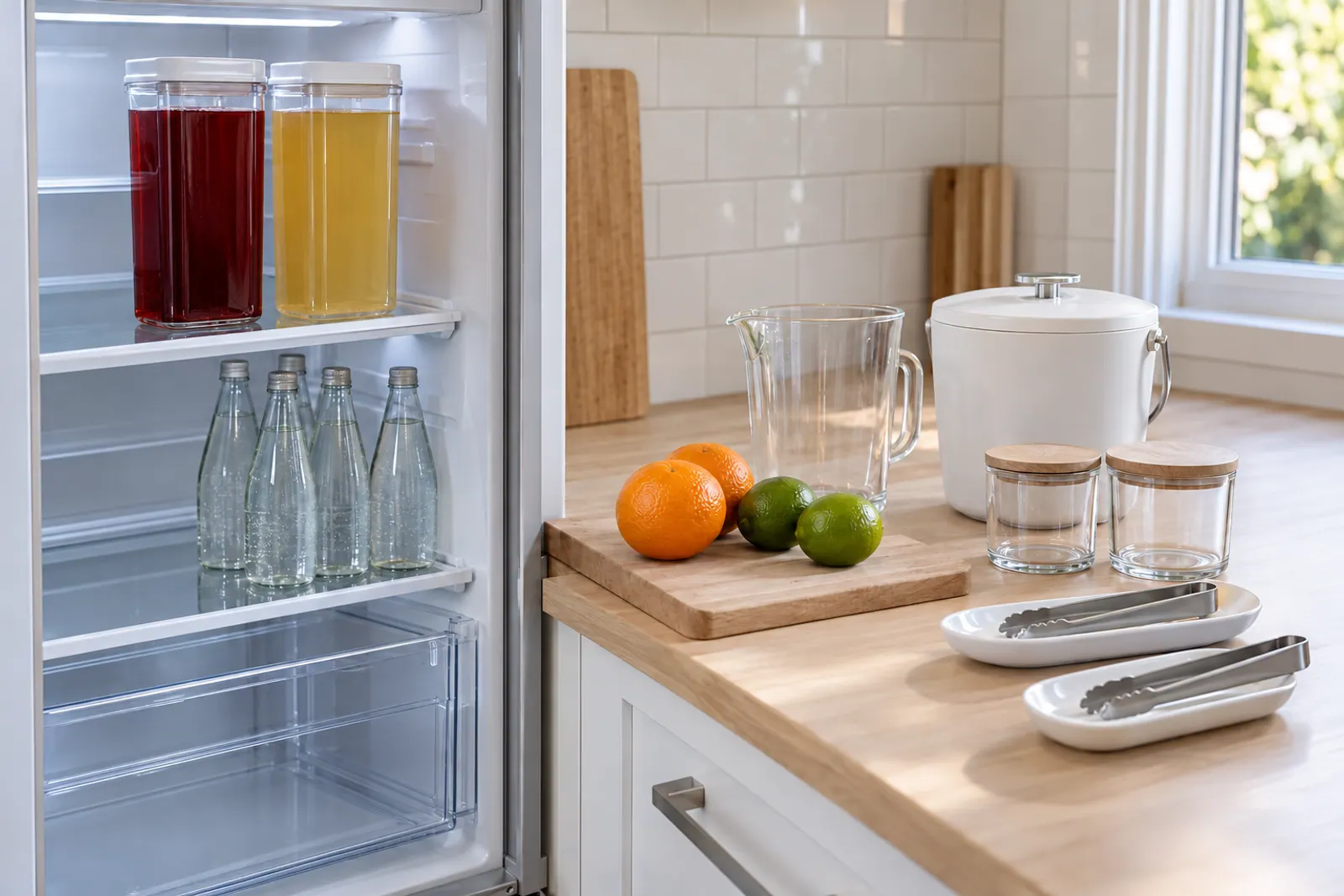
Start by checking refrigerator space, container lids and the actual equipment. For each flavor, use a clean serving pitcher with enough working capacity for its first 12 servings of base: 1.8 L cranberry-orange base or 1.44 L apple-lime base. A nominal 2 L pitcher is only a candidate; verify its usable fill level, safe lifting weight and lid fit. For 24 guests, keep a second covered 12-serving base of each flavor in the refrigerator and replace the first container when needed.
For smaller pitchers, halve the batch: a six-serving cranberry base is 540 ml cranberry plus 360 ml orange juice; a six-serving apple base is 540 ml apple plus 180 ml lime juice. This gives 900 ml and 720 ml base respectively. Use more small replacements instead of filling a pitcher beyond its working limit.
| When | Host task | Ready condition |
|---|---|---|
| Before the shopping order | Taste one serving; check guest preferences, product labels, glass fit and fruit slice yield. | The actual formula and package sizes are written down. |
| Day before | Chill unopened juices and sparkling water; wash serving equipment; reserve refrigerator and ice-storage space. | Cold storage reads 40 F / about 4 C or below. |
| One to two hours before | Measure the two juice bases into clean covered containers and refrigerate. Wash, cut and cover only the needed garnish. | Every container has its flavor, ingredients and preparation time recorded. |
| Just before guests arrive | Set out the first small chilled containers, clean cups, tools and water. Start the holding record. | A host has checked the actual base and garnish temperature. |
| During service | Measure base and water; replace near-empty base and garnish containers; clear drips and used cups. | The reserve remains covered and cold; old and fresh batches are not mixed. |
For fresh citrus, wash hands for 20 seconds, rinse the fruit under running water before cutting, use clean equipment and keep it away from raw-food preparation. FDA advises against soap or produce wash and recommends refrigerating perishable and pre-cut produce at 40 F or below. FDA produce guidance.
Keep refrigerated juice bases and perishable garnishes at or below 40 F / about 4 C during service. A decorative bowl of ice does not prove that the liquid is cold enough; use a clean food thermometer and follow the actual product’s storage instructions. If you cannot maintain that temperature, use smaller service batches and track their cumulative time out of refrigeration. Discard perishables that have been above safe cold holding for more than two hours, or one hour when the air is above 90 F / about 32 C. Refrigerating them again does not reset that elapsed time. FDA buffet holding guidance.
Add sparkling water in the glass shortly before drinking. Keep bottles closed and chilled until needed. Replace serving containers rather than pouring new base into a partly used pitcher; this follows FDA’s fresh-container approach and keeps each batch’s holding record clear.
Choose glassware and tools for the service you can support
For reusable glassware, this example allows 14 mocktail tumblers and 14 separate water glasses for 12 guests, or 26 of each for 24 guests. Guests keep their own identifiable glass for refills; the extra two are replacement glasses. If every refill needs a fresh cup and you have no washing plan, stock 24 or 48 mocktail cups instead, plus the water glasses. Do not count a reusable cup as clean again merely because it is empty.
Use two separate base measures, a sparkling-water measure, dedicated garnish tongs, a clean drinking-ice scoop and a food thermometer. A small measuring jug with clear 90, 120 and 150 ml graduations is useful; if yours lacks them, mark only externally and verify the lines with a reliable measure. Keep tool handles away from the liquid and ready-to-eat garnishes. Offer host pouring if measuring makes self-service awkward for someone.
Use the measured drink-station layouts to position your actual pitchers, cup trays, refill supplies and used-glass return. Do not add these cooling bowls and bottle tubs to that guide’s footprint assumptions without measuring them. If they make the pouring zone crowded, keep the sparkling bottles in the refrigerator with the refill host or use a separate stable cooling surface.
A dispenser is an option only if its manufacturer permits the planned cold drink and its outlet works with your cup. Keep sparkling water separate, and leave loose fruit and ice out of the outlet path. This page calculates the drink batches; the station guide owns container support, working footprints and pouring clearance.
Keep drinking ice separate from cooling ice
Weigh the ice that fits your checked glass and enter 24 iced servings for 12 guests or 48 for 24 guests into the party ice calculator. It calculates drinking bags separately from the cooling supply you measure with your actual containers.
For illustration only, a measured 80 g serving would need 1.92 kg or 3.84 kg of drink ice before reserve. A chosen 25% reserve makes that 2.4 kg or 4.8 kg; round those totals to the actual bag weight. The 80 g amount is a worked input, not an ice portion we measured or a universal rule. The capacity of the glass still needs checking.
Keep the drinking-ice container covered, use a clean nonbreakable scoop and rest it in a clean dedicated place. Do not scoop with a guest’s glass or bare hands. Ice that has cooled bottles, pitchers or garnish dishes stays out of drinks. FDA packaged-ice handling guidance.
Make the ingredient choice clear
Give each drink its full ingredient list, including the actual purchased juice blend’s ingredients, rather than calling it only “red punch” or “green mocktail.” Keep original packages available for guests who need to check them. A fruit color or a handwritten “free from” claim cannot substitute for an ingredient check. FDA food-allergy label guidance.
Use the juice-and-water formulas as written when you want a menu without added alcoholic ingredients. If you introduce commercial mixers, alcohol-removed drinks or bitters, verify their actual labels before describing the result. Let people choose plain water, less garnish or host assistance without explaining a personal reason.
Download the mocktail batch and serving plan
Choose the free US Letter mocktail plan or A4 mocktail plan. Each four-page PDF contains the standard 12/24 arithmetic, a package and fruit-yield shopping worksheet, two large serving cards, and a blank refill and cold-holding record. Print single-sided on the matching paper at actual size. The serving cards have fields for actual juice ingredients; fill them in before display. These are flat cards to clip or place in holders, not folded tent cards.
The shopping CSV carries the same standard volumes and worked package counts for both guest sizes. It is a fixed starter sheet, with no automatic formula or saved guest data. If you change a drink ratio, menu split or package size, recalculate that row using the guide’s method and write the change on the serving card.
The files were generated and checked digitally. No physical print, recipe taste, refrigerator-capacity or ice-melting test is claimed.
A useful mocktail bar needs a small menu, measured serving quantities and a cold refill plan. For this proposed two-hour gathering, allow two 240 ml drinks per guest, split between cranberry-orange and apple-lime spritzes, and offer plain water separately.
Checklist from this story
0 / 9 ready