Friendsgiving Games: Three Optional Activities with Free Printables
Choose three optional Friendsgiving games for adults: six host guesses, original conversation cards and a shared story, with separate A4 or Letter host and player PDFs.
Download the games and host rules ↓- The guest list
- 4-12 adults total; the guessing round uses one non-playing host
- A little preparation
- Choose one game, print only its pages and offer the chance to pass

These Friendsgiving games for adults give a small table three choices: a six-question guessing round, a deck of ordinary conversation prompts and a story built one sentence at a time. Each activity is written for Fête & Fig, with free printable materials and rules that make passing easy.
Choose one game for 4-12 people, after the meal has been cleared and anyone handling the food has finished that job. There is no requirement to play all three, buy prizes or tell a personal story. Use the Friendsgiving potluck planner for contributions and kitchen coordination; this page handles the optional activity afterward.
Choose the game your table wants
- Small delights: predict six preferences chosen privately by the host. For 3-11 players, individually or in pairs, plus one non-playing host. Plan roughly 8-10 minutes, including a suggested three minutes to write. Maximum six points, with shared tied wins.
- Table Threads: answer or pass on one ordinary prompt, then notice a possible shared interest. For 4-12 participants including the host. Plan roughly 10-15 minutes, without points or a strict timer.
- Tiny Table Tale: continue one fictional scene together and try to include three words. For 4-12 participants including the host. Plan roughly 8-12 minutes, with no individual winner or strict timer.
These times are planning allowances, not measured playtest results. Agree on the activity and any time limit before starting. Guests can watch, help read, pair up or return to conversation. Neither alcohol nor food tasting is part of any game.
Download the free Friendsgiving games
Choose the paper already in your printer. Each player pack has three pages, and each host pack has three pages. A4 and US Letter contain the same game content. There is no account or email requirement.
- A4 player materials, 3 pages.
- A4 host rules and private choice sheet, 3 pages.
- US Letter player materials, 3 pages.
- US Letter host rules and private choice sheet, 3 pages.
Print player page 1 for each person or pair playing Small delights. Player page 2 is one shared deck of twelve Table Threads cards. Player page 3 is one shared Tiny Table Tale sheet with three scenes to choose from. Host pages 1, 2 and 3 match those activities in that order. The files are handwriting worksheets, not fillable forms.
For a twelve-person gathering with one non-playing guessing host, all three activities need 11 copies of player page 1, one player page 2, one player page 3 and one three-page host pack: 16 single-sided sheets. The host can join the two cooperative rounds. If you choose only Small delights, 11 player sheets plus host page 1 use 12 sheets. Either cooperative game needs just its shared player page and matching host page, two sheets total.
Small delights: guess six host choices
Before players begin, the host privately circles one A or B in every row on host page 1. Choose the option closer to your preference, even if you like both. If you would rather not answer the six prompts, invite another volunteer to host or choose a cooperative game. The completed sheet is this group’s answer key; there is no universal set of correct preferences.
The player sheet uses these six pairs:
- A spare hour: A, browse a bookstore; B, walk in a park.
- A cozy evening: A, a jigsaw puzzle; B, a familiar movie.
- A table detail: A, cloth napkins; B, handwritten place cards.
- A little treat: A, a warm cinnamon bun; B, a crisp apple.
- A weekend plan: A, visit a museum; B, try a new recipe.
- A quiet pause: A, read a chapter; B, listen to an album.
Give each person or pair player page 1 and a pencil. Explain that they are predicting the host’s selected preference, not writing their own. Read the rows aloud if useful, without adding hints. Agree on the same writing allowance for everyone; three minutes is the suggested starting point. No consulting the host or looking at the private sheet during play.
Start and stop together, then reveal the host’s choices in order. Award one point per matching guess, maximum six. Blank rows score zero. If someone wrote more than one guess in a row, count only the first. Recognizable A or B writing is fine. Finishing early earns no extra points, and the host cannot change a choice after play starts. Equal highest scores share the win; prizes are optional.
For an untimed version, agree to remove the timer before anyone writes. A mixed group can use individuals and pairs, but each sheet is one entry with the same six-point maximum. The host stays out of the competition because they already know the choices.
Keep host and player pages separate
Put the marked host page in a closed folder until the reveal. Print single-sided and check the page label before handing anything out. Do not put the host’s private choices on the reverse of a player sheet. The player PDF contains no marked preferences or answer key. The other two games have no secret answers.
Use the PDF matching your paper size and select Actual Size or 100%. Check a single sheet for readable text and complete outlines before making copies. If a printer clips the margins, use Fit and check again. Adobe’s page-size guide explains these printing options. Regular copy paper is sufficient; cutting out the conversation cards is optional.
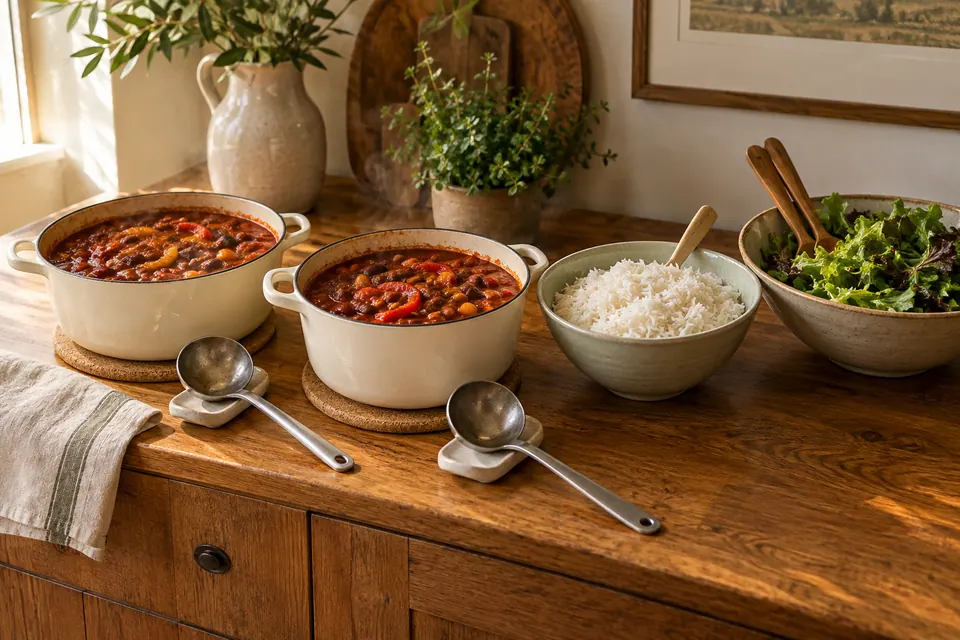
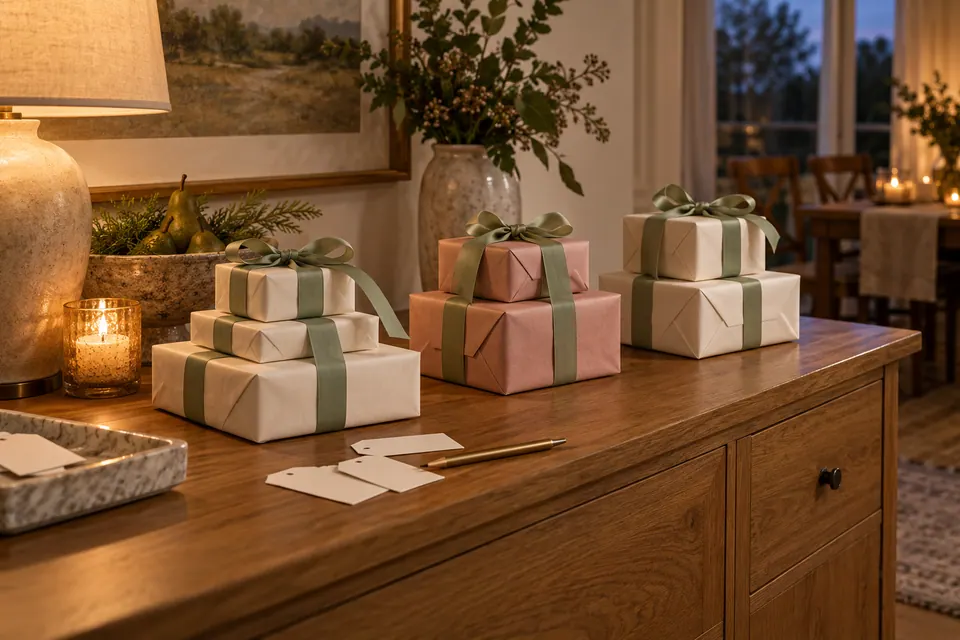
The PDFs have been checked digitally for dimensions, embedded fonts, readable layout and separation of host and player materials. We have not performed a physical printer test or timed a gathering playing these games. The photographs are AI-created styling concepts with blank paper, rather than previews of an actual printed game.
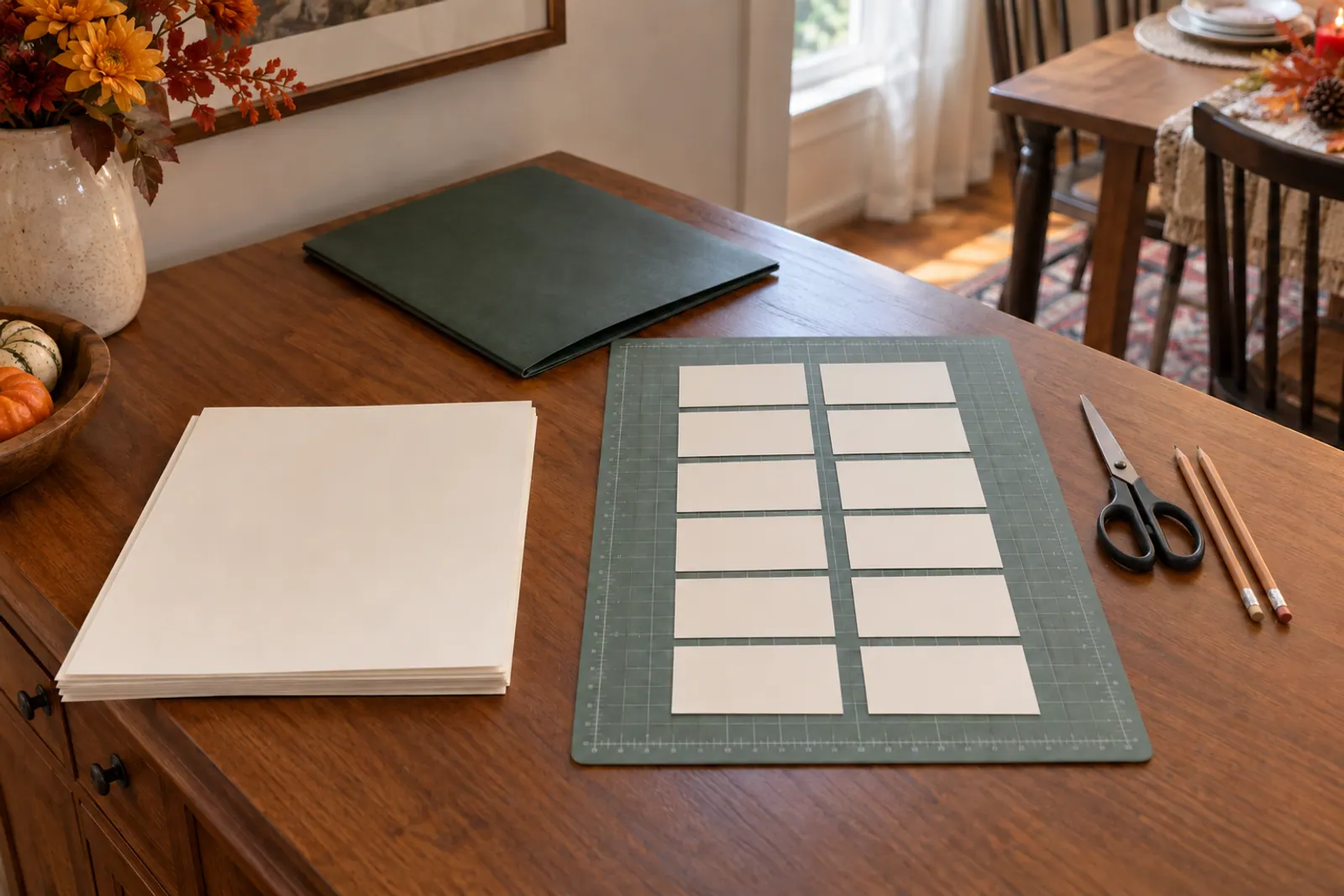
Table Threads: twelve optional conversation cards
Print player page 2 once for the table. Cut along the outlines, or leave the page whole and let guests choose a numbered prompt. In seating order, offer each person one card. They can draw or choose, swap once, respond briefly, give an imagined answer or pass. Return a swapped card to the unused deck; reuse a card if the deck runs out.
The twelve original prompts are:
- Name a small thing that made an ordinary day easier.
- Which everyday sound would you put in a cozy room?
- Choose a place where you like to take a short pause.
- Name a dish you enjoy without naming a family tradition.
- What is one object you like to keep within reach?
- Which season would you choose for a slow afternoon?
- Name a small skill you would enjoy learning.
- What would you put in a basket for a rainy afternoon?
- Choose an ordinary color you find cheerful.
- Name a book, film or activity you return to for comfort.
- Which tiny task feels satisfying when it is finished?
- Name a simple outing you would like to do with friends.
After everyone has been offered one turn, invite the table to name one interest or idea shared by at least two willing guests. Different answers can connect: a park bench and a garden chair might both suggest enjoying a pause outdoors. Ask before writing anyone’s name alongside a shared response.
The round is complete when everyone has had the chance to respond or pass. A shared connection is optional, so do not force a match. There are no points, comparisons of gratitude or rewards for more personal answers. A host can read the prompts aloud, and nobody needs to move around the room or remember what every other person said.
Tiny Table Tale: one story with three words
Use player page 3 as one shared sheet. Ask the group to choose one of its three original scenes. If the group is split, the host chooses the starting scene. Read its opening and three words aloud:
- The spare chair: An empty chair at a dinner table arrives with a folded note that says it belongs by the window. Three words: chair, window, ribbon.
- The wandering pear: A pear disappears from a bowl just as the doorbell rings. Three words: pear, doorway, pocket.
- The borrowed spoon: A borrowed serving spoon turns up inside a box marked for tomorrow. Three words: spoon, box, tomorrow.
Go around the table once. Each willing guest adds one fictional sentence continuing what came before. A sentence can include any of the three words, but nobody is assigned a particular word. Guests may pass, dictate to a helper or write a sentence for the host to read. The host can participate.
After that round, invite a volunteer to add one closing sentence. The host may close if nobody volunteers, and can include any missing word in the ending. Ordinary singular or plural forms count as the same word. The cooperative goal is one finished story containing the three words; there is no judge, correct answer, individual score or tie-break. Enjoy a story that misses a word as well, without requiring another round.
Keep the characters made up. Avoid turning a guest into the subject of a joke or using someone’s private experience as the plot. Notes are optional, and the story does not need to fit on the four printed lines. This works as a spoken activity from the three openings above if you prefer not to print anything.

Offer a quieter way to join
Make “pass” available from the beginning and accept it without asking why. Offer read-aloud instructions, a writing helper or a partner before starting. Choose the untimed guessing version if reading or writing speed would distract from enjoying the game. The cooperative activities already allow spoken, dictated or written contributions.
For a remote table, share only the player PDF window. Keep the completed host preference sheet private until the guessing reveal. Check that everyone can read the six rows, or read them aloud for the whole group. For conversation and stories, the host can read the prompts without sending files or collecting personal information.
One short round is enough. Leave the rest of the evening open for talking, and use the fall table-setting guide if you want a low centerpiece that can be moved to make room for paper.
For a Christmas gathering, the original Christmas trivia offers two scored rounds and separate sourced host answers. Use the activity suited to the occasion rather than mixing unrelated answer sheets.
Offer one short activity after clearing the meal: predict six private host choices, find an optional shared interest or build one fictional table story together.
Checklist from this story
0 / 8 ready