Baby Shower Prizes: Count Winners, Teams and Ties Before You Buy
Choose useful baby shower game prizes, count winning teammates and ties, and use a free prize budget planner with CSV export and a printable host sheet.
Count prizes and check the budget ↓- The guest list
- Count winners and winning teammates, rather than every invited guest
- A little preparation
- Choose the games and award rules before pricing prizes
Baby shower prize count and budget planner
Plan up to six games. Individual mode counts one prize per winning person; team mode counts one per winning teammate. Each game is independent, so a person winning twice can receive two prizes. The starter names and counts are editable planning examples.
A worked count, readable without JavaScript
One scramble winner + one winning team of four + one bingo winner = six base prizes. With no additional tied winners and two extra reserve prizes, prepare eight prizes. At a fictional $4 per prize including wrapping and tax, plus $3 for the whole order's extras, the total is $35. A fictional $40 cap leaves $5. Replace these illustration prices with your own actual quotes.
Entries stay in this page's memory. They are not saved between visits or sent to us. Download or print before leaving. A tie allowance is your choice and cannot guarantee coverage of every possible tie.
Baby shower prizes work best when the host can say exactly who receives one and why. One winning team of four can need four prizes, even though the score sheet shows only one team. A tied score can add another person or another whole team. Count those awards before buying a basket of attractive objects.
This guide helps you choose a modest prize, count individual and team winners, agree on a tie rule and check the cost with a prize planner. It also includes a printable host rule sheet. The examples are proposed planning scenarios, not timings or prices from a hosted event.
Decide whether the games need prizes
Ask the guest of honor which activities they actually want. A conversation game, a shared story or wishes for baby cards can end with thanks instead of a winner. If everyone prefers a cooperative game, there is no need to add a competitive award just because a supply list has a prize column.
When prizes are wanted, explain the arrangement before the first round. You might award one person, a winning pair, every member of a winning team or several named places. Do not promise a reward to the whole group and later discover that the host only bought one item.
Use the baby shower games guide to choose playable games and their actual rules. This page counts and distributes awards; the game’s own guide keeps its questions, answer key and scoring instructions.
Choose something a winner can use
A useful prize can be small. Choose an adult object that works without the baby’s name or shower date printed on it. Keep the options close in value so choosing last does not feel like receiving the leftovers. Use your actual guest preferences and prices instead of treating these examples as a shopping ranking.
| Format | What counts as one prize | Check first | Easy handoff |
|---|---|---|---|
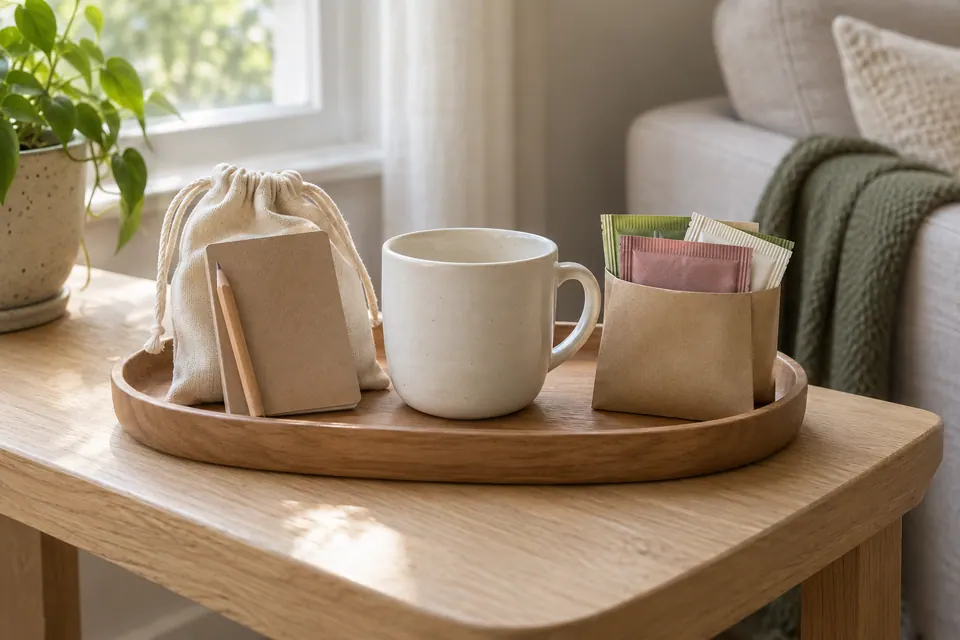
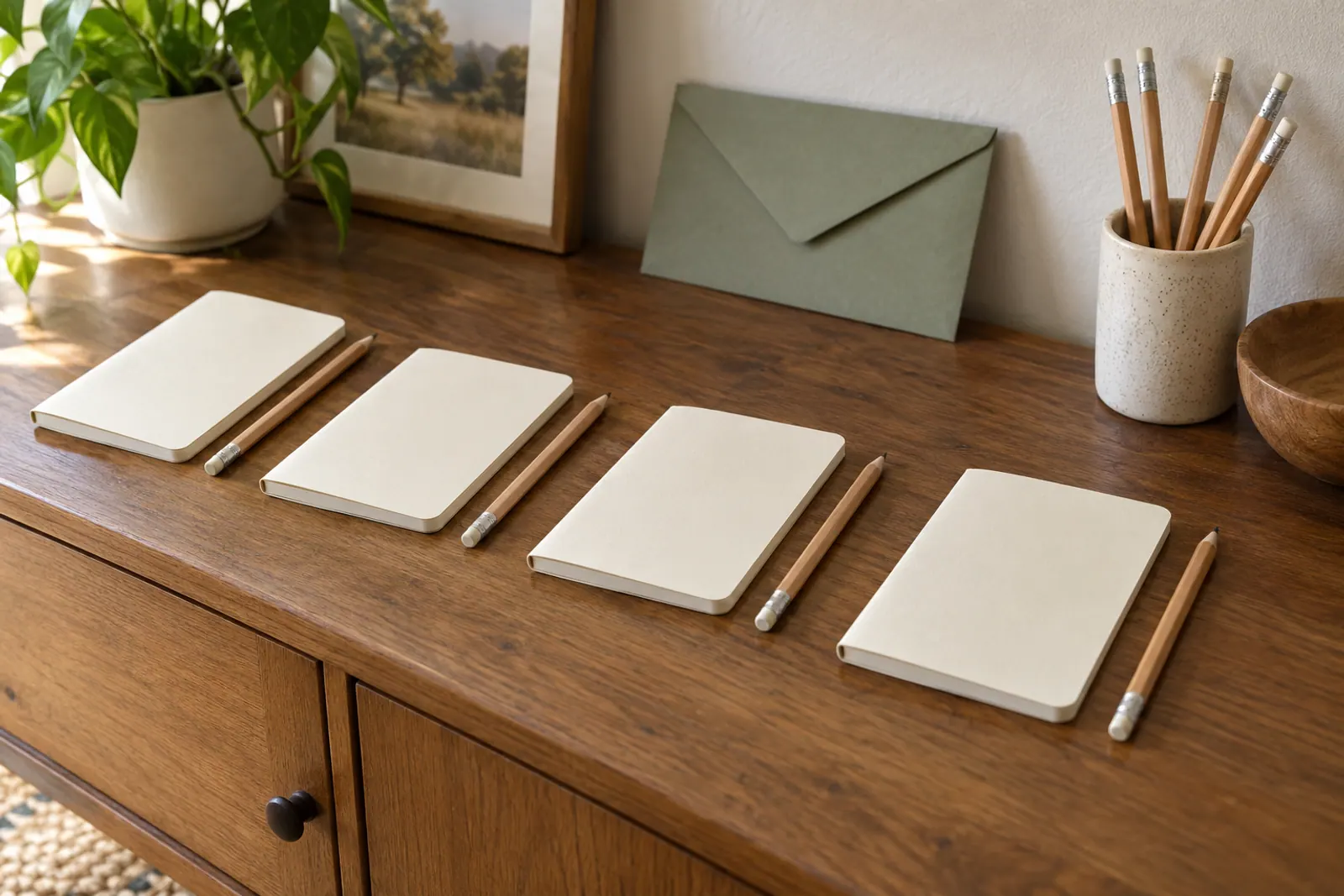
| Pocket notebook and pencil | One notebook-and-pencil pair | The notebook is usable and the pencil does not require an unavailable sharpener | Pair the two pieces with a paper band |
| Plain ceramic cup | One cup | Its supplier care instructions and whether guests can carry it home | Use protective wrapping that fits the actual cup |
| Tea or another packaged treat | One labeled packet or small bundle | The actual ingredients, storage directions and recipient preferences | Keep the original information with the package and offer a nonfood choice |
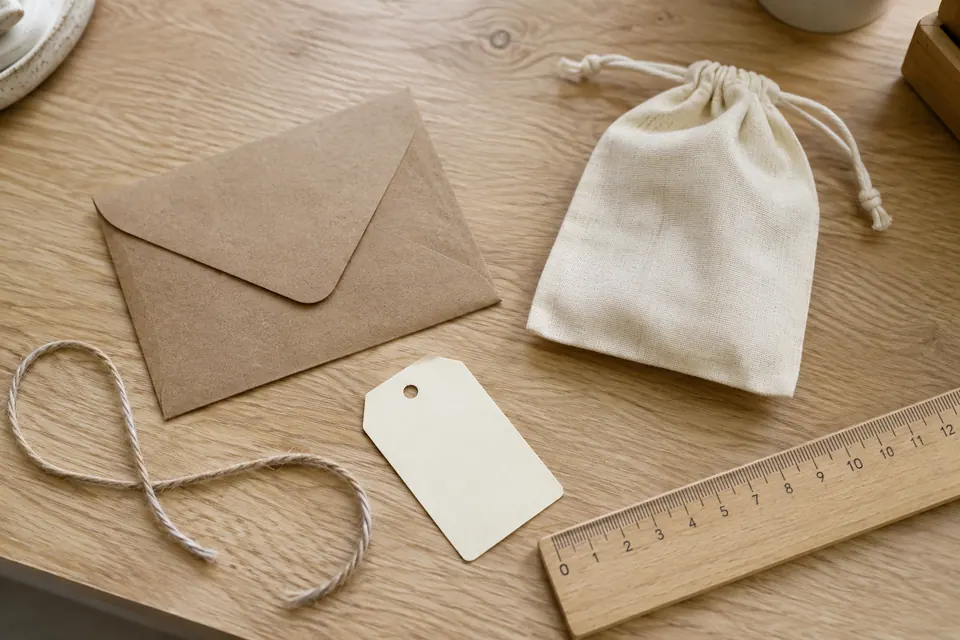
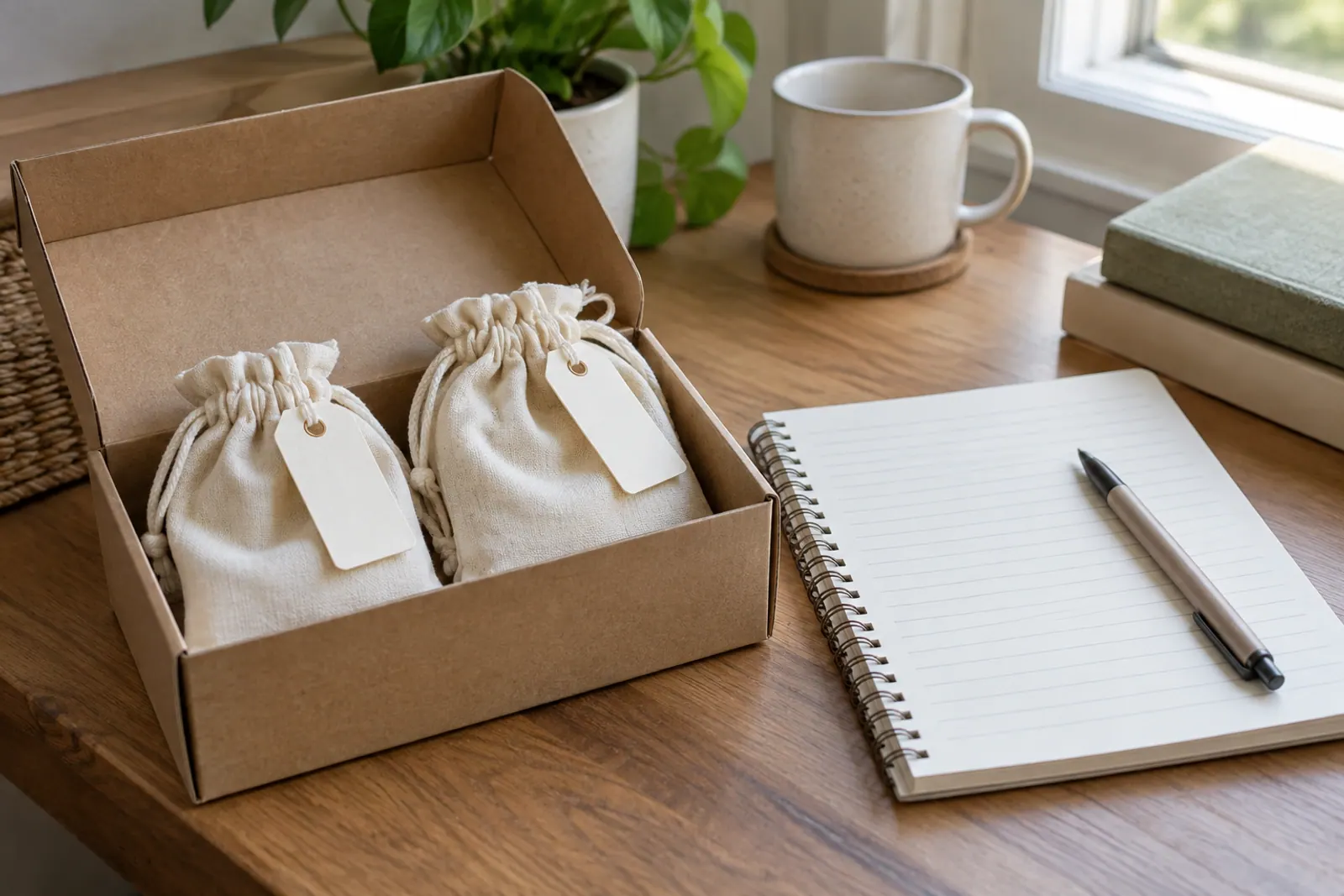
| Reusable cloth pouch | One complete pouch, with any promised contents | The item fits and the recipient can use the pouch afterward | A plain tag is enough; avoid adding a second outer bag |
| Book chosen for the group | One book | Reading preferences and whether a chosen title is already owned | Leave it easy to identify instead of hiding every choice |
| No physical prize | A shared congratulations or agreed nonmaterial award | The players know this before joining | Thank the winners and everyone who took part |
If you provide a choice tray, make it clear which objects are options and which belong together. A notebook and pencil offered as a pair count as one prize, while their purchase list contains two separate components. Check multipack quantities before deciding that one package in an online cart equals one finished award.
For food, keep the supplier’s complete product information with the prize. A new paper sleeve should not hide the original label. Give guests a quiet way to choose another format or decline it. You do not need personal food information in a public score sheet.
Count people in a winning team
Write the award rule beside each game. If a game has one winning team with four people and each person receives a notebook pair, its base count is 1 × 4 = 4 prizes. If it awards two teams of four, the count is 2 × 4 = 8. If one bundle is deliberately shared by a team, make that a clearly announced different rule and count its contents manually; the tool below always uses one prize per winning teammate.
| Game example | Award rule | Base calculation | Base prizes |
|---|---|---|---|
| Word scramble | One winning person | 1 person × 1 prize | 1 |
| Team drawing | One winning team of four, one prize per person | 1 team × 4 people | 4 |
| Bingo | One winning person under the announced rule | 1 person × 1 prize | 1 |
| Total | Six individual awards | 1 + 4 + 1 | 6 |
These are count examples, not a requirement to play three games. Pick fewer activities if the family wants more conversation. The bingo guide owns the rules and files for our caller-led set; confirm its shared-win arrangement before attaching an award.
The planner counts each game separately. If the same guest wins the scramble and bingo, it still includes two awards. If you want a one-prize-per-person rule across the whole event, announce it first and keep a private winner record during the games. The calculator cannot predict repeat winners or enforce that policy.
Decide the tie rule before the game
A small spare box does not solve every tied score. Agree on one rule while players can still decide whether to join. You can recognize everyone equally, offer a shared congratulations, or use the actual game’s approved shared-win format. Do not change the rule simply because the favorite prize has already gone.
The planner has two distinct allowances. Additional tied winners belong to a named game: one extra tied individual adds one prize, while one extra tied four-person team adds four. Extra reserve prizes sit outside those game counts, for a damaged package or another explicitly agreed need. If four spares already cover a tied team, enter them in that game’s tie allowance rather than also counting the same four in the reserve.
| Scenario | Additional tie prizes | Extra reserve | Total to prepare |
|---|---|---|---|
| Six base awards, no extra tied winner planned | 0 | 2 | 6 + 0 + 2 = 8 |
| Allow one extra tied individual in the scramble | 1 | 2 | 6 + 1 + 2 = 9 |
| Allow one extra tied team of four in drawing | 4 | 2 | 6 + 4 + 2 = 12 |
| Allow both of those ties | 1 + 4 = 5 | 2 | 6 + 5 + 2 = 13 |
Two reserves in these examples are a chosen allowance, not a universal recommendation. The number of tied players can exceed the entered allowance. Tell everyone what happens then, for example: “We will recognize every tied winner together; if our small prize supply does not cover the group, we will use the shared congratulations instead of selecting one of you.” Use wording that matches the actual game and the family’s preference.
Price each complete award
Enter a price for each game’s complete per-person prize. Include the object, its required packaging and applicable tax in that price; put delivery or other order-wide charges in extras once. If you cannot determine the tax or delivery charge yet, the cost is still unknown. Avoid adding the same charge into both the unit price and extras.
For the starter eight-prize plan, a fictional $4 per complete prize plus fictional $3 order-wide extras gives 8 × $4 + $3 = $35. A fictional $40 cap leaves $5. These figures demonstrate arithmetic and are not current product prices or a recommended budget. Different game prizes can have different unit prices in the tool.
If a winning team receives four awards priced at $4 each, its game cost is $16. A reserve of two $4 prizes costs $8. Enter 0 when an item costs nothing because you already have it, and leave a field blank when the price is not known. The calculator withholds the complete total until every active prize count and order-wide extras has a price. An unused game row with zero awards needs no price.
If the total exceeds the cap, simplify the award format, reduce an unannounced optional game or agree on a revised budget before purchasing. After the rule has been announced, do not silently reduce the number of promised prizes.
Give one host the score sheets and prize handoff
Keep the prize tray beside the activity supplies rather than in the general favor pickup area. Give one helper the game instructions, answer sheets, a winner record and the reserve box. The baby shower planning checklist assigns that helper’s timing and backup; it does not need a second copy of these counts.
State how a choice tray works. For example, winners choose in the agreed game order, tied winners receive equal choices, and someone can decline without losing recognition. Check that the intended choices remain available for the last announced award. If there are identical team prizes, bundle one for each teammate so one person does not accidentally carry away the whole team’s supply.
Use the free host rule sheet to write the game, award, tie and fallback rules and the person handing out prizes. Edit the fields in your browser and print, or print the blanks and fill them by hand. It saves nothing between visits. The count and budget planner creates a separate current CSV and print copy of your arithmetic.
Keep prizes and favors separate
A prize goes to a winner under an announced game rule. A favor is an optional take-home thank-you for a guest or household. Twelve invited guests do not automatically mean twelve game prizes, and six winning awards do not replace twelve intended favors.
If the family wants both, use this page for awards and the baby shower favors planner for favors. Keep the pickup points distinct. A sign that says “please take one” belongs to the favor arrangement; a game award needs the activity host to confirm its recipient.
Baby shower prize questions
How many prizes should I buy? Count the winning people in each game, including every winning teammate who will receive one. Add the chosen additional tie allowance and a separate reserve. Three games can require more than three prizes.
Does every baby shower guest need a prize? Only if that is your announced activity rule. Guests can receive thanks, choose a favor or enjoy an unscored activity without a competitive prize.
What happens if the same person wins twice? The tool counts both game awards. For a different policy, tell players before the first game and record winners as the games run. Do not invent the restriction after someone wins.
Can I print the current calculated plan? Yes. Calculate a valid plan, then choose Print current plan. That sheet contains the current inputs, results and source link. Editing a field clears the old result so its print and CSV buttons cannot reuse stale quantities.
An optional diaper raffle can use one clearly named prize and one free ticket per guest, whether they bring diapers or not. Count that drawing separately from game winners when filling out the prize plan.
Start with the number of winning people, including every teammate who will receive a prize. Add an explicit tie allowance and a separate reserve, then price each complete prize before buying. Tell players the award and tie rules before they begin.
Checklist from this story
0 / 8 ready