Baby Shower Favors Guests Will Actually Use
Choose baby shower favors guests can use, eat or plant. This practical guide covers quantities, costs, tags, allergy notes and a low-waste favor table.
Plan quantities and costs ↓Choose one favor format, count guests and prepare the tags before buying extras
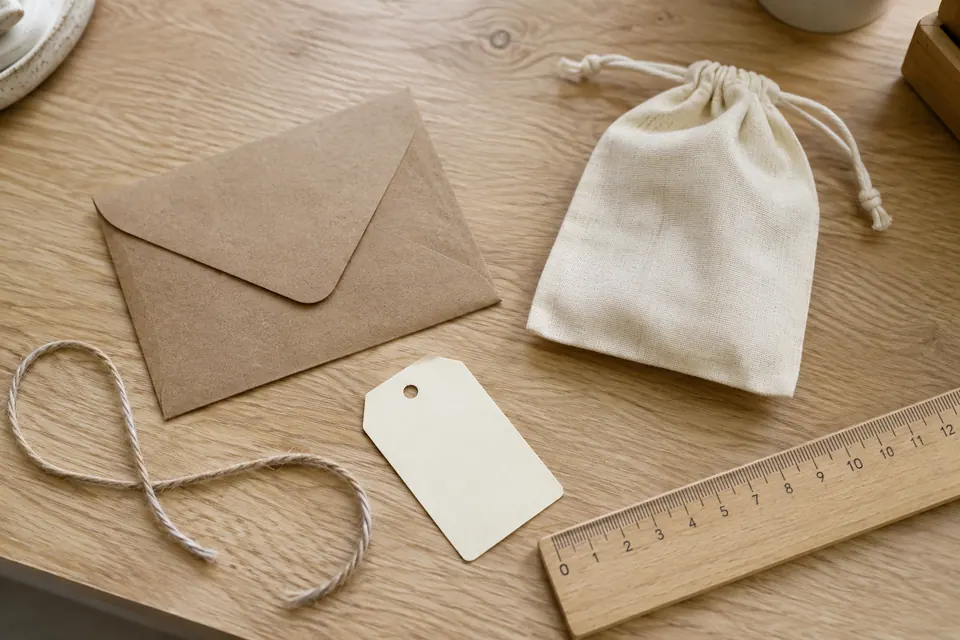
Baby shower favors do not need to be elaborate to feel thoughtful. A small useful object, a well-labeled treat or a packet of seeds can be enough when it suits the people in the room. The host’s job is to choose one clear idea, make the quantity manageable and give guests a simple way to take one home.
This guide is for showers of 8, 12 or 16 guests. The counts are planning examples, not a rule that every guest must receive a gift. A favor is a thank-you, not an admission ticket. If the budget is tight, spend the money on food, seating or access needs first.
Step 1: Choose the favor by the job it needs to do
Start with the moment you want the favor to create. Do you want guests to enjoy something on the way home, use a small object later or grow something in another season? The answer makes the shopping list shorter.
| Format | Good fit when | What to prepare | Watch for |
|---|---|---|---|
| A packaged treat | Guests can take food home and the host has a reliable supplier or recipe. | One sealed portion, a complete ingredient note and a use-by or storage note when needed. | Allergens, heat, humidity and any guest who does not want food. |
| A useful little object | You want a keepsake that does not depend on a theme or a baby-related slogan. | One practical item, a small tag and packaging that protects it in a handbag or coat pocket. | Objects that are too fragile, too large or clearly chosen for the photograph rather than the guest. |
| A plantable or reusable detail | The group enjoys gardening, cooking or a small ritual they can repeat. | A labeled seed packet, herb marker or reusable cloth item with simple care information. | Seeds that are unsuitable for the recipient's climate, vague planting directions or extra plastic. |
The table is a decision tool, not a list of three favors to buy. Choose one format and make it consistent. Mixing three types often leaves the host with three half-finished supply lists and guests comparing the value of their packages.
If you are also choosing a theme, let the theme change the color or tag, not the usefulness. The baby shower theme guide compares four options and their preparation work. It does not require a matching favor for each theme.
Step 2: Count favors without overbuying
Use the confirmed guest count rather than the invitation count. Ask the host whether children, vendors or a photographer should receive one, then write that decision beside the number. The simplest formula is:
favors to prepare = confirmed recipients + 1 spare for every 8 recipients, rounded up
That gives you a little room for a torn tag, a late reply or a guest who would like to take one for a partner. It does not ask you to buy a second favor for everyone.
| Confirmed guests | Prepare | Tags | Packaging pieces | A sensible reserve |
|---|---|---|---|---|
| 8 | 9 favors | 9 tags | 9 bags, boxes or envelopes | 1 spare favor |
| 12 | 14 favors | 14 tags | 14 bags, boxes or envelopes | 2 spare favors |
| 16 | 18 favors | 18 tags | 18 bags, boxes or envelopes | 2 spare favors |
The quantity and cost planner below calculates your own recipient count and reserve. Enter actual prices for the item, package, tag and delivery; a blank price stays unknown. You can export the current plan as a CSV. The starter count sheet remains available if you prefer to work in a spreadsheet. Neither needs a list of guest names.
Buy the packaging after you test one complete sample. A favor that fits on the supplier’s product page may need more room once you add a folded note, a seal and a ribbon. Measure the finished item, not the empty bag.
For a realistic budget, price one complete favor before multiplying it. Include the item, packaging, tag, printing, delivery and the small reserve in the same calculation. If the total is higher than the host wants to spend, simplify the package before choosing a cheaper-looking product.
| Keep first | Simplify next | Cut first |
|---|---|---|
| A useful or enjoyable item | Use one tag shape, one ink color and one ribbon or seal. | Extra layers, oversized boxes and separate decorative fillers. |
| Clear ingredient or care information | Print one small card for the whole batch and repeat the essential details on each package. | A long poem or a date that makes the item hard to reuse. |
| Packaging that protects the item | Choose a smaller package that fits the finished sample. | Individual bags inside a second individual bag. |
Step 3: Make one sample before making a set
The sample is where a pretty idea becomes a workable one. Put the exact item, tag, tie and wrapping together. Test a non-food or supplier-confirmed shelf-stable sample overnight in its planned storage spot. For perishable food, test the empty packaging and keep the food stored according to the supplier’s instructions. Check four details before making the set:
- Can a guest open it without scissors or a second pair of hands?
- Does the tag say what the item is and how to store, plant or use it?
- Will the package stay upright in a tote or coat pocket?
- Does the finished size fit the tray, basket or place you planned for it?
If the sample is difficult, change the format before making thirteen more. A plain paper sleeve that closes cleanly is kinder than a complicated box that keeps popping open. A clear ingredient note is more useful than a second ribbon.
Step 4: Three favor formats that are easy to finish
The right choice depends on the guest list, the season and the time the host can actually spend. These examples show the planning detail each format needs without turning the favor into a second event.
Packaged edible treats
Choose a supplier-made cookie, tea sachet, wrapped chocolate or other item with a complete label. If you bake, write down the recipe and the batch date for the host even if the guest only receives a small package. Keep the decoration simple enough that the item remains easy to identify.
The tag can say:
A little thank-you for celebrating with us. Ingredients: [complete list]. Please keep sealed and enjoy by [date].
That wording is more helpful than a generic “sweet treats” label. Tell guests what they are receiving, especially when the package could contain nuts, dairy, wheat, sesame or another ingredient they avoid. The FDA food allergy guidance explains why an ingredient list matters for packaged foods.
Useful objects without a slogan
Small hand cream, a sturdy measuring spoon, a reusable cloth, a bookmark or a simple candle can work when the guest list would appreciate it. Buy one sample and ask whether the object would be useful without the shower’s date printed on it. If the answer is no, it may be better as a table detail or a prize for a game.
Choose a tag that explains the connection in one sentence: “Thank you for helping us welcome a new chapter.” That keeps the note warm without putting the child’s name, due date or a decorative phrase on an item the guest may not want to display.
Plantable or reusable details
Seed packets and small herb markers are thoughtful when guests have a realistic place to use them. Keep the supplier’s species, planting season and light instructions with the packet. Check suitability for the recipients’ locations before buying; a familiar herb is not automatically suitable everywhere. If you cannot confirm that, choose a reusable detail instead.
Keep the package dry and separate from the food table. A paper envelope inside a shallow basket is enough. Do not add loose soil, water or a live plant unless the host has checked how guests will carry it home.
Step 5: Personalize the tag, not the entire favor
Personalization is most useful when it helps the guest understand the gift. Add the guest of honor’s first name, a short thank-you and the date only if the object will still be useful afterward. Avoid printing an address, a phone number or private pregnancy details on anything that may leave the party.
Here are three short tag lines to adapt:
| Favor | Tag copy |
|---|---|
| Food | Thank you for celebrating with us. Please enjoy by [date]. Ingredients: [list]. |
| Useful object | Thank you for making room in your day for [name]. We hope this small detail is useful. |
| Seeds or herb | Something small to grow. Plant [name] in [season] with [light note]. Thank you for being here. |
If the host is also collecting written messages, keep that activity separate from the favor table. The wishes for baby printable is a keepsake resource; it is not a favor tag and should not be bundled into every package unless the guest of honor wants that arrangement.
Step 6: When edible favors need a little more care
Perishable favors need a storage and handoff plan. Ask the supplier how the item should be held, when it was made and how long it remains suitable. Keep chilled food cold, use clean packaging and put the storage note on the tag rather than relying on a host’s memory.
The FDA buffet guidance gives the two-hour rule for perishables at room temperature and a shorter one-hour limit when the air is above 90°F. That guidance is for food safety, not a decoration timeline. If a treat cannot remain safely stored until pickup, choose a shelf-stable alternative. For chilled gifts, arrange a cold handoff and keep the supplier’s transport instructions with the package.
Do not promise that a homemade item is allergen-free. Use the actual ingredient list and explain any supplier statement about shared equipment. Offer a non-food choice without making the guest announce an allergy in front of the group.
Step 7: Set a quiet favor table
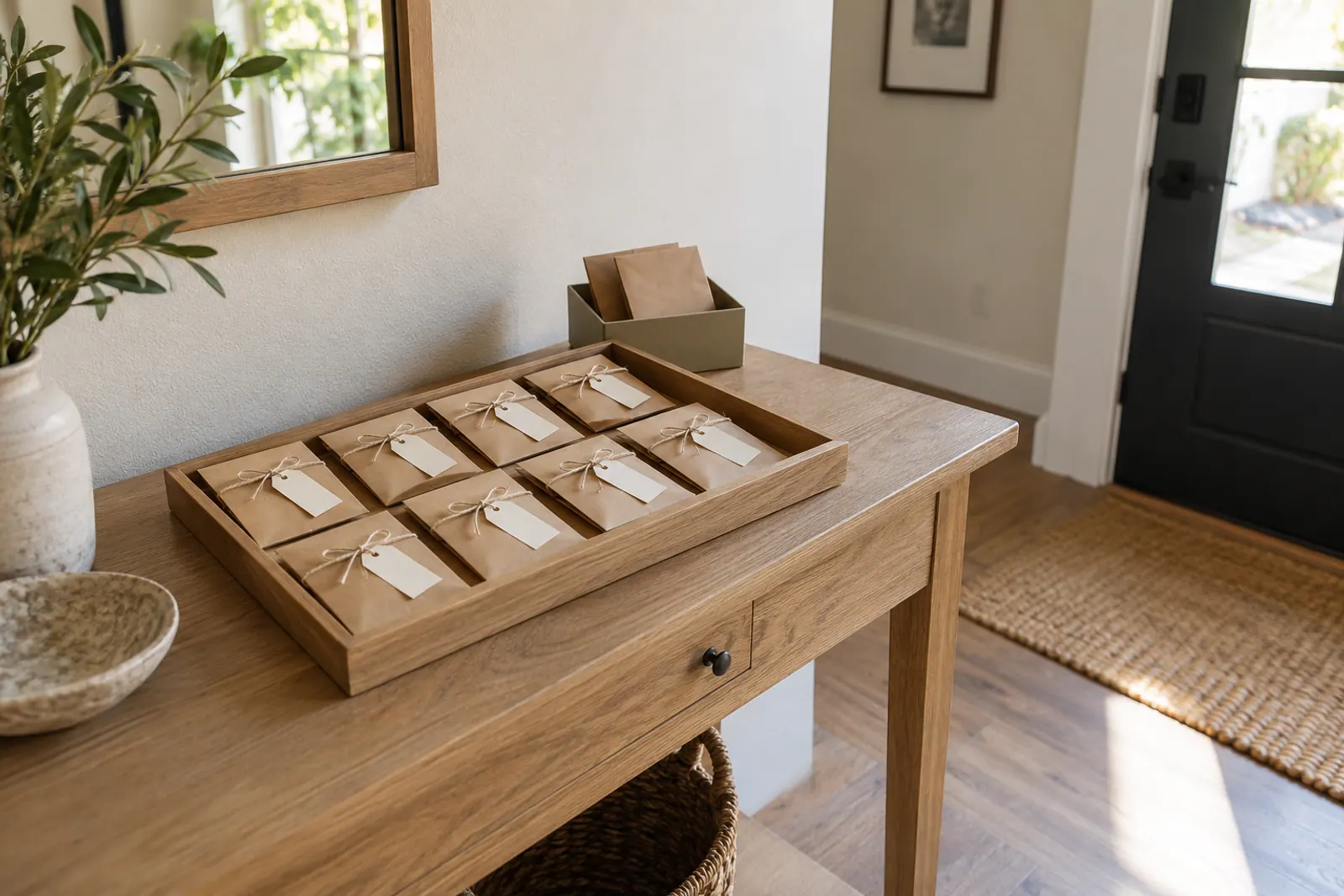
Place the favors where guests can reach them on the way out, not beside the food where they can be mistaken for a serving. A small tray, basket or shallow box is enough. Leave one clear sign if guests might wonder whether the items are for everyone:
Please take one if you would like one. Thank you for celebrating with us.
That sentence makes the choice clear and removes pressure. Keep the spare favors behind the host or in a labeled drawer. If guests can choose between two colors or scents, separate the options in small groups and write the difference on the label.
The baby shower invitation wording guide can carry the practical event details. The invitation does not need to promise a favor. Guests are coming to celebrate the family, not to receive a product.
Step 8: Skip the extras that create waste
Leave out anything that only works in a staged photograph. That includes a large box for a tiny item, single-use plastic wrapped around another single-use wrapper, and a printed slogan that the guest cannot remove. A favor does not become more generous because it has three layers of packaging.
Before ordering, ask:
- Would this guest use the item without the shower theme?
- Can the host explain what it is and how to use it?
- Can the package be opened, carried and stored comfortably?
- Can a guest decline it without a conversation?
If two answers are no, choose a simpler format. The best favor is the one that lets the host finish on time and lets the guest leave with a small, welcome choice.
Step 9: Common questions about baby shower favors
How many baby shower favors should I buy?
Start with one for each confirmed recipient, then add one spare for every eight recipients, rounded up. For twelve guests, fourteen favors gives you two spares without doubling the order.
Are baby shower favors required?
No. A favor is an optional thank-you. A well-planned meal, a comfortable seat and a clear way to share food needs matter more than a take-home item.
What is a thoughtful low-waste baby shower favor?
A packaged treat with complete information, a useful object without a permanent slogan or a small packet of suitable seeds can all work. Choose the option your guests can use, eat or plant rather than choosing the item that photographs best.
Should favors match the baby shower theme?
They can share a color, paper or short tag line, but they do not need to be a miniature version of the decorations. Keeping the favor useful makes it easier for guests to enjoy after the shower.
When should I put favors on the table?
Keep them in a tray near the exit and set them out once the host knows the package is safe to carry. If the item is perishable, follow its storage directions and hand it over at the appropriate time rather than leaving it in a warm room.
Your baby shower favor checklist
Use this short sequence with the printable count planner:
- Confirm the recipients and calculate the small reserve.
- Choose one format and price the complete finished sample.
- Check the ingredient, care or planting information.
- Buy packaging that fits the finished item.
- Prepare the tags and test the seal the day before.
- Store food or plants in the conditions they need.
- Set out the favors near the exit with a clear optional note.
- Pack leftovers for the host and recycle or reuse the packaging you can.
The favor should finish the gathering with a thank-you, not another obligation. Make one good choice, explain it clearly and leave enough room for guests to enjoy the people they came to see.
Giveaways for every recipient and baby shower game prizes serve different jobs. Count them separately so a winner’s prize does not reduce the favors you promised.
Baby shower favor quantity and cost planner
Count each person or household receiving a favor. Plan one item, package and tag per favor. Leave prices blank until you know them, or enter 0 for something you already have.
Automatic spares = recipients ÷ 8, rounded up. For 12 recipients, prepare 12 + 2 = 14 favors. Zero recipients gives zero automatic spares. This is a small planning allowance; choose a custom spare count if it suits your guest list.
Total cost = favors × (item + packaging + tag prices) + delivery and extras for the whole order. The total stays unknown until every price is entered. Check supplier minimums, multipacks and all charges before buying.
Entries stay on this page while it is open. This tool does not store or send them anywhere. A downloaded CSV is a snapshot of your plan.