Baby Shower Brunch Menu: Shopping Lists for 8, 12 or 16
Choose a baby shower brunch menu with complete shopping quantities for 8, 12 or 16 guests, a kitchen capacity check and a clear cold or hot service plan.
Get your menu's shopping list ↓- The guest list
- 8, 12 or 16 people, including hosts and the guest of honor
- A little preparation
- Choose a cold bagel board or prepare an apple French toast bake the night before
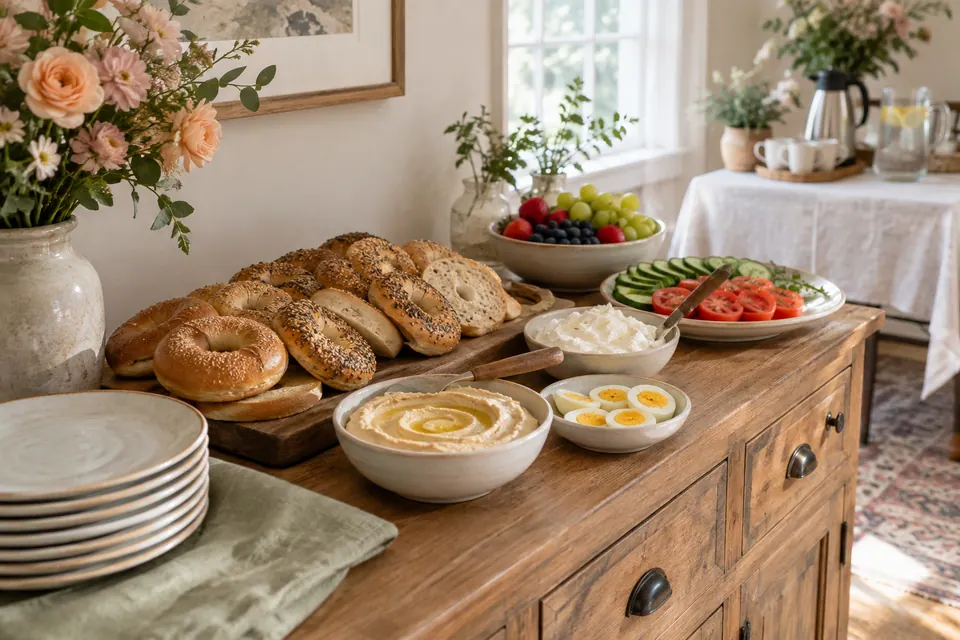
A baby shower brunch menu is easier to choose when you know what the kitchen can handle. For an oven-free service, use the savory bagel board below. For a seated breakfast with one warm centerpiece, choose the apple French toast bake with yogurt and berries. Both menus include shopping quantities for eight, twelve or sixteen people.
These are proposed menus for a roughly two-hour gathering that takes the place of breakfast or an early lunch. Count the hosts and guest of honor among the eaters. The portions are planning estimates, not nutritional recommendations or results from a party we have tested. Adjust for the people coming, and arrange any alternative meal before shopping.
Choose the menu by kitchen capacity
| Decision | Menu A: savory bagel board | Menu B: apple French toast brunch |
|---|---|---|
| Main plate | Bagel, hummus or cream cheese, a cooked egg, cucumber and tomato | Warm apple French toast, plain yogurt and berries |
| Oven at service | None; serve fresh bagels without a toasting queue | One separate baking pan for eight, two for twelve or sixteen |
| Fridge demand | Covered containers for eggs, spreads, cut produce and fruit | One or two covered 9 × 13-inch pans, plus yogurt and berries |
| Guest rhythm | Guests build their own plates as they arrive | A shared serving time once the bake is ready |
| Choose another plan if | You cannot keep the spreads and eggs cold | The separate pans will not fit safely in the fridge or oven |
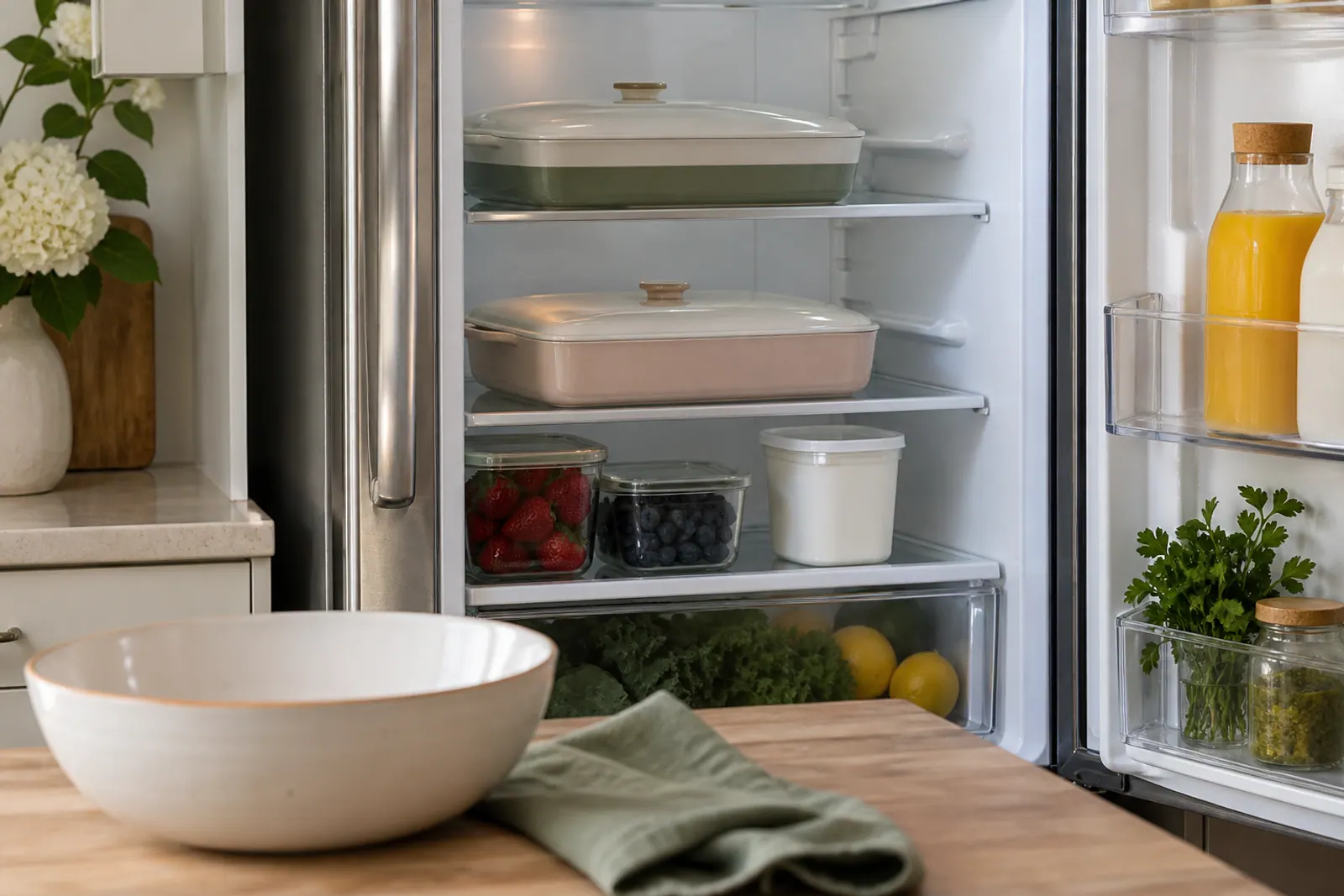
Measure with the actual empty pans and containers. A two-pan menu is a poor fit for an oven that holds only one. Choose the bagel menu or arrange suitable catering instead of depending on an unplanned second baking round while guests wait.
Menu A: the savory bagel board
The bagels are the main bread, with one cooked egg per person and two spreads to choose from. Cucumber and tomato belong with the savory plate; fruit and a small bakery sweet finish it. Offer plain and seeded bagels, but keep their labels because ingredients differ.
This list allows 1¼ standard bagels, one egg, 60 g of spread, 125 g of vegetables and 150 g of prepared fruit per person. The spread allocation is 40 g hummus and 20 g cream cheese per guest across the group, not a requirement for each plate. Swap the split if you know the guests’ preferences.
| Buy or prepare | 8 people | 12 people | 16 people |
|---|---|---|---|
| Standard bagels | 10 | 15 | 20 |
| Hard-cooked eggs, bought ready or cooked ahead | 8 | 12 | 16 |
| Hummus | 320 g / about 11 oz | 480 g / about 17 oz | 640 g / about 23 oz |
| Cream cheese | 160 g / about 6 oz | 240 g / about 8½ oz | 320 g / about 11 oz |
| Prepared cucumber | 600 g / about 1⅓ lb | 900 g / about 2 lb | 1.2 kg / about 2⅔ lb |
| Prepared tomatoes | 400 g / about 14 oz | 600 g / about 1⅓ lb | 800 g / about 1¾ lb |
| Prepared fruit, such as grapes and orange segments | 1.2 kg / about 2⅔ lb | 1.8 kg / about 4 lb | 2.4 kg / about 5⅓ lb |
| Small bakery sweets, one chosen type | 8 | 12 | 16 |
Weights mean the amount available to eat after trimming. Buy enough whole produce to reach them. Metric figures are the calculation basis; US weights are rounded shopping guides. Round packaged foods up to the next available pack, then keep the unopened surplus stored.
Halve the bagels before service and use separate spreaders for hummus and cream cheese. Put out a small platter of eggs and cut vegetables, with refills in covered fridge containers. Serve sweets after the savory food has been cleared. This keeps the first buffet smaller without reducing the food bought.
Menu B: apple French toast, yogurt and berries
Use King Arthur’s Apple French Toast Bake, by Janet Matz, following the recipe for assembly and baking. It allows overnight refrigeration in a 9 × 13-inch pan, about 23 × 33 cm.
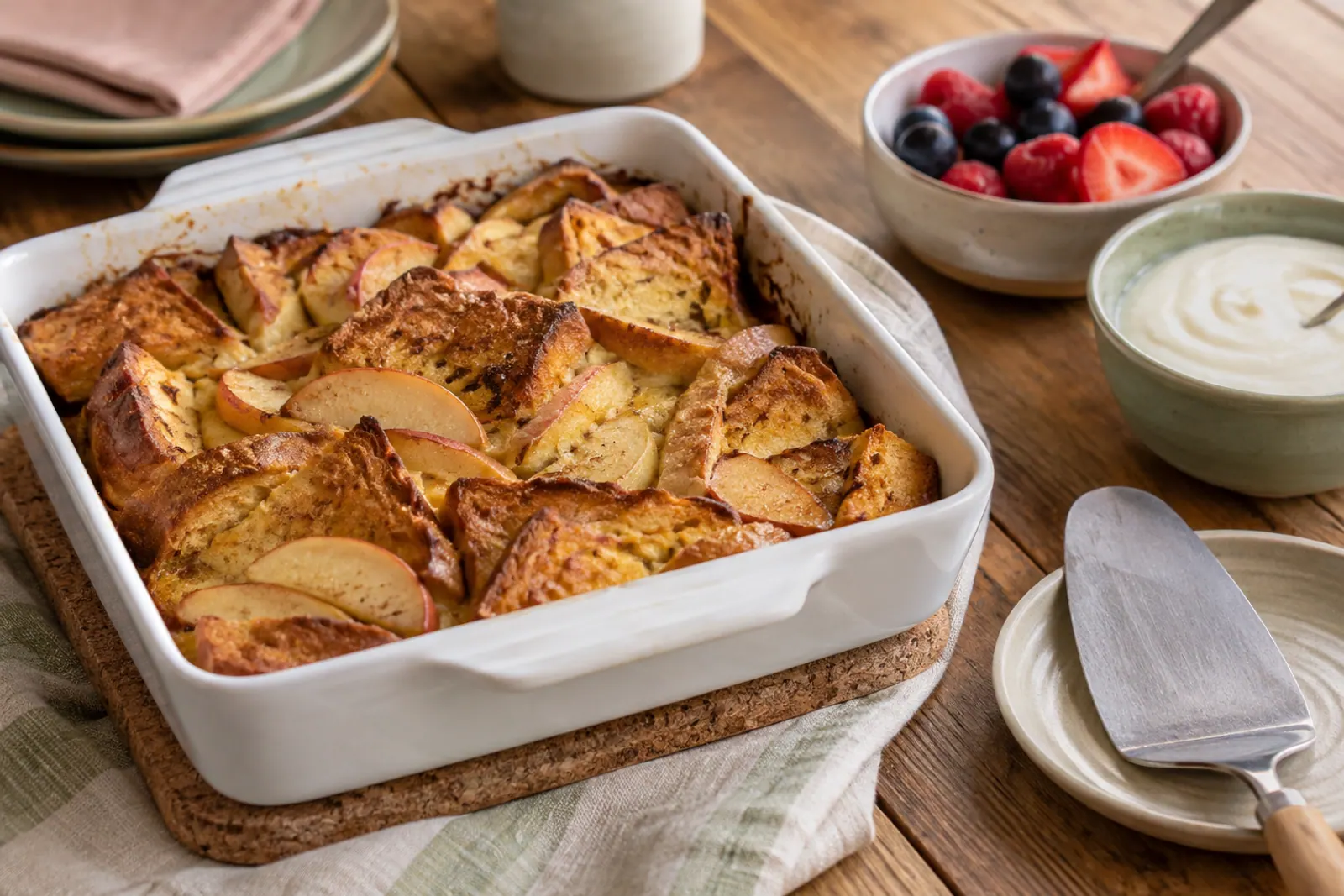
Our menu assigns eight brunch portions to each pan, served with yogurt and berries. That is our portion-planning choice, not a serving count stated by the recipe publisher. Twelve guests need two whole pans: twelve first portions and four extra. Sixteen guests also need two pans, with no extra main portions built in. If your group needs more, plan a further complete pan and check capacity again.
| Buy or check in the pantry | 8 people: 1 pan | 12 people: 2 pans | 16 people: 2 pans |
|---|---|---|---|
| Day-old baguettes, each 18–20 inches long | 1 | 2 | 2 |
| Large eggs | 8 | 16 | 16 |
| Milk for the bake | 3 US cups | 6 US cups | 6 US cups |
| Granulated sugar, both recipe components combined | 117 g | 234 g | 234 g |
| Vanilla extract | 1 tbsp | 2 tbsp | 2 tbsp |
| Ground nutmeg | ¼ tsp | ½ tsp | ½ tsp |
| Salt | ¼ tsp + a pinch | ½ tsp + 2 pinches | ½ tsp + 2 pinches |
| Prepared apples | 680 g | 1.36 kg | 1.36 kg |
| Lemon juice | 1 tbsp | 2 tbsp | 2 tbsp |
| Ground cinnamon | 1 tsp | 2 tsp | 2 tsp |
| Maple syrup in the bake | 2 tbsp | 4 tbsp | 4 tbsp |
| Butter | 28 g + enough to grease 1 pan | 56 g + enough to grease 2 pans | 56 g + enough to grease 2 pans |
| Plain yogurt, 100 g per person | 800 g | 1.2 kg | 1.6 kg |
| Prepared berries, 100 g per person | 800 g | 1.2 kg | 1.6 kg |
The apple bake supplies the sweet course as well as the main; this menu does not need additional pastries. Put yogurt and berries in separate cold dishes so guests choose their own amounts. The table excludes optional extra sugar and syrup garnishes. Recipe measures use US cups and spoons; 1 US cup is approximately 237 ml, 1 tablespoon 15 ml and 1 teaspoon 5 ml.
Keep each recipe batch in its own specified pan. Doubling the shopping list does not mean pouring twice the mixture into one deeper dish. Check each pan separately for doneness; fitting two pans in an oven does not guarantee the same cooking time as one. Allow the recipe’s full preparation and baking sequence before the planned meal time.
Download one menu and one guest count
Choose the menu first, then take one matching shopping list. Each three-page PDF uses page 1 for eight people, page 2 for twelve and page 3 for sixteen. Print only your guest-count page. Blank columns let you record usable pantry stock and the actual packs you need to buy; the planned food is already counted.
| Chosen menu | A4 shopping sheets | US Letter shopping sheets | CSV for your guest count |
|---|---|---|---|
| A: savory bagel board | Menu A, A4 | Menu A, Letter | 8 people, 12 people, 16 people |
| B: apple French toast, yogurt and berries | Menu B, A4 | Menu B, Letter | 8 people, 12 people, 16 people |
Menu B retains whole separate pans: twelve people need two pans, just as sixteen do. Its shopping list is not a recipe instruction sheet. Follow the linked recipe and check kitchen capacity before committing to that menu. For different guest counts or real package yields, the party food calculator can round your chosen quantities after usable stock is deducted.
Add drinks and serving supplies to either menu
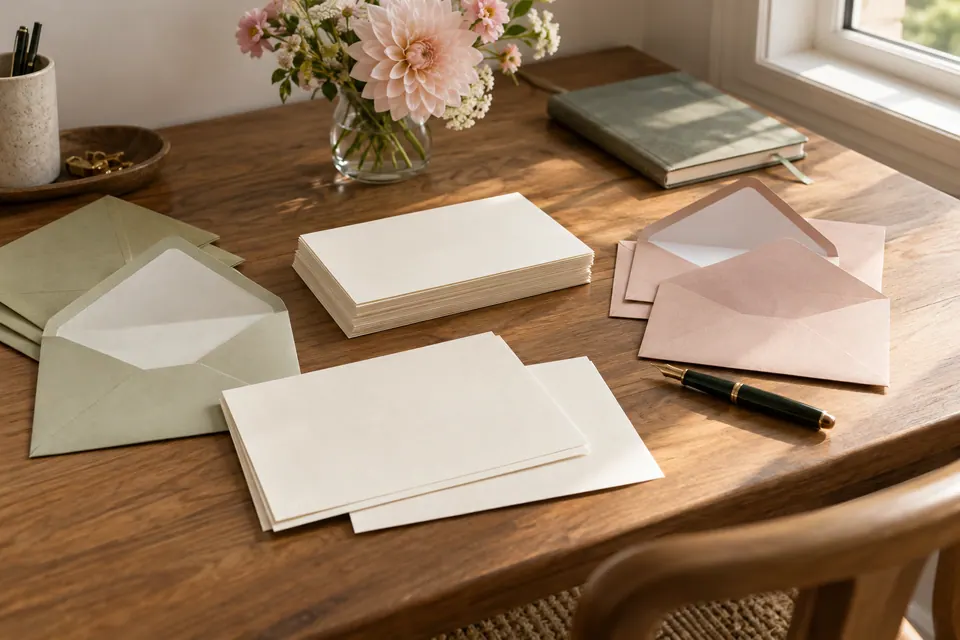
Tell guests that brunch is a meal and name the food you are serving. The baby shower brunch invitation example keeps the menu, arrival time and reply deadline together; adapt its food line to the menu you chose.
Start with 4, 6 or 8 liters of water for eight, twelve or sixteen people, plus a refill supply. Add 1.2, 1.8 or 2.4 liters of juice if offering it. These are initial station quantities, not a limit on what guests should drink. For hot drinks, stock twelve, eighteen or twenty-four cups’ worth of coffee and tea combined, divided according to preferences. Add milk, an appropriate alternative and sweetener after checking what is already in the kitchen.
Count one dining plate, fork, knife, napkin, water glass and cup per person, plus two spare sets. Menu B also needs a bowl and spoon per person, with two spares. For Menu A, allow separate spreaders, egg and vegetable tongs, a fruit spoon and small sweet plates. For Menu B, add a server and trivet for each baking dish and separate yogurt and berry spoons.
Keep one clean replacement serving dish for each perishable item, or serve from small dishes with an agreed replenishment routine. Write the actual ingredient names on the editable menu card. Keep packaging available; a handwritten label cannot resolve uncertain ingredients or cross-contact arrangements.
Give each menu a service route
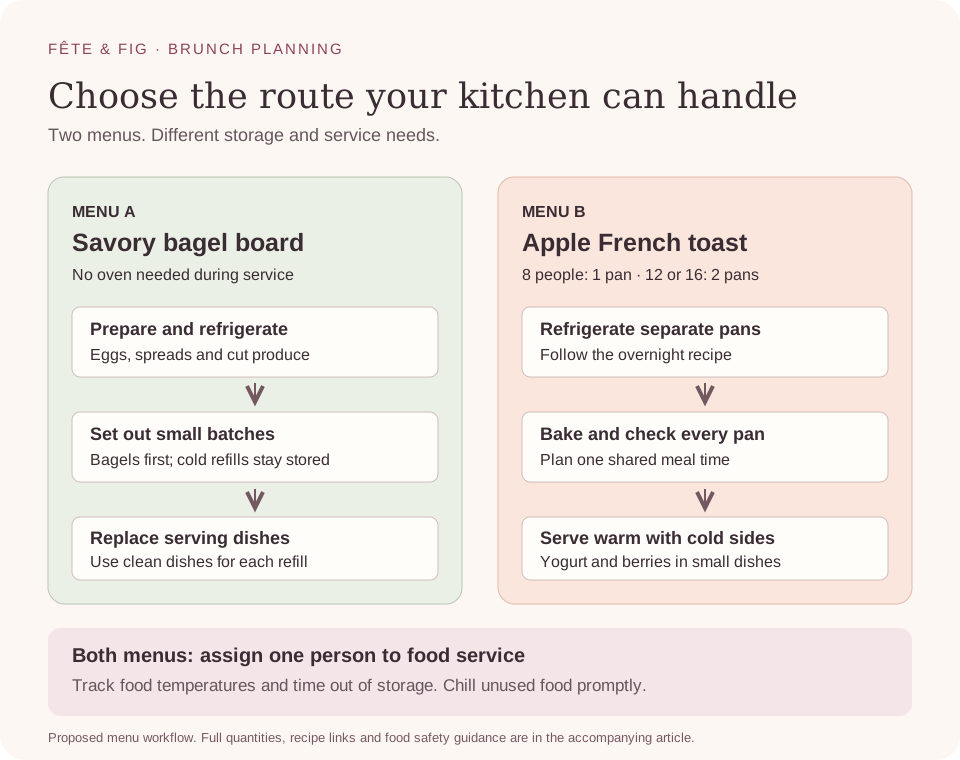
| Stage | Menu A | Menu B |
|---|---|---|
| The day before | Prepare suitable components; store perishables covered and cold | Assemble separate pans as the recipe directs; cover and refrigerate overnight |
| Before guests arrive | Slice bagels and set out empty serving dishes | Follow the recipe's baking sequence; prepare cold sides separately |
| At the meal | Put out small cold batches; leave refills in the fridge | Check every pan; serve the bake with small dishes of yogurt and berries |
| During and after service | Replace dishes with clean, replenished ones and store food promptly | Track hot and cold food separately; portion and chill unused food promptly |
The FDA advises cooking egg dishes to 160°F, about 71°C, and reheating previously cooked, refrigerated egg dishes to 165°F, about 74°C. Use a food thermometer; browning is not a temperature reading. Homemade hard-cooked eggs should have firm whites and yolks. FDA egg safety guidance.
Keep cold perishable food at 40°F or below, about 4°C, and hot food at 140°F or above, 60°C, when holding it. Without temperature control, discard perishables left out beyond two hours, or one hour above 90°F, about 32°C. Count preparation and transport time too. Divide leftovers into shallow containers for prompt refrigeration; do not leave a full pan on the counter waiting for it to become completely cold. USDA leftovers and food safety guidance.
Make substitutions before the final count
Ask each guest who needs an alternative what food and handling arrangements will work. Replace their complete meal portion, rather than assuming the fruit bowl is enough. A substitute spread may change the ingredients without making the shared bagel board suitable for an allergy. A different milk or bread can change how a baked recipe behaves, so use a suitable recipe or prepared meal with known instructions instead of improvising on the morning.
Choose milk, yogurt and cream cheese made with pasteurized milk, checking their labels. This follows the FDA’s dairy guidance for pregnancy.
Once the menu is chosen, use the garden brunch preparation checklist to assign the wider setup jobs. For a floral setting, the Baby in Bloom guide provides a separate room and decoration plan. Choose one baby shower game after the meal, when the food has been stored and the host can join in.
Choose the menu that fits your fridge and oven. The bake needs two pans for either twelve or sixteen guests; yogurt, berries and drinks still scale with the actual guest count.
Checklist from this story
0 / 7 ready
Sources and file checks
The menu-specific downloads were checked against every quantity in the visible 8-, 12- and 16-person tables. Each PDF page was reviewed for legibility and text boundaries. These are portion-planning examples, not a cooked recipe trial or measured guest appetite; no physical sample print was performed.
- King Arthur Baking: Apple French Toast BakeMenu B's recipe ingredients and separate 9-by-13-inch pan; eight brunch portions per pan is our planning choice.
- FDA: What You Need to Know About Egg SafetyCooking, reheating and handling egg dishes safely.
- USDA: Leftovers and Food SafetyHot and cold holding, time limits and prompt refrigeration in shallow containers.