Party Food Calculator: Turn Your Menu into Whole Packs and Batches
Calculate party food quantities from your chosen portions, recipe yields and pack sizes. Account for existing supplies, then export or print your shopping plan.
Calculate my food shopping plan ↓- A little preparation
- Have the guest count, chosen portions and real pack or recipe yields ready
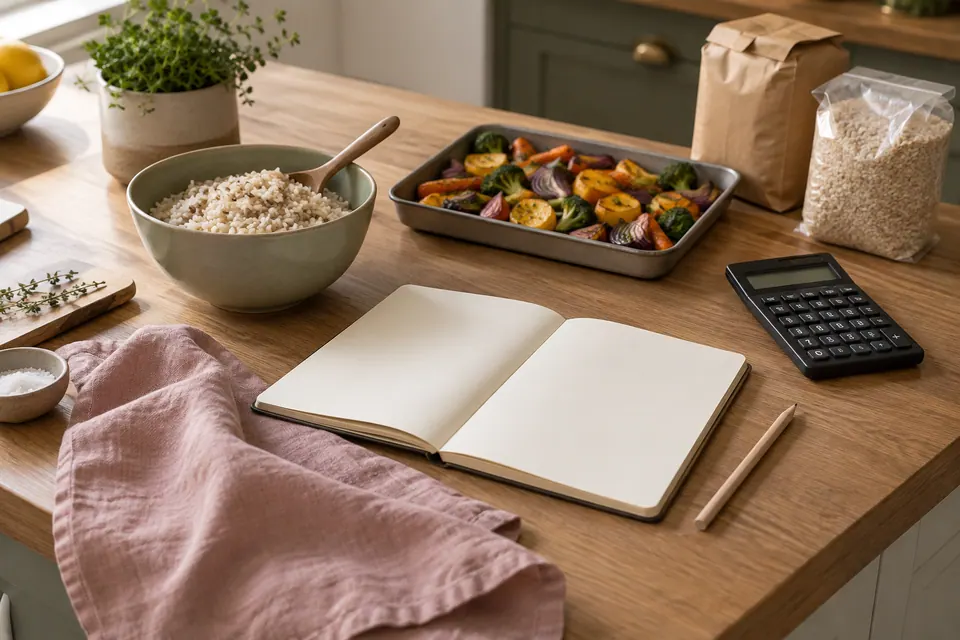
Party food calculator
Choose what one portion means for each food, then enter the recipe's tested yield or the pack's stated count. The example values below illustrate the calculation. Replace them with your own plan.
Entries are not sent to Fête & Fig. Saving stores one plan in this browser on this device; it does not sync or create a shared document. The CSV and printed sheet are snapshots.
Calculate the example by hand
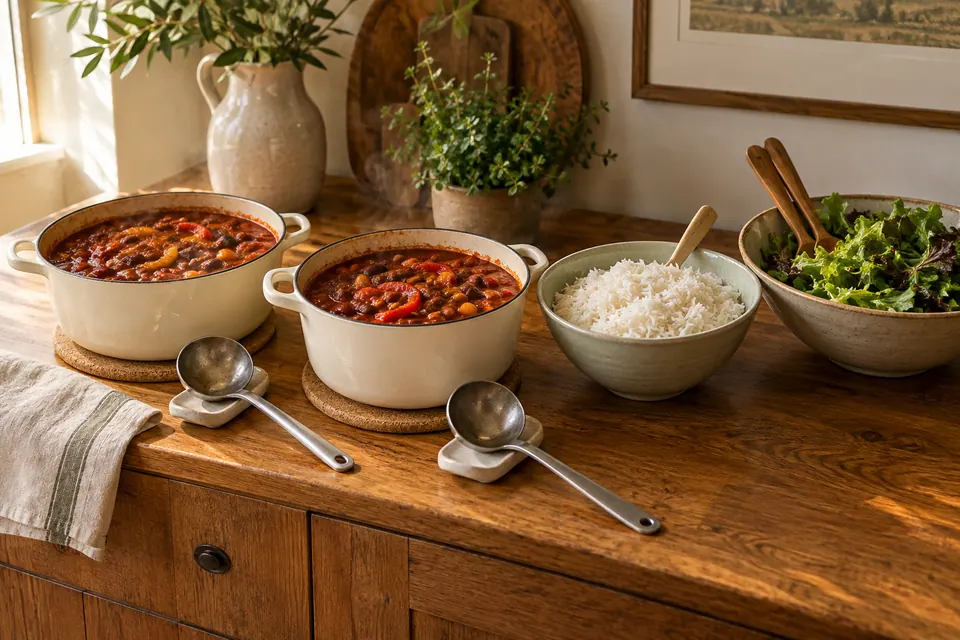
10 adults + 4 children × a chosen 0.5 share = 12 equivalent guests. For a main at one portion each, a chosen 10% allowance gives 13.2 portions, rounded up to 14. With no portions available and 6 portions per batch, prepare 3 batches: 18 portions, including 4 extra from rounding. Check a real recipe's yield and your actual portions before relying on this example.
To calculate food for a party, work food by food: multiply the people eating that food by your chosen portion allowance, subtract what you can already use, and round the remaining quantity up to the actual pack or recipe batch. A plan for fourteen portions of a main is different from a shopping order for three six-portion trays.
This calculator completes that arithmetic for your own menu. It does not choose a universal amount of food, forecast individual appetites or turn portions of unrelated dishes into a complete meal. Its starter values are editorial examples. Replace them with your guest choices, the recipe’s verified yield and the supplier’s actual pack count.
Start with the people eating this menu
Count adults and children separately if your plan uses different portions. Choose the children’s share of your defined adult portion: 0.5 means a half portion; 1 means the same portion. The share is your hosting decision for this group, not a nutritional guideline or a rule for every child.
Equivalent guests = adults + children × chosen child portion share. For ten adults and four children at a chosen half portion, the calculation is 10 + 4 × 0.5 = 12 equivalent guests. A household with teenagers or children who choose the same meal may prefer a share of 1.
Use a separate calculation for a group receiving a reserved meal. If three guests need a particular main, plan that main for those three people and keep their supplies identified. Do not reduce a guest’s meal to an assumed fraction because their requirements differ from the rest of the table. Confirm the actual menu with the people concerned.
Define one portion for each food
A portion can be one roll, one cupcake, one measured scoop or one serving from a recipe. Decide which of those units you mean before entering a yield. “Six portions per tray” should refer to six servings of the size you intend to give, rather than six arbitrary cuts made to fit the arithmetic.
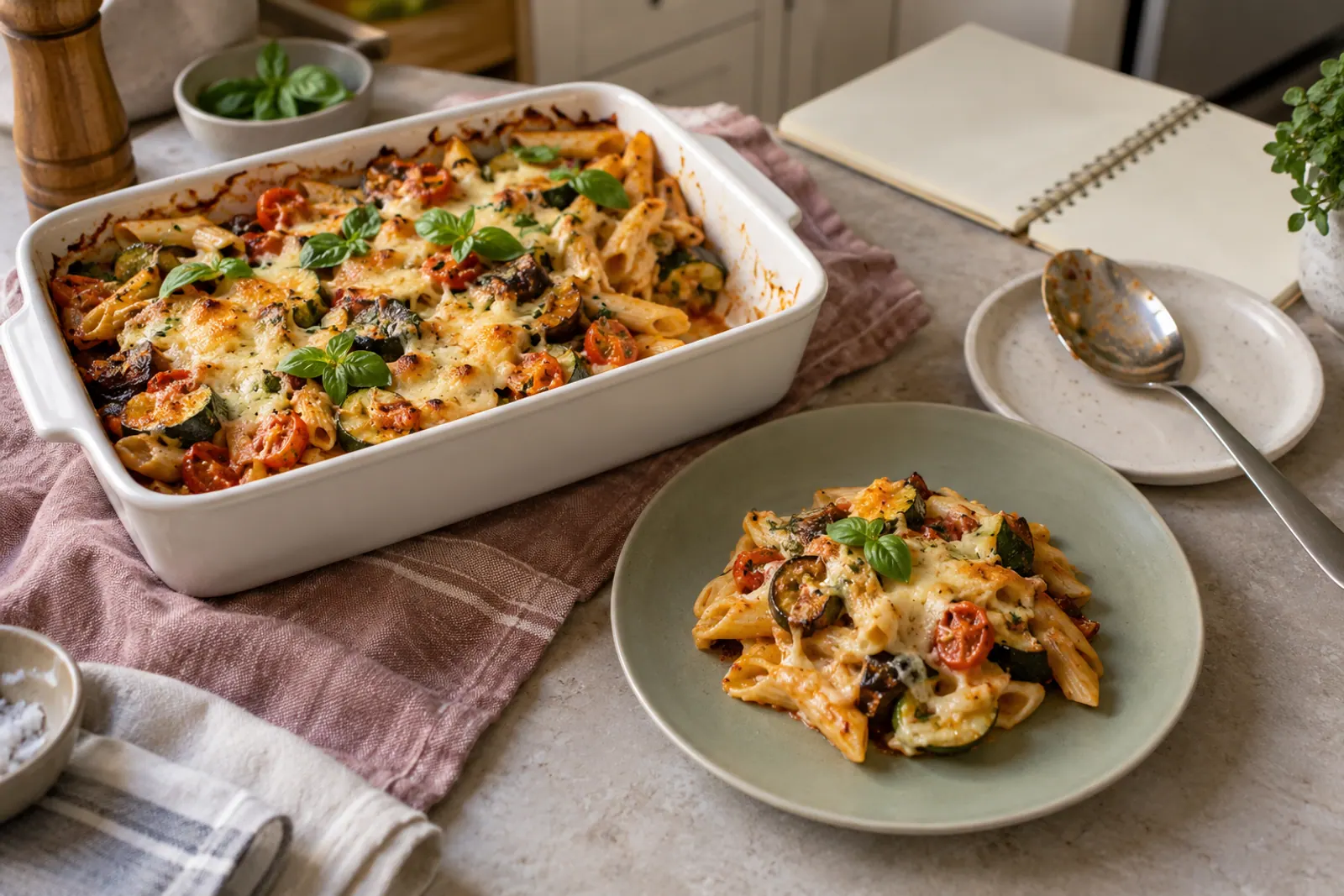
If you have cooked the recipe before, use the serving count you actually obtained. Otherwise, check the recipe’s stated yield and make a trial if the quantity matters. We have checked the calculator’s arithmetic, not cooked the starter menu or measured the photographed food.
For guests choosing between dishes, use deliberate shares. If two mains are alternatives and you expect half the group to choose each, start with 0.5 portions per equivalent guest on each row. Giving every guest a full portion of both would plan twice the main allocation. If guests will sample both, define the smaller serving you intend and use the appropriate rate. These assumptions need your judgment.
| What guests will receive | Example row definition | What to verify |
|---|---|---|
| A single main | 1 portion per equivalent guest | The real serving size and batch yield |
| A choice of two mains | 0.5 portion of each, as a starting assumption | Actual preferences and whether people will sample both |
| One roll with a meal | 1 roll per equivalent guest | Supplier pack count and any usable stock |
| Two small bites per person | 2 pieces per equivalent guest | Each counted piece is the intended unit |
| A reserved meal for a particular group | A separate guest-group plan | The agreed portions and clearly identified supply |
Add one deliberate allowance
The extra allowance is a percentage you choose, applied before whole-pack rounding. At 0%, the tool adds no extra portions. At 10%, it scales the base portion count by 1.10 and rounds up to a whole portion. The percentage does not predict appetite, breakages, cooking loss or late arrivals.
Planned whole portions = round up [equivalent guests × portions per guest × (1 + allowance ÷ 100)]. Twelve equivalent guests at one portion and a chosen 10% allowance need 13.2 portions, rounded up to fourteen.
Do not also multiply the guest count by an unrecorded reserve. Keep the allowance visible so another host can see why the plan exceeds the base count. Consider the extra food created by whole-pack rounding before increasing it again.
Round each food to its real pack or batch size
Count usable portions already available, then subtract them from the planned quantity. The shortfall cannot be negative. Divide that shortfall by the number of portions in one purchased pack or prepared batch, and round up to a whole pack or batch.
Shortfall = the greater of zero or planned portions minus usable portions already available.
Packs or batches needed = round shortfall ÷ portions per pack up.
The example uses ten adults and four children at a chosen half portion, giving twelve equivalent guests. Every food has one portion per equivalent guest and the same chosen 10% allowance.
| Food | Planned whole portions | Already available | Yield per pack/batch | Buy or prepare | Extra after stock and rounding |
|---|---|---|---|---|---|
| Main | 14 | 0 | 6 | 3 batches, 18 new portions | 4 |
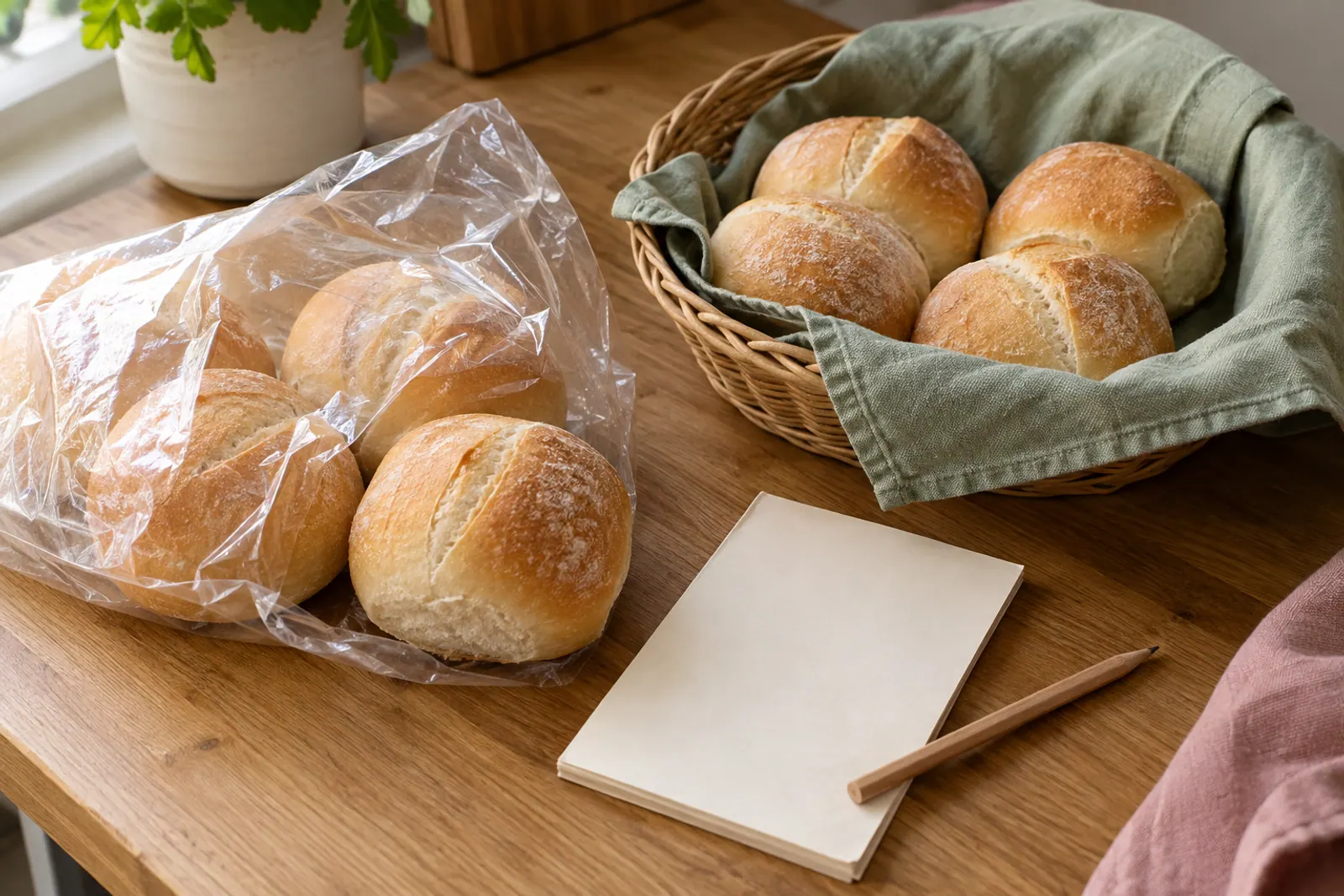
| Rolls | 14 | 4 | 8 | 2 packs, 16 new rolls | 6 |
| Dessert | 14 | 0 | 4 | 4 batches, 16 new portions | 2 |
The extra count is calculated after adding usable stock and purchased portions. It is not another order. Do not add the main, roll and dessert columns together as “forty-two meals”: they describe different parts of the menu.
If a supplier sells a tray and says only “serves six to eight,” establish which serving count suits your portion before entering it. A larger recipe batch may require a different pan, more time or another cooking method. The calculator scales portions and batches; it does not validate a recipe multiplied without testing.
Check the kitchen before accepting the quantities
A mathematically complete shopping list can still exceed the refrigerator, oven or serving capacity. List where the food will be stored, which equipment it needs, when each batch will be prepared and who will replenish it. Three batches do not automatically mean three pans can share one oven.
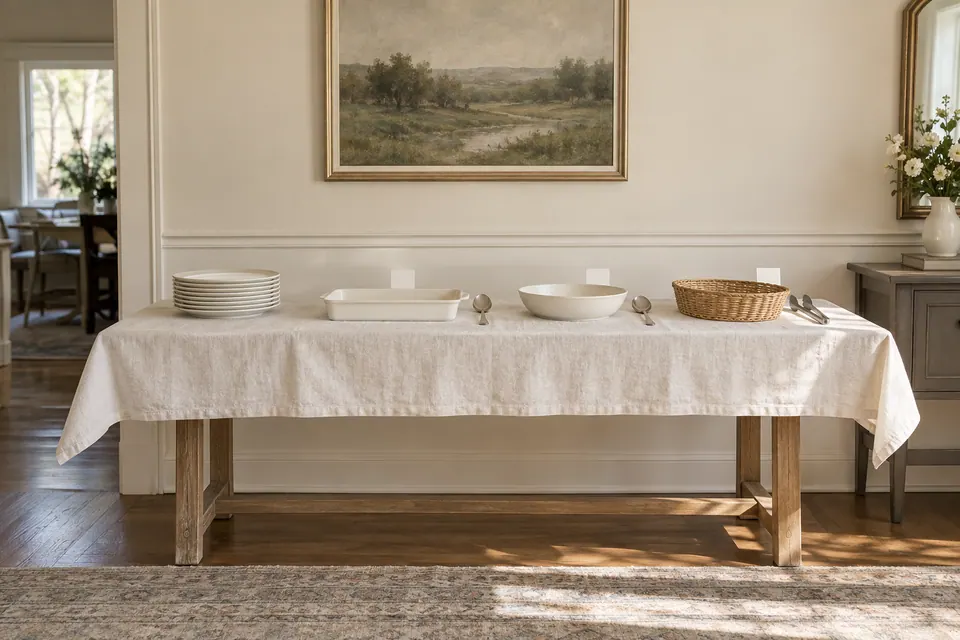
Use the dinner menu comparison to choose a manageable menu. For dishes brought by other hosts, the Friendsgiving potluck planner owns the assignments, arrival details and oven reservations. The buffet layout guide owns the serving route.
For safe service, follow the USDA buffet guidance: keep hot food at 140°F or above and cold food at 40°F or below. Discard perishable food left outside safe holding for more than two hours, or one hour when the air temperature is above 90°F. Use small replenished dishes and check actual temperatures. A calculated extra portion does not extend its safe holding time.
Save the current plan with the shopping list
After calculating, download the current CSV or print the food-only plan. Both record the chosen child share, extra allowance, each food’s rate, the usable stock and the real pack yield. Editing an input clears the previous result, so an old answer cannot be exported as if it matched the current entries.
You can explicitly save one valid plan in this browser on this device, load it later, or remove that saved copy. The tool does not send your entries to Fête & Fig or sync them between helpers. Keep the downloaded sheet with whoever owns the shopping, and agree which copy is current.
For pencil planning, download the A4 worksheet or US Letter worksheet. It includes the formulas, one worked example and blank rows for your actual foods. The ice calculator handles drink ice and separate cooling bags rather than adding those supplies to food portions.
Scale each food from your guest group's chosen portions, add your deliberate allowance, subtract usable stock and round the shortfall up to whole packs or recipe batches. Keep reserved meals separate and check actual recipe yields before buying.
Checklist from this story
0 / 8 ready