Hot Chocolate Bar Ideas: Cup Sizes, Batch Calculator and Refill Plan
Plan a hot chocolate bar with a finished-yield calculator, complete-pour appliance loads, measured toppings and free printable batch and refill sheets.
Calculate your hot chocolate batch ↓- The guest list
- Worked example: 24 drinkers and 6 extra pours
- A little preparation
- Confirm recipe yield, vessel compatibility and a named server before buying
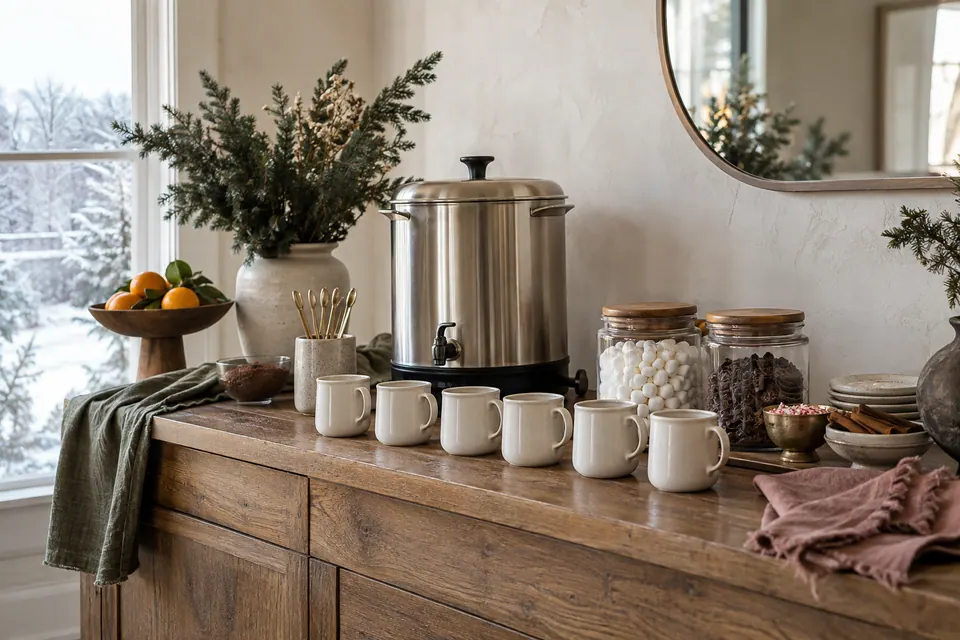
Hot chocolate batch calculator
Plan finished drink volume, appliance loads and one topping. Enter the usable capacity permitted by your appliance instructions, not the size printed on its box. This does not calculate cooking, reheating or holding times.
Example: 24 drinkers, 30 planned pours
5.4 L finished drink; 2 appliance loads at a usable 4 L capacity. Load 3.96 L for 22 complete pours first, then 1.44 L for 8 pours when your holding and refill plan permits.
Three recipes yielding 2 L each make 6 L, 600 mL beyond this plan. One topping at 5 g per pour needs 150 g. These are chosen planning amounts, not expected consumption.
Appliance loads describe capacity, not a schedule. Keep a suitable prepared reserve under the correct temperature controls; a second load is not permission to leave milk-based drink at room temperature.
A good hot chocolate bar starts with the drink you can actually serve. Pick a comfortable cup pour, check the finished yield of your recipe and work out how many complete pours your suitable warming vessel holds. Toppings come after those decisions. A beautiful counter cannot compensate for a pot that runs out during the first round.
Use the hot chocolate calculator for volume and capacity, then print the batch and refill sheets. The worked example is a proposed plan for 24 people drinking hot chocolate, one pour each and six extra pours. Its portions and fictional staffing are planning choices, not a party we have hosted or a recipe we have tested.
This guide covers hot drink quantities and service. For counter space, cups, spills and the guest route, use the drink station layouts.
Choose a pour before counting the batch
Use one of the cups you plan to set out. With cool water, measure a fill that is easy to carry and leaves space for the toppings you actually want. The vessel’s advertised size is not necessarily your serving size. A mug that holds 300 mL to the brim might be more pleasant with a smaller pour.
Our example uses 180 mL, about 6.09 US fl oz, per pour. That is a selected serving amount, not a rule for adults or children. Ask which guests want hot chocolate, offer another suitable drink and keep an adult responsible for serving hot drinks to children. Do not use a serving temperature recommendation to encourage drinking immediately.
Choose the reserve as an actual number of extra pours. Here, six extra pours provide another 1.08 L. If twelve people tell you they would like a second mug, enter twelve; do not hide that decision inside a percentage nobody remembers.
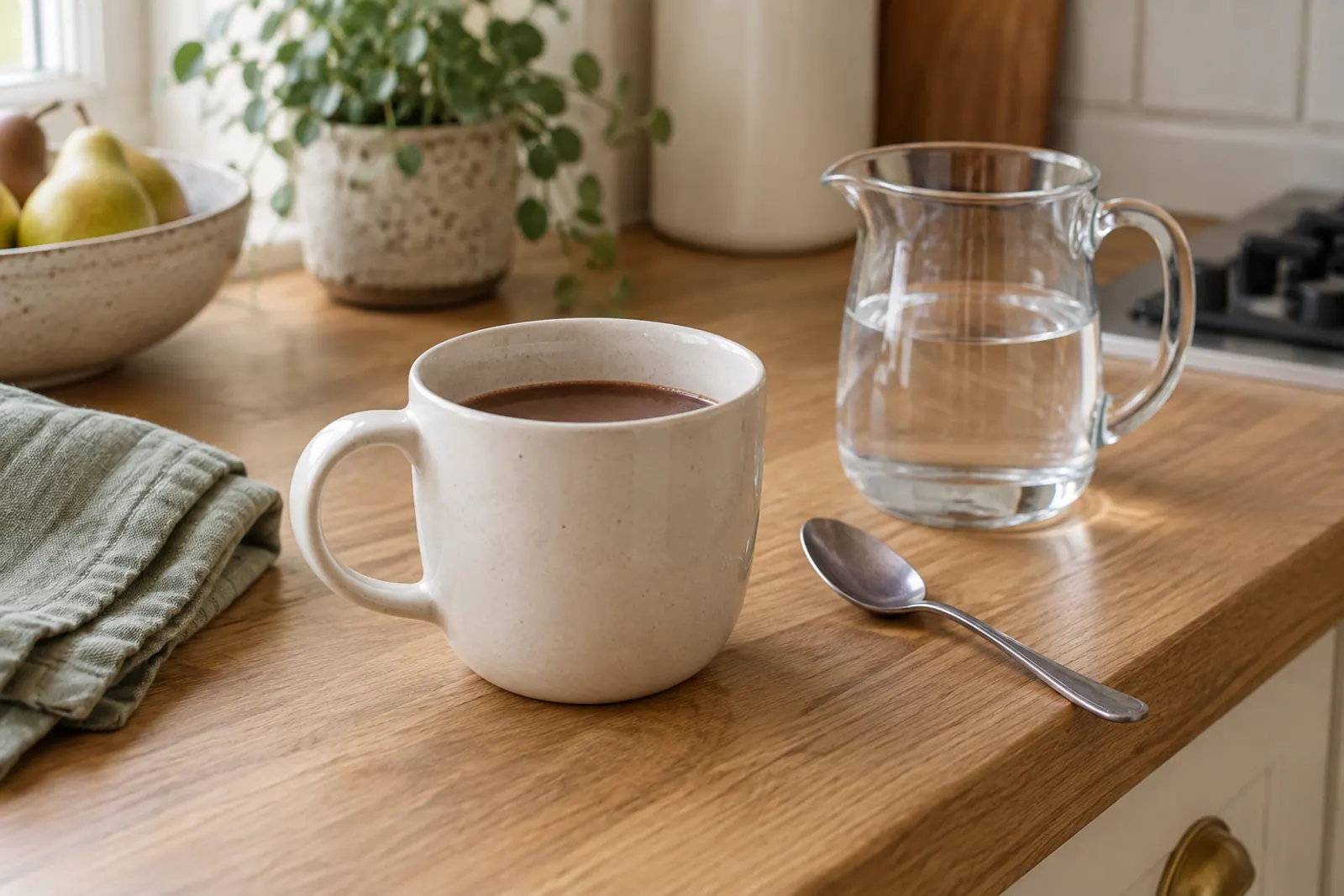
Use finished yield rather than the milk carton size
Record the amount of finished hot chocolate supplied by the complete recipe or product directions. Milk volume alone can differ from finished yield after ingredients are added or liquid is lost during preparation. If the directions give a serving count, confirm the serving volume before turning it into liters.
Start with a recipe you already trust or a suitable product with clear preparation directions. This is a planning guide, so it does not invent cooking times for an unknown mixture. Make a modest trial if you need to establish yield. Confirm that the recipe can be scaled, that the cooking vessel has room and that the result behaves acceptably in the intended service appliance.
| Approach | Useful when | Check before committing |
|---|---|---|
| One prepared batch | You have a known recipe and suitable hot holding | Finished yield, usable capacity, holding instructions and a server |
| Individually prepared cups | Drink preferences vary and demand is modest | Product directions, preparation time, hot-water equipment and supervision |
| Separately prepared alternative | A guest needs a different agreed ingredient arrangement | Full ingredients, preparation and utensil arrangements accepted by that guest |
A dairy-free ingredient swap does not establish that the entire drink is suitable for someone’s allergy. Check the chocolate, mix, toppings and preparation arrangements too. Avoid pouring a different drink into the same vessel just to simplify the counter.
Work through a 24-person batch plan
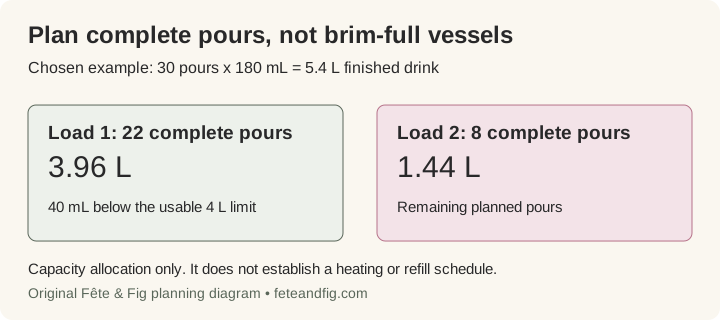
The calculator uses these transparent steps:
- Planned pours = drinkers × chosen pours per person + extra pours.
- Finished drink needed = planned pours × chosen pour volume.
- Complete pours per load = usable vessel capacity ÷ pour volume, rounded down.
- Loads needed = planned pours ÷ complete pours per load, rounded up.
- Whole recipe batches = drink volume needed ÷ one recipe’s finished yield, rounded up.
Each load is allocated in whole pours. The calculation leaves unusable partial-pour capacity unused rather than assuming a remnant can be carried into another load. A load count describes capacity; it does not establish when a fresh load can be prepared or served.
| Input or result | Example | Meaning |
|---|---|---|
| Drinkers and reserve | 24 × 1 + 6 = 30 pours | Reserve is six chosen pours |
| Finished volume | 30 × 180 mL = 5,400 mL | 5.4 L available to pour |
| Usable capacity | 4,000 mL | A sample input, not an appliance recommendation |
| Complete pours per load | 22 | 22 × 180 mL = 3.96 L; 40 mL of usable capacity remains unallocated |
| Second load | 8 pours = 1.44 L | 3.96 L + 1.44 L = 5.4 L |
| Recipe yield | 2 L per complete recipe | Three recipes make 6 L, with 600 mL beyond the pour plan |
The 600 mL above the pour plan is a recipe-rounding remainder, not an additional promised serving count. Keep it within your storage and handling plan. If scaling a complete recipe is unsuitable, choose an appropriate recipe or product format instead of treating the rounded number as a cooking instruction.
Select equipment for the actual drink
A water urn, coffee dispenser or slow cooker is not automatically suitable for milk-based hot chocolate. Check the specific appliance’s instructions for permitted contents, maximum and minimum fill, heating versus holding functions, stirring, cleaning and supervision. For a dispenser, confirm that the mixture is suitable for the outlet; thick drink and chocolate pieces can behave differently from water.
Enter usable capacity, after applying the device instructions, rather than filling to the rim. Put the appliance on its permitted stable surface with the required clearances, and route its cord as its manufacturer directs. Keep decoration and loose fabric out of the equipment area.
The FDA’s home buffet guidance says to keep hot food at 140°F / 60°C or above, check with a food thermometer and verify that a warmer can maintain that temperature. Its guidance also limits perishables at room temperature to two hours, or one hour above 90°F / about 32°C. These are food holding checks, not a comfortable drinking temperature or proof that every appliance setting works.
Assign one adult to the hot drink. Guests can choose toppings after receiving their cup. That person should know the recipe, the equipment and where the prepared reserve is kept. If the required holding arrangement cannot be maintained, change the service plan before guests arrive.
Give each topping its own measured portion
Choose a small, coherent set: marshmallows for softness, chocolate curls for richness and peppermint pieces for a mint option. You do not need every topping on every cup. Keep their complete ingredient information and separate utensils beside them.
Measure one proposed portion of a topping with the utensil you intend to offer. The following amounts are illustrative choices for 30 pours. They are not tested scoop yields; weigh the actual product and adjust.
| Topping | Chosen portion | If offered for all 30 pours | Service detail |
|---|---|---|---|
| Miniature marshmallows | 5 g | 150 g | Small dedicated spoon; keep the remaining package information |
| Chocolate curls | 4 g | 120 g | Separate spoon and a modest first bowl |
| Peppermint pieces | 2 g | 60 g | Optional finish with its own utensil |
If only ten people want peppermint, calculate ten portions instead. A topping total assumes the chosen portion for every counted pour; it does not forecast preferences. Add another topping only when its storage, ingredient information and service can be managed. Refrigerated toppings need their own suitable cold storage and display arrangement.
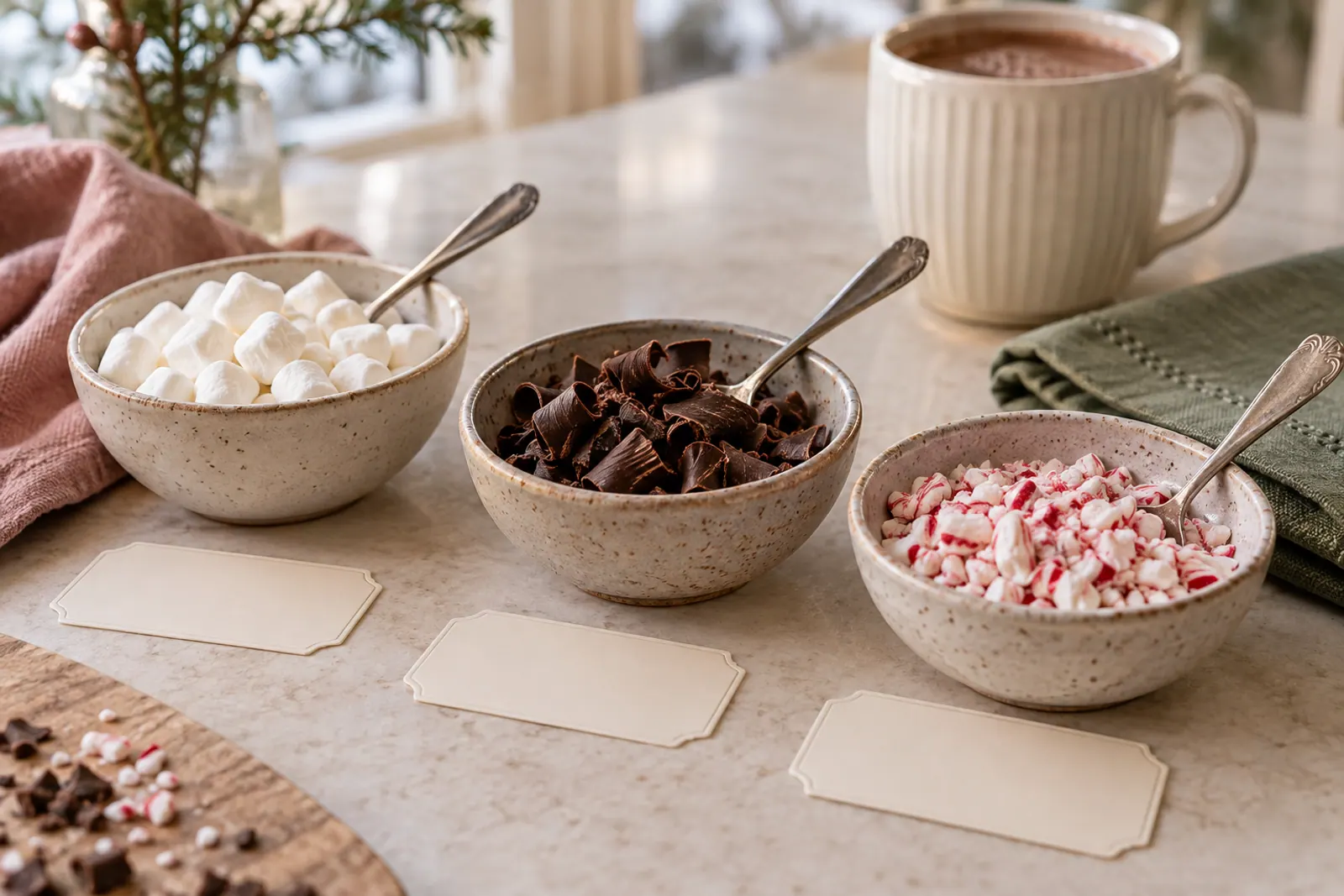
Make refills a named job
Leave the serving person with a short log, not a vague instruction to keep an eye on the pot. Record which batch is in use, its prepared amount, the time it entered service, the observed temperature and any action required by the recipe, device or food handling plan. The blank sheet intentionally has no default checking interval. Establish that interval for your equipment and situation.
For the worked example, Morgan serves the first 22 planned pours from 3.96 L. Casey manages the separately prepared 1.44 L reserve using the agreed holding arrangement. They confirm the replacement before the first load is exhausted. This is an assignment example, not a heating schedule. Extra mugs and topping portions are replenished separately from the hot vessel.
When service finishes, make a prompt decision about suitable leftovers using the food guidance and your recipe. Do not let a pretty pot become an untracked container. Pack away the food before the ribbons and cups.
Download the batch and refill sheets
The free two-page workbook has a batch plan with the complete-pour formulas and a separate blank service log. Print at actual size on the matching paper; it needs no account or email.
- Hot chocolate batch and refill workbook, US Letter PDF
- Hot chocolate batch and refill workbook, A4 PDF
- Blank hot chocolate refill log, CSV
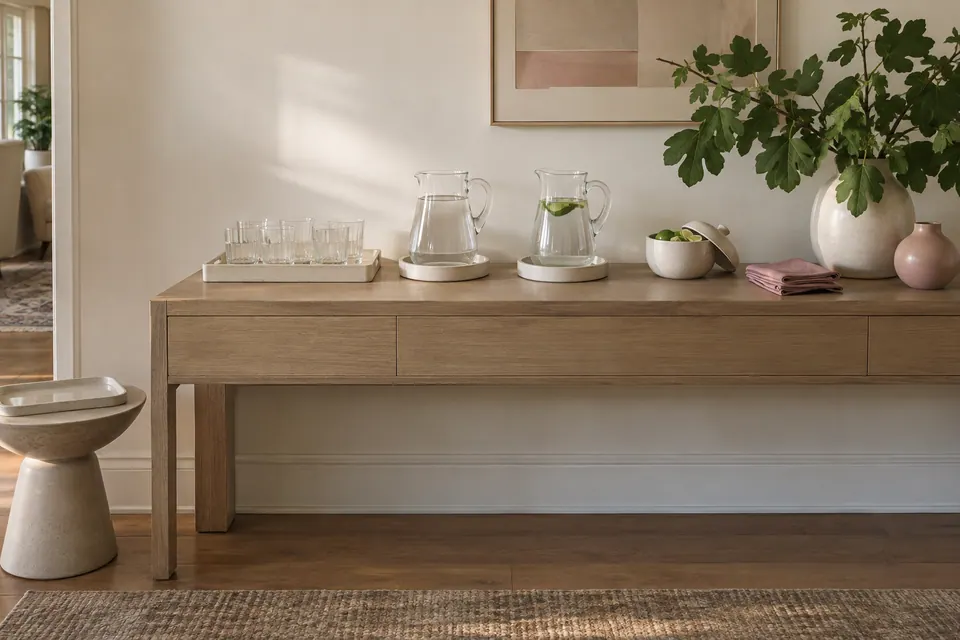
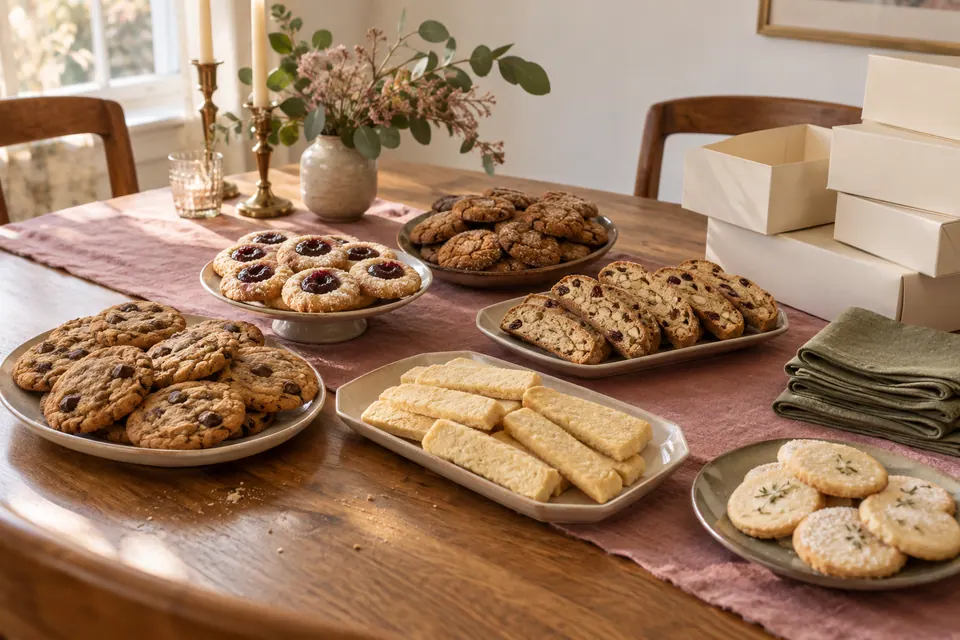
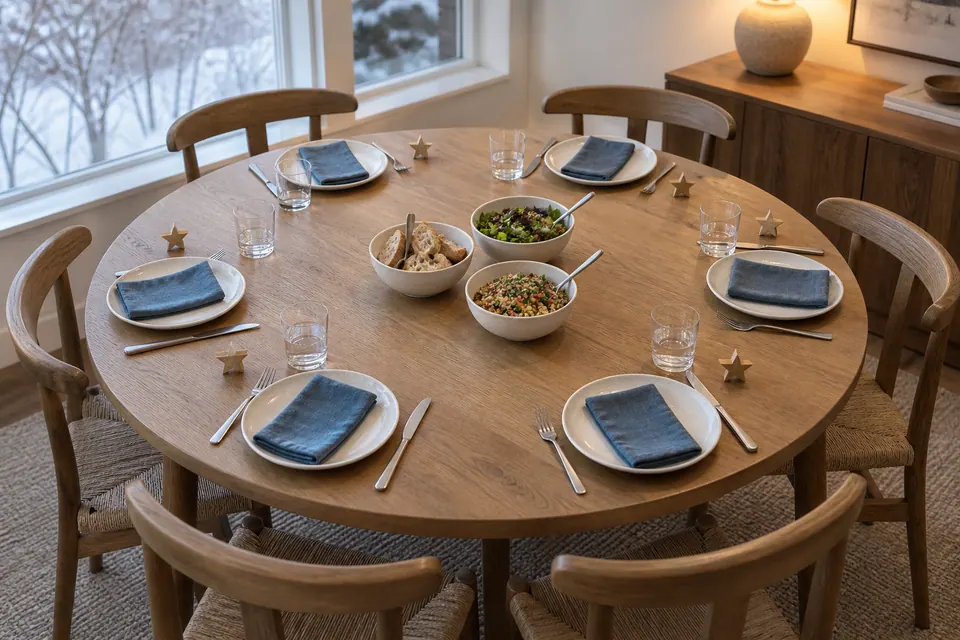
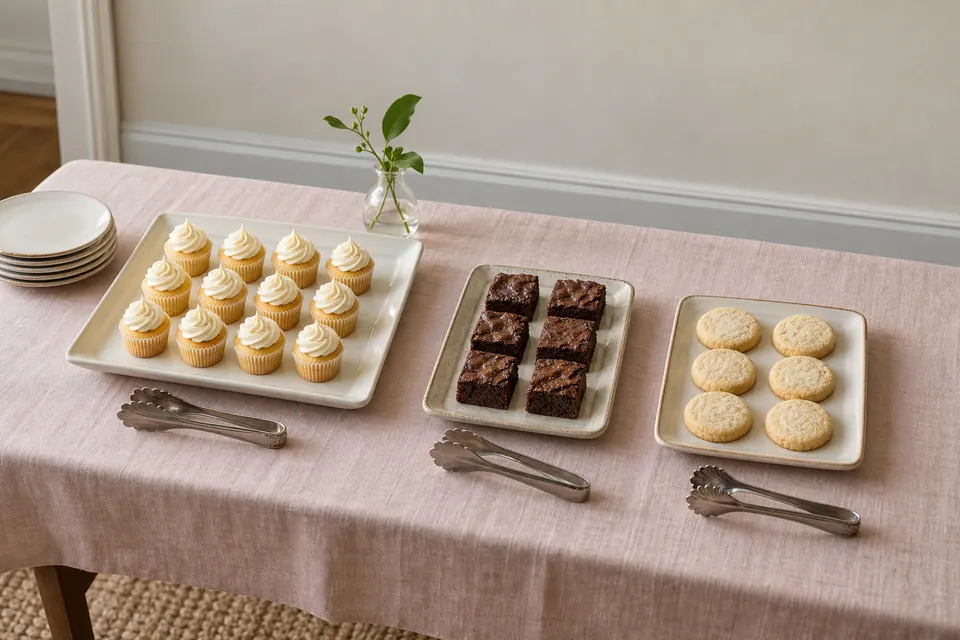
These are original planning pages. They do not provide a recipe, establish a safe checking interval or replace appliance instructions. The AI-created photos are styling concepts; use your measured cup, the formulas and the actual equipment directions for the working plan.
Hot chocolate bar questions
How much hot chocolate do I need for 24 people?
With one chosen 180 mL pour each and six extra pours, you need 5.4 L of finished drink. Change the pour and reserve to match your guests. This is a stated example, not a universal amount per person.
Can a 4-liter vessel serve all 30 pours at once?
Not at the 180 mL example pour. It holds 22 complete pours using 3.96 L; the remaining eight pours need 1.44 L in another load. Confirm the usable capacity and the permitted holding and replacement arrangements first.
Should I set out a giant bowl of every topping?
Small first bowls are easier to manage. Calculate the selected amount separately for each topping, keep its information and utensil nearby, and hold the remaining supply under the appropriate conditions.
Can I prepare the drink the day before?
Only when your recipe and food handling plan support preparation, cooling, storage and reheating. The volume calculator does not establish those steps. Follow the actual directions rather than using a capacity result as a preparation schedule.
For a decorating afternoon, the gingerbread house party plan counts one kit per adult and checks workspace and take-home transport. Keep hot drinks on a separate host-operated surface so they do not compete with decorating supplies.
Choose a cup pour, count the people who want the drink and add a deliberate reserve. Plan appliance loads as complete pours, use the recipe's finished yield and assign a server to temperature checks and refills.
Checklist from this story
0 / 8 ready