Flower Bar Bridal Shower: Count Bouquets, Wraps and Guest Turns
Plan a bridal shower flower bar with a stem and wrap calculator, whole-pack shopping counts, guest-turn capacity and free A4 or Letter host worksheets.
Paid links: we may earn a commission. As an Amazon Associate I earn from qualifying purchases.
Calculate flower-bar materials and turns ↓- A little preparation
- Choose a sample bouquet, count usable inventory and measure a complete guest turn
Flower-bar quantity and turn planner
One participating maker receives one bouquet and one wrap. The starter values match the guide's example. Reserves are additional units, included once. A total stem count does not check whether you have enough of each flower type.
The worked example, readable without JavaScript
12 makers × 5 stems = 60 base stems. Add 6 reserve stems once: target 66. Subtract 18 usable owned stems: buy at least 48. Five packs of 10 provide 50, leaving 2 above the target. Wraps: 12 + 2 reserve - 3 owned = 11 needed; two packs of 10 leave 9 above target.
Three staffed workspaces × five complete 12-minute turns in a 60-minute window = capacity for 15 makers. Twelve makers need four rounds, or 48 minutes. These are chosen planning inputs, not measured activity times.
Entries stay in this page's memory. They are not saved between visits or sent to us. Editing any input clears the previous result and exports. Download or print the current plan before leaving.
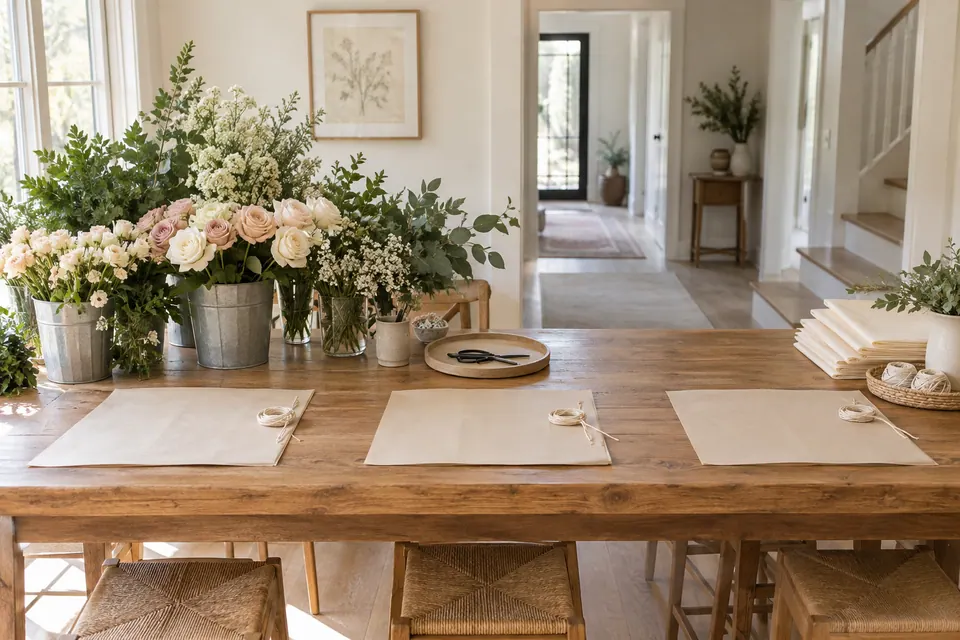
A flower bar bridal shower gives guests a place to make a small bouquet to take home. Its main planning problem is practical: enough of the right flowers, dry space to work, a wrap that fits and enough complete turns for the people who want to join.
This plan uses one small posy per participating guest and one paper wrap per posy. It includes a quantity and turn planner and two-page host worksheets. The twelve-person example is an arithmetic model. We have not assembled or timed it at a physical event; use your actual flowers, room and practice turn to replace the assumptions.
Still deciding whether to include flower arranging? Compare the work and space it needs with four other bridal shower ideas before buying stems.
Choose one small bouquet before counting
Ask the honoree whether bouquet making fits the gathering. Participation can be optional: someone can watch, ask the helper to assemble their chosen stems, or decline a bouquet. Count intended makers rather than automatically multiplying the invitation list.
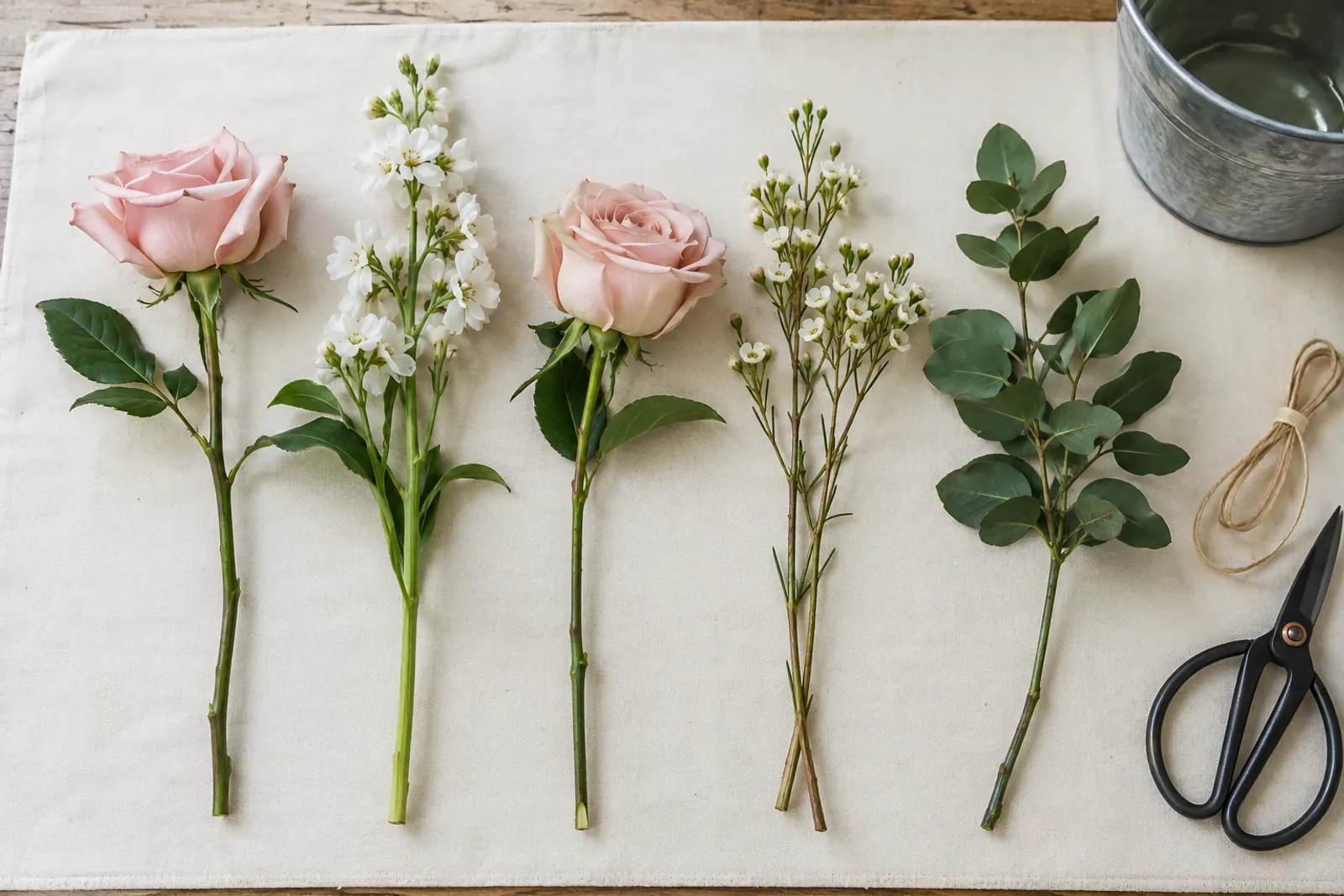
Start with a small selection that can be shown on the table. One editorial example is two focal stems, two slimmer flowering stems and one foliage stem: five cut stems in total. This is a counting example, not a rule for florist design. A branching stem can have several flower heads but still count as one cut stem. A purchased bunch can contain mixed stem lengths or unusable pieces, so check its real yield.
Set aside one sample, photograph it privately for your helper if useful, and write the chosen mix on the host sheet. Make sure that the remaining stock can supply that mix. Sixty assorted stems are not interchangeable with twenty-four focal stems, twenty-four slimmer flowering stems and twelve foliage stems if that is the actual recipe you promised.
| Chosen material | Per bouquet | For twelve makers |
|---|---|---|
| Focal stems | 2 | 24 |
| Slimmer flowering stems | 2 | 24 |
| Foliage stems | 1 | 12 |
| Total cut stems | 5 | 60 |
Assign reserve stems to the types most likely to need replacements. The total calculator below checks overall quantities; use the worksheet to check each type separately when bunches have different yields. Do not count table decorations as available stock unless the family has agreed to dismantle them.
Add reserve once and round the actual packs
For twelve makers at five stems each, the base is 12 × 5 = 60 stems. Add a chosen six extra stems once, making a target of 66. If eighteen suitable usable stems are already available, the purchase shortfall is 66 - 18 = 48. With ten usable stems per purchased pack, buy five whole packs, which provide fifty stems. Total availability becomes 18 + 50 = 68: two above the target that already includes the six-stem reserve.
Do not add the six reserve stems again after rounding packs. The two pack-rounding extras are a different figure. A reserve is your explicit chosen allowance; it is not a guarantee against every damaged stem or a guest changing the bouquet recipe.
Wrapping is a separate purchase. Twelve wraps plus two chosen reserve wraps make fourteen. Subtract three usable wraps already owned: eleven are needed. Two packs of ten provide twenty new wraps, leaving 3 + 20 - 14 = 9 above the target. Existing loose sheets only count if the actual bouquet fits them.
Use the bridal shower budget worksheet for current supplier prices, wrapping, tools and delivery. The flower calculator counts units; it does not invent a price, tax amount or recommended spending cap.
Check complete turns instead of dividing minutes by guests
Count workspaces that can be used at the same time with the available helpers. Three chairs do not create three working places if one bucket or one helper blocks the whole process. Each complete turn must include choosing stems, assembling the posy, wrapping it, moving it aside and resetting the space.
For the example, choose three staffed simultaneous workspaces, twelve minutes per complete turn, and sixty minutes available for turns. These are deliberately entered assumptions, not observed guest speeds.
The window fits floor(60 ÷ 12) = 5 complete rounds. At three makers per round, capacity is 5 × 3 = 15 makers. Twelve makers need ceil(12 ÷ 3) = 4 rounds, or 4 × 12 = 48 minutes. Initial flower preparation and final cleanup are outside that sixty-minute activity window.
| Round | Elapsed activity time | Makers | Finish check |
|---|---|---|---|
| 1 | 0 to 12 minutes | 1 to 3 | First three bundles moved aside; spaces reset |
| 2 | 12 to 24 minutes | 4 to 6 | Stock and dry paper checked |
| 3 | 24 to 36 minutes | 7 to 9 | Remaining flower mix confirmed |
| 4 | 36 to 48 minutes | 10 to 12 | Last bundles collected; tools counted |
A fifty-nine-minute window only fits four whole twelve-minute rounds. A thirty-five-minute window fits two, giving capacity for six makers: six of the intended twelve would not fit. Extend the activity, add truly available staffed spaces, or agree on fewer makers. Shortening an untested turn on paper does not create real capacity.
Give water and dry wrapping separate places
Arrange a route from stem selection → dry assembly workspace → wrapping → finished-bouquet pickup. Keep stable water containers away from table edges and dry paper. Put a towel or spill tray underneath the wet zone, and keep the guest route free of buckets, bags and trailing ties.
Give one helper the flower stock, preparation and tools, and another the turn list and finished bundles. A seated workspace and helper-made option can make participation easier. Ask guests what access would help rather than assuming everyone can stand, grip stems or use scissors.
The RHS conditioning guidance advises clean containers and water, removing foliage that would sit below the water line and keeping flowers cool. Individual plants have different preparation needs. Follow the florist’s instructions for the actual material; keep flower food and cutting tools with the helper rather than on a food or drink table.
The host can prepare stem lengths before guests arrive. Count only sound, suitable pieces afterward. Write which person handles further cuts and where closed tools return. If a guest brings flowers from home, identify them and check that they suit the planned handling and transport instead of adding unknown plants to the general selection.
Test the actual paper wrap
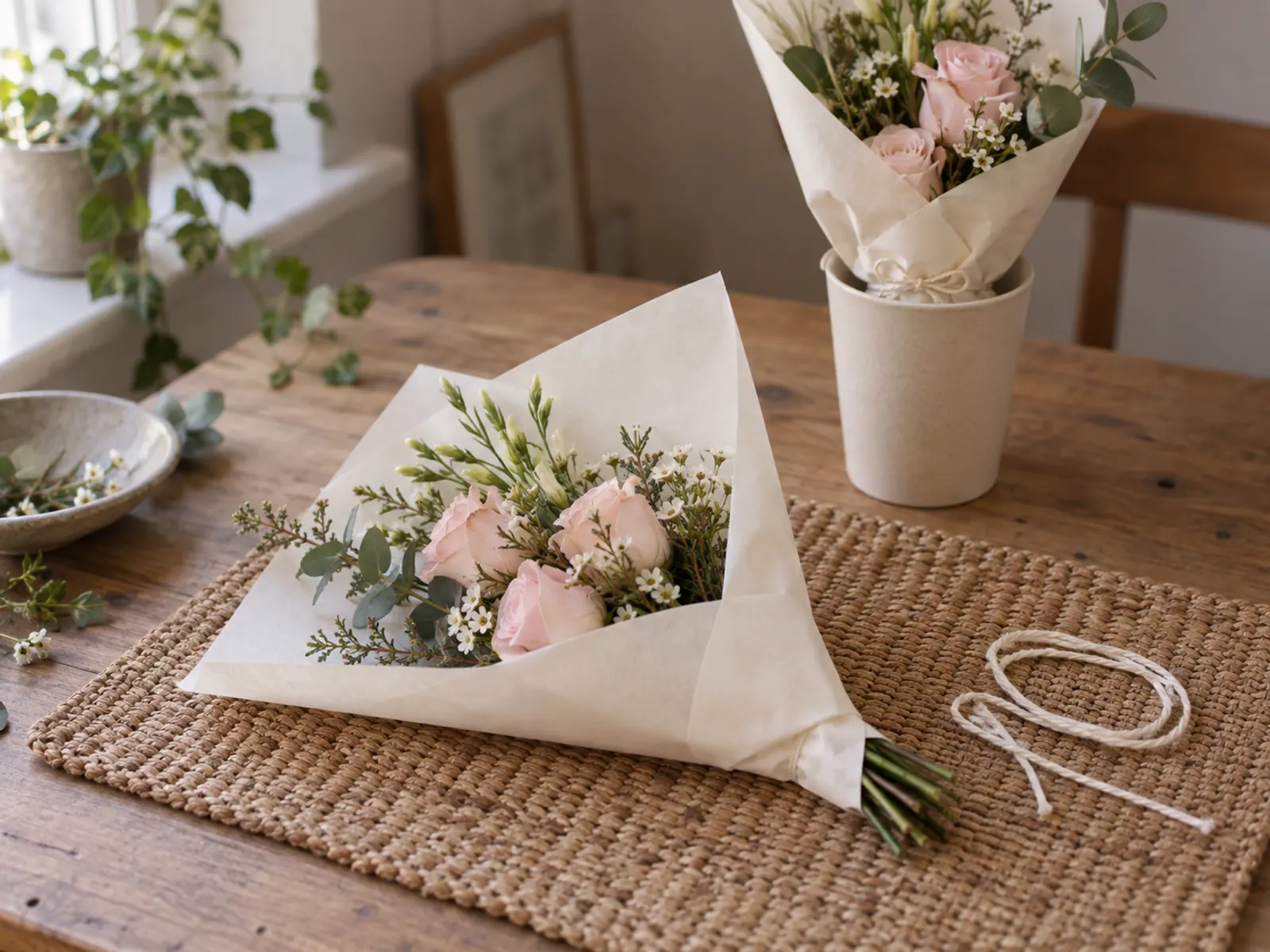
Choose a paper size by fitting the real posy. A twelve-inch square is a starting sample size, not a universal pattern. Lay it diagonally, position the tied stems toward the lower corner, fold that corner up around the stem area, bring the side corners across the bundle and secure them with a tie. Keep flower heads outside the paper and confirm that the overlap holds without crushing the bouquet.
Practice with the same paper, tie and bouquet fullness guests will receive. If the sides do not overlap, use a larger sheet or a smaller chosen posy, then update the quantities. Do not solve a paper-fit problem by hiding extra stems inside a narrow sleeve. The downloaded sheet provides a step diagram and fit checklist, rather than claiming to be a universal cut-out wrapper.
Keep finished bundles upright in a suitable carrying container and explain the aftercare provided by the flower supplier. For vase transport, University of Minnesota Extension recommends sturdy padded boxes, upright containers and reducing water to limit spills. Adapt that to the actual containers and journey; a dry paper wrap is not a water reservoir or a guaranteed long journey solution.
Download the flower-bar worksheets
Page one contains the material formula, the worked stem/wrap example and a blank shopping record. Page two contains the complete-turn calculation, station route, original paper-fold diagram and sample-fit checks. Print the matching paper size at 100 percent and check the one-inch calibration line. These are printable writing worksheets, not editable PDF forms. The interactive calculator exports your current figures separately as CSV or a plan-only print sheet.
Keep the activity distinct from table decorations and favors
This station lets guests assemble their own take-home bouquets. Our DIY bridal shower decorations guide makes the host’s removable table flower groups; those have a separate stock and serving-space job. Our bridal shower favors guide provides three original paper-packaging projects. You can choose the guest bouquet as the take-home item without also promising a second favor.
Use the bridal shower planning checklist to assign the flower order deadline, indoor space, helpers and pickup handoff. Keep the detailed bouquet count and turn plan here so hosts can find the current version in one place.
A bridal shower flower bar is a shared bouquet-making activity. Choose one achievable bouquet, count its usable stems and wrapping, then confirm that the staffed workspaces can handle the participating guests in the time available.
Checklist from this story
0 / 9 ready
Sources and file checks
The original calculator checks whole-stem and wrap arithmetic, pack rounding, stock subtraction and complete-turn capacity. Numeric model tests and digital PDF rendering were performed; no physical flower bar, bouquet assembly, paper fit or event timing was tested. Photos are disclosed AI-created styling concepts.
- RHS: Cut flowers, cutting and conditioningClean water and containers, removing submerged foliage, species-specific conditioning and keeping flowers cool.
- University of Minnesota Extension: Fresh flowers and blue ribbonsTransporting flower containers upright in a sturdy padded box and reducing spill risk.